Dalung Challenges Defence Minister Musa to Produce Evidence Against El-Rufai Over Alleged Planned Killings
By KEMI KASUMU

According to Dalung, Musa’s statement that “we can never be happy with somebody who deliberately planned for the killing of our people” amounted to an allegation of deliberate criminal intent that required substantial evidence.
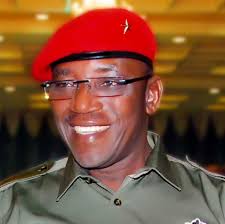
Nigeria’s former Minister of Youth and Sports, Comrade Solomon Dalung, has challenged the Minister of Defence, Gen. Christopher Musa, to produce evidence supporting his allegation that former Kaduna State Governor Nasir El-Rufai deliberately planned the killing of people in Southern Kaduna.
Dalung made the call in a lengthy statement reacting to recent comments attributed to Musa concerning El-Rufai, arguing that the allegation was too serious to be treated as an ordinary political disagreement.
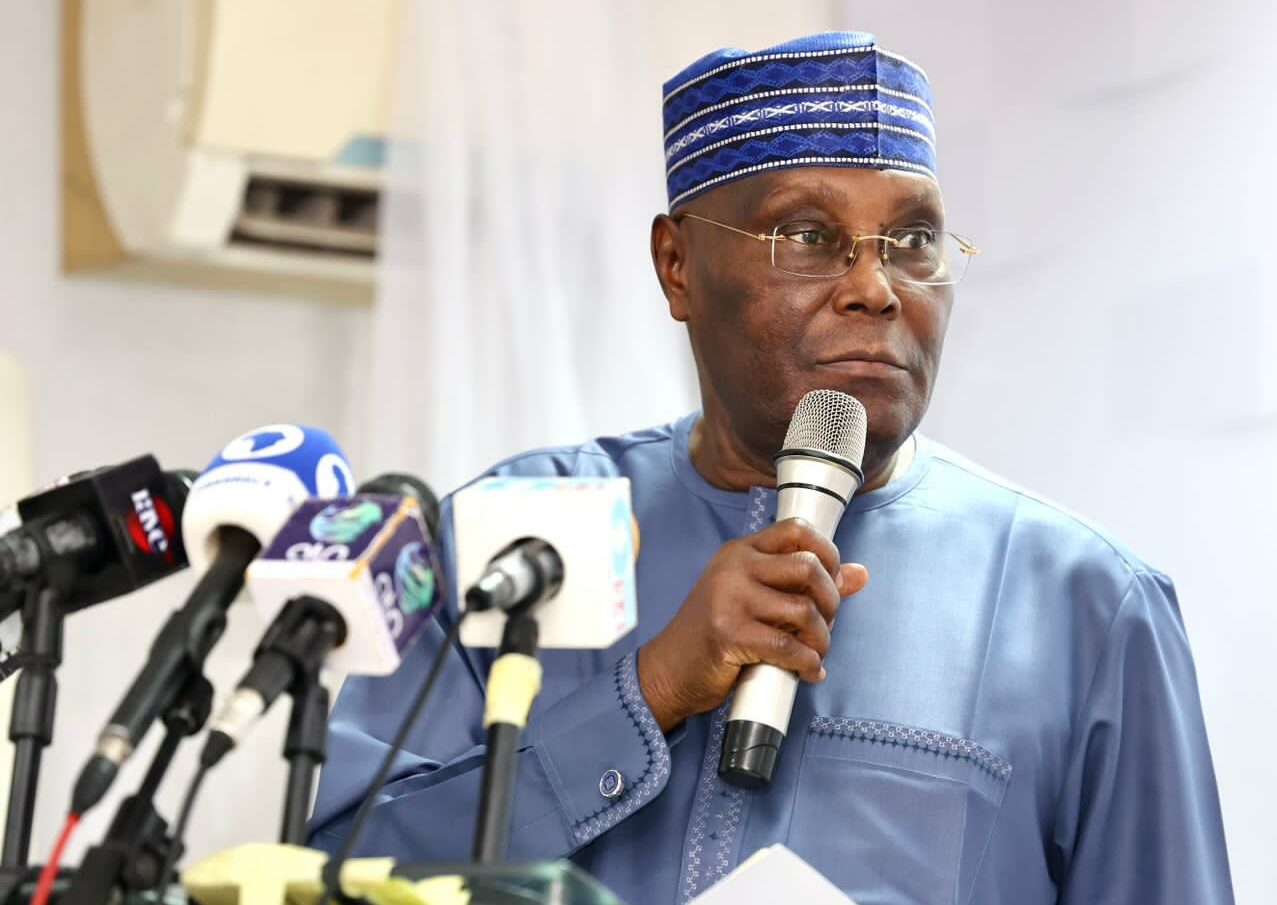
According to Dalung, Musa’s statement that “we can never be happy with somebody who deliberately planned for the killing of our people” amounted to an allegation of deliberate criminal intent that required substantial evidence.
He said the gravity of the accusation was heightened by Musa’s status as a former Chief of Defence Staff and current Defence Minister.
“This is not an ordinary political accusation,” Dalung said. “It is an allegation of deliberate criminal intent.”
He urged Nigerians to distinguish between criticism of El-Rufai’s administration and an allegation that the former governor intentionally planned the killing of Southern Kaduna residents.
Kaduna crisis predates El-Rufai, Dalung says
Dalung argued that Kaduna’s history of communal and religious violence long predated El-Rufai’s eight-year tenure as governor, which began in 2015.
He cited the 1987 Kafanchan crisis, the 1992 Zangon Kataf crisis, the 2000 Sharia crisis and the 2011 post-election violence as examples of conflicts that had already created deep fault lines in the state.
He also referenced the work of retired Gen. Martin Luther Agwai, a Southern Kaduna-born former Chief of Army Staff and Chief of Defence Staff, who had examined the region’s conflicts.
Dalung said Agwai had identified several factors behind the violence, including pastoral grazing disputes, land and boundary disagreements, drug abuse and the indigene-settler question.
He stressed, however, that pointing out the historical roots of the crisis did not absolve El-Rufai of responsibility for events that occurred during his administration.
Rather, he said, there was a fundamental difference between arguing that an administration failed to adequately address insecurity and alleging that the governor deliberately planned the killing of citizens.
Dalung questions alleged payment to bandits
A major issue raised by Dalung was Musa’s reported claim that El-Rufai had spoken about paying bandits.
Dalung recalled that El-Rufai publicly acknowledged in 2016 that his administration had paid compensation to some Fulani affected by previous violence.
He said the account needed to be distinguished from an allegation that El-Rufai financially rewarded active bandits.
“Who were the people El-Rufai allegedly paid?” Dalung asked.
“Were they active bandits? Were they criminal gangs? Were they people who had participated in attacks? Or were they Fulani who had lost cattle and family members during the 2011 violence and whom the Agwai peace process sought to compensate in exchange for ending reprisals?”
According to Dalung, those were fundamentally different factual propositions.
He challenged Musa to identify the alleged payments if he was referring to something other than the compensation publicly acknowledged by El-Rufai.
He further argued that Gen. Agwai had previously said that if compensation was being paid in relation to the Southern Kaduna crisis, all affected parties should be considered rather than one group alone.
Retired general’s account raises fresh questions
Dalung also referred to comments by retired Maj.-Gen. Danjuma Ali-Keffi, who reportedly challenged Musa to produce evidence for his allegations.
According to Dalung, Ali-Keffi said El-Rufai never instructed him to halt military operations against criminal elements in Kaduna while he served as General Officer Commanding 1 Division.
Dalung said Ali-Keffi had also maintained that military clearance operations continued and that Kaduna State officials, including then Commissioner for Internal Security and Home Affairs Samuel Aruwan, provided intelligence to military commanders.
The former minister said Ali-Keffi’s account raised an important institutional question: if a governor was deliberately facilitating the killing of citizens, what did the military and intelligence agencies know about it?
Dalung noted that governors do not command the Nigerian Army, which operates through its own chain of command.
He therefore argued that an allegation of deliberate state-sponsored killings would necessarily raise questions about the security agencies responsible for operations in affected areas.
‘What did Musa do if he knew?’
Dalung then turned his scrutiny to Musa himself, noting that the Defence Minister is from Zangon Kataf in Southern Kaduna.
He acknowledged Musa’s personal connection to the region but stressed that Musa was also a professional soldier who served in senior military positions for decades.
Dalung asked whether Musa had possessed evidence of deliberate killings by a sitting governor while he was still in military service.
“If General Musa possessed credible evidence that a sitting governor was deliberately planning the killing of citizens, what did he do with that information when he was in uniform?” he asked.
“When did he first know? Who did he report it to? Was it contained in military intelligence? Was it ever presented to the President, the National Security Adviser or the intelligence agencies? Was there an investigation?”
Dalung said he was not claiming that Musa necessarily possessed such evidence while serving in the military, but argued that the seriousness of the present allegation made such questions legitimate.
Dalung raises Muslim-Muslim ticket issue
The former minister also questioned whether Musa’s criticism of El-Rufai was partly connected to the former governor’s decision to run a Muslim-Muslim ticket in Kaduna.
El-Rufai selected Hadiza Balarabe, a Muslim from Southern Kaduna, as his running mate in 2019 and retained her in 2023.
Dalung noted that El-Rufai had defended the arrangement as an effort to reduce the influence of religion and ethnicity in Kaduna politics.
He said that if Musa considered Muslim-Muslim political arrangements inherently divisive, the principle should be applied consistently, given that President Bola Tinubu and Vice-President Kashim Shettima also contested the 2023 presidential election on a Muslim-Muslim ticket.
“If Muslim-Muslim tickets are inherently dangerous, why is the federal arrangement acceptable?” Dalung asked.
He added that if such arrangements were not inherently dangerous, Musa should explain what specific actions by El-Rufai amounted to religious division.
‘I am not here to rehabilitate El-Rufai’
Dalung stressed that his intervention should not be interpreted as an attempt to absolve El-Rufai of criticism.
He said the former governor’s record in Kaduna remained open to scrutiny, including his controversial demolitions, combative style of governance and the insecurity experienced in Southern Kaduna during his tenure.
“If there is evidence that he knowingly facilitated criminal violence, he should answer for it,” Dalung said.
However, he argued that the occurrence of killings during El-Rufai’s tenure, political disagreements with Southern Kaduna leaders or the payment of compensation could not, by themselves, establish an allegation that the former governor deliberately planned the killings.
‘Kaduna has a memory’
Dalung warned that Kaduna’s long history of communal violence made it particularly important for public officials to avoid presenting selective accounts of the state’s past.
He listed several major episodes, including the Kafanchan crisis, Zangon Kataf violence, the Sharia crisis and the 2011 post-election violence, alongside subsequent farmer-herder and bandit conflicts.
“Kaduna has been carrying these wounds for generations,” he said.
He maintained that the crisis was not created by a single individual and that the state had accumulated commissions, inquiries, reports and peace initiatives over several decades.
‘Nigerians are listening’
Dalung ultimately called on Musa to substantiate his allegations.
“If you have evidence that Nasir El-Rufai deliberately planned the killing of Southern Kaduna people, please produce it,” he said.
He similarly challenged the Defence Minister to identify the alleged bandits, payments, dates and circumstances if his reference to El-Rufai’s alleged payments concerned active criminal elements rather than compensation arising from previous communal violence.
Dalung said Nigerians were entitled to know what the security establishment knew if such allegations had been known to military authorities at the time.
“This is not about protecting El-Rufai. It is not about attacking Musa. It is about something much more fundamental: The truth,” he said.
According to him, an allegation by a sitting Defence Minister that a former governor deliberately planned the killing of citizens was too grave to become merely another political or social-media controversy.
“If the allegation is true, Nigerians deserve justice. If it is false, Nigerians deserve to know that too,” Dalung said.