Japan builds long military builds long-range strike capability
According to an analysis published by RT on Thursday, August 13, Japan’s latest defence white paper describes the country’s security environment as the most severe and complex since the end of World War II.
Japan is accelerating a major transformation of its defence and intelligence architecture, with the government under Prime Minister Sanae Takaichi expanding long-range strike capabilities, intelligence coordination and defence spending in ways that could significantly alter the security balance in East Asia.


According to an analysis published by RT on Thursday, August 13, Japan’s latest defence white paper describes the country’s security environment as the most severe and complex since the end of World War II. Tokyo cited China’s military activities around Japanese waters, tensions over Taiwan, North Korea’s nuclear and missile programmes, and closer military coordination between China, Russia and North Korea as major concerns.
The report said two developments are particularly significant: the reorganisation of Japan’s intelligence structure and the expansion of military systems capable of striking targets well beyond Japanese territory.
Japan creates new intelligence structure
Japan established a National Intelligence Bureau on July 31, upgrading the former Cabinet Intelligence and Research Office.
The new organisation is expected to consolidate intelligence gathered by different government agencies and serve as a central coordinating body under a National Intelligence Council chaired by the prime minister.
The restructuring is taking place alongside improvements in satellite and maritime surveillance, cyber capabilities, electromagnetic warfare and military command-and-control systems.
Japan is also considering further anti-espionage legislation and the possible establishment of a dedicated foreign-intelligence agency.
Long-range weapons expand Japan’s reach
Another major change is Tokyo’s development and deployment of long-range counterstrike capabilities.
Japan has been acquiring Tomahawk cruise missiles while upgrading its domestically developed stand-off weapons. It is also developing longer-range anti-ship missiles, hypersonic weapons and unmanned systems designed for operations in the air, at sea and underwater.
The shift represents a significant departure from Japan’s traditional post-war defence posture, which largely focused on protecting Japanese territory and intercepting incoming threats.
Tokyo maintains that the new capabilities remain consistent with its exclusively defence-oriented policy because they are intended to deter or counter attacks before they reach Japanese territory.
However, the expansion means Japanese forces could increasingly operate at greater distances from the country’s traditional defensive perimeter.
Defence spending exceeds ¥9 trillion
Japan is also committing substantially greater financial resources to defence.
Fiscal 2026 defence-related expenditure, including costs associated with Okinawa and the realignment of US forces, exceeded ¥9 trillion, or approximately $56.5 billion, according to the report.
Tokyo is also placing greater emphasis on domestic defence production, technological development and cooperation between the military and private-sector companies.
Japan has further relaxed restrictions on defence-equipment exports, potentially allowing greater cooperation with the United States and other strategic partners in joint production, maintenance and supply chains.
Nuclear debate attracts attention
Japan continues to maintain its three non-nuclear principles of not possessing, producing or allowing the introduction of nuclear weapons.
Prime Minister Takaichi reaffirmed those principles during ceremonies marking the 81st anniversaries of the atomic bombings of Hiroshima and Nagasaki.
However, debate over Japan’s nuclear posture has become more prominent as Tokyo reassesses its national-security strategy.
The country possesses a highly developed civilian nuclear industry, advanced technological expertise and nuclear-related infrastructure. While this does not mean Japan has decided to develop nuclear weapons, the debate has raised questions about how far its security policy could evolve if the regional threat environment continues to deteriorate.
China closely monitoring Japan’s military expansion
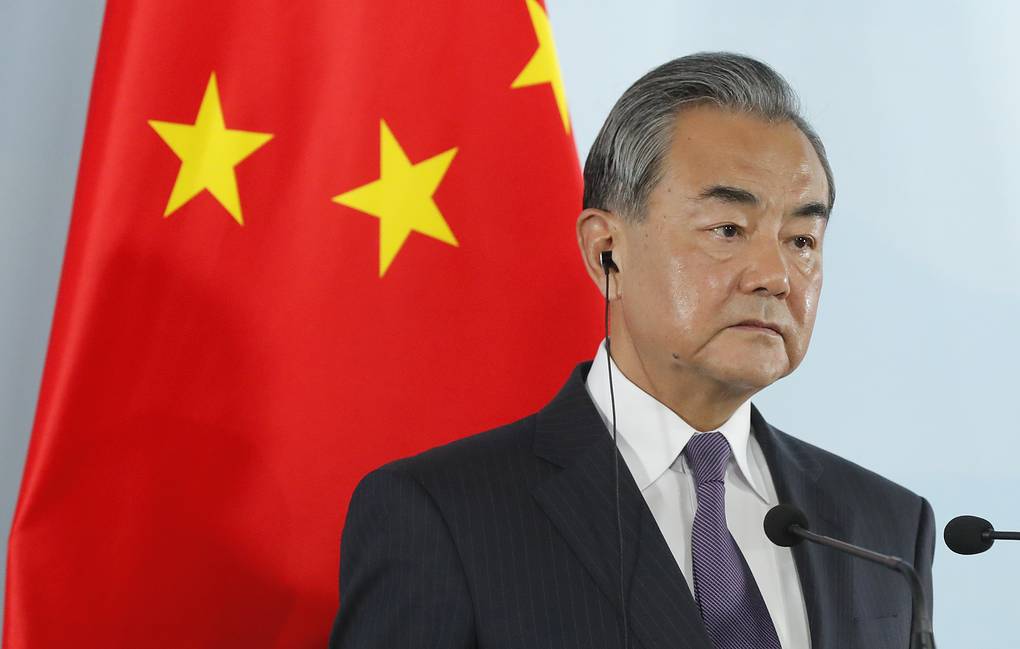
China has strongly criticised Japan’s accelerated military development, particularly Tokyo’s acquisition of long-range strike capabilities.
Beijing has warned against what it regards as a return toward Japanese remilitarisation, while Chinese military and maritime activities around strategically important areas have continued.
At the same time, Japan is strengthening defence cooperation with the United States, Australia, the Philippines, South Korea and other regional partners.
The emerging network is designed to improve military interoperability, intelligence sharing, training, equipment cooperation and defence-industrial integration.
Although Japan remains considerably smaller than China in population, military expenditure and overall military capacity, its growing technological capabilities and expanding network of alliances are increasing its strategic importance.
The development is therefore creating a new security equation in East Asia, particularly around Taiwan and the first island chain.
Japan is increasingly positioning itself not only as a country defending its territory but as a more capable military and intelligence power able to respond to threats farther from its shores.
For China, the transformation represents a significant change from the relatively restrained Japanese military posture that characterised much of the post-war era — and Beijing is watching the shift closely.