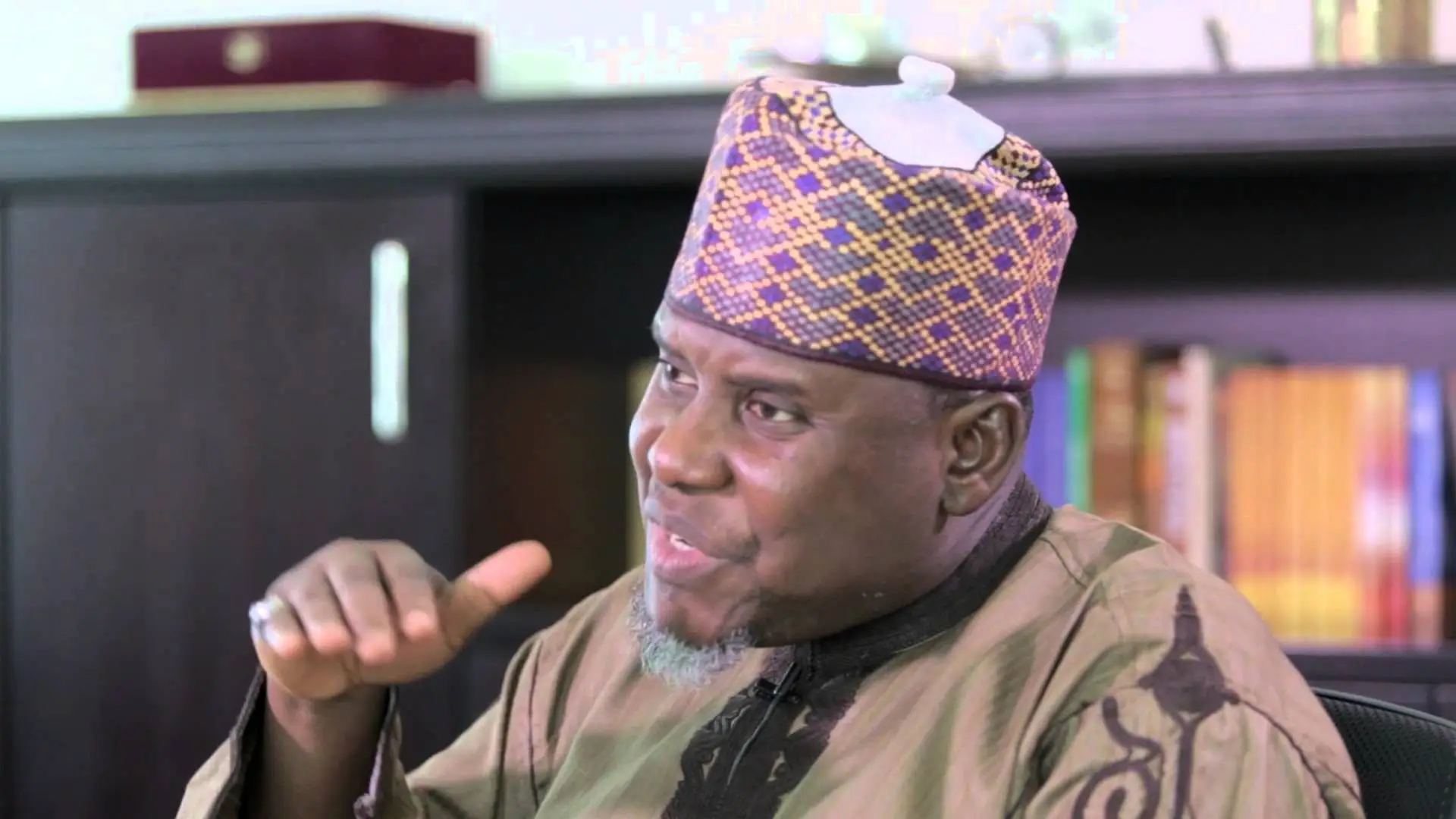
Court’s stringent bail terms for El-Rufai threaten his constitutional rights – Atiku

By KEMI KASUMU
Although the people, whose interest El-Rufai claimed all his administration’s decisions served, have not denied the former governor’s submission but the ICPC kept insisting that it’s investigations uncovered irregularities in the management of government funds and the award of contracts, leading to the alleged diversion and misapplication of public resources.
Former Vice President Atiku Abubakar has criticised the continued detention of former Kaduna State Governor Nasir El-Rufai, warning that excessively stringent bail conditions could undermine constitutional safeguards and weaken public confidence in the justice system.
Atiku’s remarks came on Wednesday as the Federal High Court in Kaduna fixed July 1, 2026, to rule on bail applications filed by El-Rufai and his co-defendant, Jimi Lawal, in an alleged corruption case brought by the Independent Corrupt Practices and Other Related Offences Commission (ICPC).
The court, presided over by Justice Hauwa’u Buhari, adjourned after hearing arguments from both the prosecution and defence on the bail applications.
El-Rufai, who appeared before two separate courts in Kaduna on Wednesday, is facing charges related to alleged abuse of office, financial impropriety and money laundering.
At the Federal High Court, the former governor, Lawal, a former Special Adviser during the El-Rufai administration, and several corporate entities were arraigned on an amended 11-count charge. El-Rufai pleaded not guilty to count one, while Lawal pleaded not guilty to counts six, seven and eight. A corporate entity, Singularity Network Security Limited, was arraigned on counts two, three, four, five, nine, ten and eleven.
In total, El-Rufai, Lawal and five corporate entities are standing trial.
Earlier in the day, El-Rufai appeared before the Kaduna State High Court for the continuation of proceedings in another ICPC case before Justice Darius Khobo. The case involves allegations of abuse of office and money laundering allegedly committed during his tenure as governor between 2015 and 2023. Justice Khobo adjourned the matter until June 29 for further hearing.
The former governor has consistently denied all allegations, insisting that decisions taken during his administration were lawful and served the public interest.
Although the people, whose interest El-Rufai claimed all his administration’s decisions served, have not denied the former governor’s submission but the ICPC kept insisting that it’s investigations uncovered irregularities in the management of government funds and the award of contracts, leading to the alleged diversion and misapplication of public resources.
Justice Rilwan Aikawa had earlier granted El-Rufai bail in the sum of N200 million with two sureties, including a serving or retired civil servant on Grade Level 15 and a recognised traditional ruler. The court subsequently declined an application seeking a variation of the bail conditions.
Reacting to the development, Atiku, through a statement issued by his Senior Special Assistant on Public Communication, Phrank Shaibu, described the refusal to review the bail conditions as troubling.
According to him, bail conditions that are practically impossible to meet amount to a “constructive denial of bail.”
“The law is settled that an accused person remains innocent until proven guilty. Bail exists to preserve that constitutional protection. It was never designed to become a sophisticated instrument for punishment before conviction,” Atiku said.
He questioned the rationale behind requirements that allegedly compel a defendant to produce a serving Grade Level 17 federal civil servant with verifiable property in Abuja’s Maitama or Asokoro districts, among other conditions.
“Nigerians are entitled to ask a simple question: is the objective to grant bail or to ensure that bail remains unattainable?” he asked.
Atiku warned that such judicial decisions could create precedents affecting the liberties of ordinary citizens.
“This is not merely about one individual. It is about the principles that underpin a democratic society governed by the rule of law. Today it is El-Rufai. Tomorrow it could be any citizen whose liberty depends not on the law but on whether he can satisfy conditions that few Nigerians can ever meet,” he stated.
The former vice president stressed that the judiciary must remain a bulwark against abuse of power and ensure that its decisions inspire confidence in the fairness and accessibility of justice.
“At a time when public trust in institutions is under unprecedented strain, the judiciary must be careful not to create the impression that justice is available only in theory but unreachable in practice. Bail conditions should secure attendance in court, not guarantee continued incarceration,” he added.
Atiku also expressed concern over what he described as a growing perception that opposition figures and government critics were increasingly becoming entangled in legal and administrative disputes.
“No democracy can thrive where citizens begin to suspect that legal processes are being used not merely to prosecute offences but to punish dissent. The strength of a democracy is measured not by how it treats those in power but by how it treats those who challenge power,” he said.
While maintaining that he was not commenting on the substance of the allegations against El-Rufai, Atiku insisted that constitutional rights must remain paramount.
“The question of guilt or innocence is entirely for the courts to determine. What concerns every patriot is whether constitutional safeguards are being faithfully upheld. The right to liberty, the presumption of innocence and the right to fair hearing are not privileges to be dispensed at convenience. They are constitutional guarantees,” he said.
He concluded that when bail conditions become impossible to satisfy, detention effectively becomes punishment before trial.
“There is a name for a situation where a citizen is told he has been granted bail but is simultaneously subjected to conditions that make his release virtually impossible. It is called a constructive denial of bail,” Atiku said, urging justice sector institutions to uphold fairness, proportionality and respect for fundamental rights.