CISLAC demands probe of defence spending after General Rabe dies in bandits’ captivity
By KEMI KASUMU

According to Rafsanjani, the death of the retired military officer demonstrates the growing reach of criminal groups and raises questions about the effectiveness of the country’s security architecture.
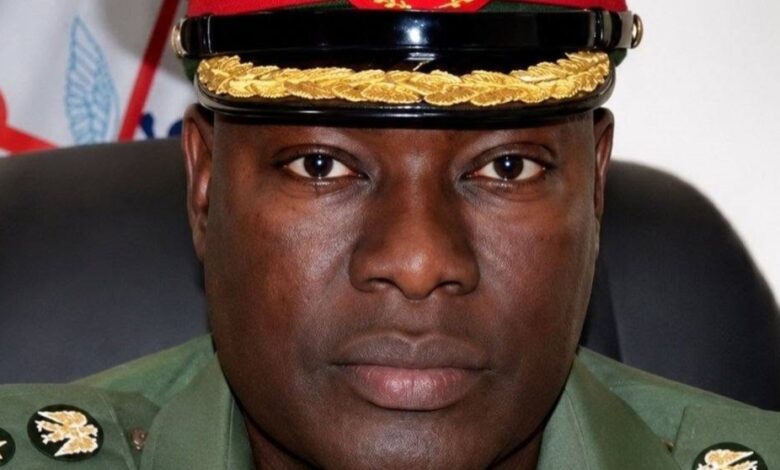
The Civil Society Legislative Advocacy Centre (CISLAC) has called on the Federal Government to declare a national emergency on insecurity following the death of retired Major General Rabe Abubakar in bandits’ captivity, describing the incident as a stark reflection of Nigeria’s worsening security crisis.
In a statement signed by its Executive Director, Auwal Musa Rafsanjani, CISLAC expressed concern over the persistent rise in kidnappings, banditry and violent attacks despite trillions of naira allocated annually to defence and security operations.
According to Rafsanjani, the death of the retired military officer demonstrates the growing reach of criminal groups and raises questions about the effectiveness of the country’s security architecture.
“The death of a retired Major General in captivity is not only a personal tragedy but a national one that reflects the alarming state of insecurity in the country. If a decorated military officer who dedicated his life to defending Nigeria can fall victim to bandits, then ordinary Nigerians face even greater risk,” he said.
Rafsanjani noted that Nigeria has continued to lose military personnel, security officers, traditional rulers, community leaders and civilians to criminal violence, adding that the situation reflects a broader failure to adequately address security challenges.
He warned that insecurity now affects all segments of society, including former public officials and senior military officers, stressing that no one should assume immunity from the country’s security crisis.
The CISLAC Executive Director also highlighted the growing incidence of kidnappings, particularly the abduction of schoolchildren and attacks on rural communities. He cited a recent Amnesty International report which indicated that at least 1,100 people were abducted between January and April 2026 across northern Nigeria, especially in rural areas and internally displaced persons’ camps.
Rafsanjani recalled that President Bola Ahmed Tinubu, during his Democracy Day address, announced a N5.41 trillion allocation to defence and security in the 2026 budget, the largest security allocation in Nigeria’s history.
Despite the record spending, he said Nigerians continue to face daily threats from kidnappers, bandits and terrorist groups.
“The Federal Government must urgently address the horrifying spate of abductions and violent attacks targeting innocent Nigerians. The situation has reached an unacceptable level and requires immediate, coordinated and decisive action,” he stated.
CISLAC also criticised comments attributed to the Minister of State for Defence, Bello Mohammed Matawalle, that only God could ultimately end insecurity in Nigeria. While acknowledging the role of faith, Rafsanjani argued that public officials have a constitutional responsibility to develop and implement effective security strategies.
“Nigerians did not appoint Ministers of Defence to tell them that only God can solve insecurity. They were appointed to develop strategies, mobilise resources, strengthen security institutions and deliver results. Leadership requires action, not excuses,” he said.
Rafsanjani further questioned remarks by the Minister of Defence, General Christopher Musa (retd.), who reportedly linked challenges in procuring military equipment to global conflicts involving Russia, Ukraine, Israel, Iran and the United States.
While acknowledging that international conflicts may affect defence procurement, he maintained that such factors could not justify years of persistent insecurity despite substantial government spending.
“Criminal groups operating across Nigeria do not appear to be suffering from shortages of weapons. Nigerians deserve answers about how terrorists, bandits and kidnappers continue to access arms while citizens are told that procurement challenges are responsible for the failure to defeat insecurity,” he said.
The CISLAC Executive Director also expressed concern over what he described as systemic failures, weak intelligence coordination, negligence and corruption within the security sector.
He questioned how criminal networks continue to operate across the country despite the presence of several intelligence agencies, including the Office of the National Security Adviser, the Department of State Services, the National Intelligence Agency and the Defence Intelligence Agency.
Rafsanjani called for stronger intelligence gathering, improved inter-agency collaboration and the dismantling of networks supporting criminal activities.
He also demanded a comprehensive and independent audit of defence expenditure and security votes at both federal and state levels, arguing that increased budgetary allocations must be matched by measurable improvements in public safety.
In addition, he criticised the National Assembly for what he described as inadequate oversight of security spending and outcomes.
CISLAC urged the government to improve the welfare, training, equipment and operational capacity of security personnel while adopting proactive, intelligence-driven security measures.
Although acknowledging ongoing discussions on state policing, Rafsanjani cautioned that any implementation must be guided by strong legal and accountability frameworks to prevent abuse.
The organisation reiterated its call for comprehensive security sector reforms, enhanced intelligence coordination, greater transparency in defence spending, stronger community engagement and sustained political commitment to restoring peace and security across the country.This version follows a conventional newspaper reporting format, removing repetitive statements and presenting the key claims, reactions and demands in a balanced news style.