CFRPA asks court to disqualify Tinubu from 2027 election over certificate forgery allegations

As Gani Fawehinmi’s 1999 case, US court judgements of 2023 resurface
By KEMI KASUMU and OUR REPORTER, Kano

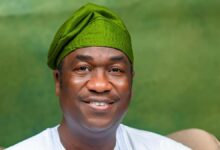
The suit, marked FHC/K/CS/312/2026, lists Tinubu, INEC, and Chicago State University as defendants.
As Nigeria’s ruling All Progressives Congress (APC) is turning what some concerned members of the public call “the deaf ears” to issues of forgery surrounding the certificate and discrepancies in universities President Bola Ahmed Tinubu had told the Independent National Electoral Commission (INEC) in 1999 and 2023 thus pr denying him him again as its presidential flagbearer for the 2027: election, a civil Society group has taken it upon itself to stop both the president.
The civil society organisation named Centre for Reform and Public Advocacy (CFRPA), which is at the centre of the latest development, did so by filing a suit at the Federal High Court in Kano seeking the disqualification of the President from the 2027 presidential election over allegations of the certificate forgery.
According to court documents, reportedly, the plaintiff alleged that Tinubu presented forged academic certificates from Chicago State University and a fake National Youth Service Corps (NYSC) discharge certificate to the Independent National Electoral Commission (INEC) during the 2023 elections.
The suit, marked FHC/K/CS/312/2026, lists Tinubu, INEC, and Chicago State University as defendants.
The plaintiff contended that Tinubu never attended Government College Lagos as claimed, noting that the school was established in 1974, four years after Tinubu allegedly graduated.
The CSO further argued that Tinubu does not possess a valid secondary school certificate, which is the minimum constitutional requirement to contest for the presidency.
It claimed that INEC had failed to act on its petition dated June 19, 2026, demanding clarification on Tinubu’s eligibility.
In its statement of claims, the group referenced a 2023 U.S. court ruling in In Re: Application of Atiku Abubakar (No. 23 CV 05099), which compelled Chicago State University to release Tinubu’s academic records.
The plaintiff insisted those records revealed false entries and inconsistencies, including a forged University of Cambridge General Certificate of Education.
The prayers asked by the plaintiff included declaration of forgery against Tinubu’s Chicago State University certificate, issuance of an order directing INEC to disqualify him from the 2027 presidential election, directing CSU to strike Tinubu’s name from its records and perpetual injunction restraining INEC from uploading Tinubu’s name as a candidate.
The plaintiff also submitted affidavits of non-multiplicity of action, witness statements, and letters to the NYSC and the Secretary to the Government of the Federation, demanding disclaimers on the alleged fake NYSC certificate.
1999 with Gani Fawehinmi
It will be recalled that in 1999, human rights lawyer, Chief Gani Fawehinmi, who was then boss to the current Minister of Aviation Mr. Festus Keyamo (SAN), had dragged Tinubu to court in Lagos over the certificate he claimed to have obtained from the “University of Chicago” under a sworn affidavit.
Tinubu at the time had submitted the certificate to the INEC as governorship candidate of the Alliance for Democracy (AD) and went ahead to contest and win election as governor of Lagos State.
2023 US court judgements
Nigerians had wondered when the same person, Bola Tinubu, in 2023 submitted certificate and academic records bearing Chicago State University different from the earlier University of Chicago he claimed to the same INEC in 1999.
Vice President Atiku Abubakar had gone to court in the United States of America’s Eastern Illinois District to demand for the release of Tinubu’s academic records by the Chicago State University, which the lower court headed by Jeffery Gilbert (a magistrate) in the foreign country granted.
Judge Jeffery Gilbert had ordered the Chicago State University to release the academic records of President Bola Tinubu to his rival presidential candidate in the 25 February election, Atiku Abubakar of the Peoples Democratic Party (PDP) who needed the documents to pursue his post-election petitions in a Nigerian court.
Gilbert, a US magistrate judge, gave the ruling on September 20, 2023, ordering the university to produce “all relevant and non-privileged documents” to Atiku within two days.
On August 2, 2023, Atiku had filed an application requesting from the university the academic documents of Tinubu. Atiku, a former vice president of Nigeria, was challenging the authenticity of the Chicago State University diploma Mr Tinubu presented to the INEC before the election.
The former vice president argued that among other things, a “second Chicago State University diploma has since emerged (dated June 27, 1979) that bears the name “Bola Ahmed Tinubu” but also presents with a different font, punctuation, seal, and signatures, than the June 22, 1979 diploma, among other alleged discrepancies.”
Atiku told the US court that he wanted to authenticate the documents whether a “Chicago State University diploma in the name of Bola Ahmed Tinubu dated June 22, 1979, that was submitted to the INEC before the Nigerian presidential election in February 2023 is genuine or was forged.”
Atiku added that “under Nigerian law, the submission of a fraudulent document to the INEC would have disqualified President Tinubu from participating in the election.”
When Atiku filed his application in the US district court on August 2, 2023, his petition challenging the presidential election was pending before the Nigerian Presidential Election Petition Tribunal. Therefore, Atiku said his application in the US court was to obtain discoveries that would support his petitions in the Nigerian court of appeal.
Court documents reportedly showed that a day after Atiku’s application was filed, President Tinubu filed a motion to join in the suit. The judge granted the motion to intervene on 7 August.
In his intervention, Mr Tinubu contended that the discovery Atiku sought was not relevant to the Nigerian proceedings because issues regarding his educational background were not referenced specifically in Atiku’s petition filed with the court of appeal.
“Those matters instead were raised in Atiku’s reply materials filed in support of the petition,” Mr Tinubu told the US court, adding that “the Nigerian Court of Appeal declined to consider issues related to Mr Tinubu’s educational background that had not been included in Petition but rather were belatedly raised for the first time in Atiku’s petition.”
Atiku responded that in his intended appeal of the Presidential Election Petition Court’s decision, the Supreme Court of Nigeria could consider new evidence in “exceptional circumstances under the Nigerian Electoral Act of 2022 and/or in its discretion, and he provides a declaration to that effect from his counsel in the Nigerian Proceedings.”
Documents requested
The court said it agreed with Atiku. The former vice president requested four documents from Chicago State University”. They are: “true and correct copies of (1) an exemplar of a Chicago State University diploma issued to President Tinubu in 1979; (2) Intervenor’s diploma issued in 1979; (3) any exemplar of a Chicago State University diploma that “contains the same font, seal, signatures, and wording as contained in Exhibit C to the First Liu Declaration, which purports to be a CSU diploma issued to Mr Tinubu on or about June 22, 1979;” and (4) the CSU documents that were certified and produced by Jamar Orr (an associate general counsel at CSU) as well as communications relating to these documents.”
In its ruling, the Jeffery Gilbert-led US court said, “For all of the reasons discussed above, Atiku Abubakar’s Application Pursuant to 28 U.S.C. § 1782 for an Order Directing Discovery from Chicago State University for Use in a Foreign Proceeding [ECF No. 1] is granted. Respondent CSU shall produce all relevant and non-privileged documents in response to Requests for Production.
“The deposition of respondent’s corporate designee shall proceed within two days of the production of documents. The parties can modify the dates set by the court by mutual agreement. Given the tight time frame under which the parties are operating, the deposition can, if necessary, occur on a non-weekday,” the court added.
Attitudes at Nigeria’s post-election petitions tribunal
Under controversial circumstances on September 6, 2023, a five-member panel of the Presidential Election Petition Court led by Haruna Tsammani, dismissed Atiku’s petition challenging Tinubu’s election.
The five-member court held that Atiku failed to prove the allegations of electoral fraud against Nigeria’s electoral commission, INEC and Tinubu.
But, Atiku through his team of lawyers, led by Chris Uche, a Senior Advocate of Nigeria (SAN), argued that the PEPC’s judgement occasioned “grave error and miscarriage of justice” in its legal reasoning by upholding Mr Tinubu’s election as president.
Moving forward, Atiku on September 18, 2023 filed an appeal at the Supreme Court urging the apex court to set aside the lower court’s affirmation of Tinubu’s election and order INEC to conduct a second election (run-off) between him and Tinubu. He urged the court to declare that Tinubu did not secure a majority of lawful votes cast during the presidential election on February 25, 2023.
While at the Supreme Court of Nigeria, US Judge Jeffery Gilbert delivered his ruling for the release of Tinubu’s academic records but the Nigerian president appealed against it at another US court in Northern Illinois District praying that release of his academic records would cause him “irreparable damages”.
How female US appeal court judge trashed Tinubu’s prayers, ordered release, deposition to his academic records
The United States Court in the Northern Illinois District, to which President Bola Ahmed Tinubu had appealed to block the Eastern Illinois court, later ruled on October 1, 2023 ordering the Chicago State University (CSU) to release within three days the Tinubu’s academic records to former Nigerian Vice President Atiku Abubakar by Tuesday October 3, 2023.
The presiding woman judge, Nancy Maldonado who had questioned how releasing of a person’s academic records could cause him “irreparable damages”, dismissed Tinubu’s objection, issuing a two-day ultimatum to CSU to release the documents to Atiku.
She also upheld the September 20 ruling of US Magistrate Judge, Jeffery Gilbert, who ordered the CSU to release Tinubu’s academic records as requested by Atiku, stressing that the PDP candidate Atiku had the right to have access to the records.
“For the reasons stated in the Court’s accompanying Memorandum Opinion and Order, the Court overrules President Tinubu’s objections (44] and adopts Judge Gilbert’s recommended decision [40] in full.
“The Court therefore grants Mr. Abubakar’s application under 28 U.S.C. § 1782. [1],” Justice Maldonado of the Northern District of Illinois ruled.
According to the judge, CSU must complete all necessary filings regarding the release by 5 p.m. on Tuesday.
The court ruled, “Respondent CSU is directed to produce all relevant and non-privileged documents in response to Requests for Production Nos. 1 through 4 (as narrowed by Judge Gilbert and adopted by the District Court in its opinion) in Mr. Abubakar’s subpoena, by 12:00 p.m. (noon) CDT, on Monday, October 2, 2023.
“The Rule 30(b)(6) deposition of CSU’s corporate designee must be completed by 5:00 p.m. CDT on Tuesday, October 3, 2023.”
Abubakar, the presidential candidate of the main opposition Peoples Democratic Party (PDP) had approached the US District Court in Northern Illinois to compel the university to release Tinubu’s academic records, arguing that it would boost his suit challenging the President’s election in the February 25 presidential poll.
The PDP candidate had requested the documents for use in Nigerian courts to support his argument that Tinubu forged a certificate he claimed to have obtained from CSU in 1979 and submitted to Nigeria’s electoral body, the Independent National Electoral Commission (INEC), for the 2023 presidential election.