EL-RUFAI’S DETENTION: Is it making Tinubu’s re-election easier or harder? – Sanusi
By KEMI KASUMU

Those who believe the development could benefit Tinubu argue that keeping a prominent opposition figure out of circulation could reduce his ability to mobilise supporters, participate actively in political negotiations and influence the formation of opposition alliances ahead of the election. But the opposite argument is equally strong.
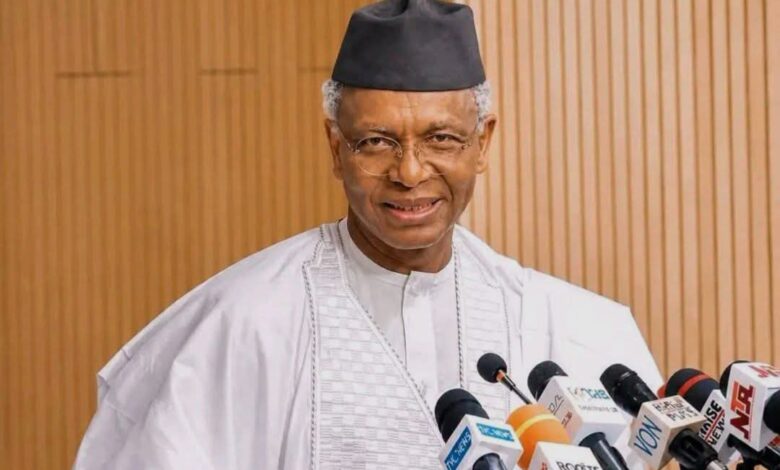
The continued detention of former Kaduna State Governor, Mallam Nasir El-Rufai, has triggered a fresh political debate over its possible impact on President Bola Ahmed Tinubu’s bid for re-election in 2027.
The development has increasingly become a subject of political calculations, with questions being raised over whether El-Rufai’s detention could weaken opposition forces and ultimately make Tinubu’s path to a second term easier—or instead galvanise opposition against the President.
Opening thus public discourse with the complicated but realistic question on his verified Facebook page was London-trained economic and speech writer, Musa Sanusi who simpler asked, “El-Rufai’s detention: Is it making Tinubu’s 2027 re-election easier—or harder?”
El-Rufai remains an influential figure in Nigeria’s political landscape, with networks extending beyond Kaduna and the North. His detention, therefore, has attracted considerable political attention and generated competing interpretations about its broader implications for the 2027 elections.
Those who believe the development could benefit Tinubu argue that keeping a prominent opposition figure out of circulation could reduce his ability to mobilise supporters, participate actively in political negotiations and influence the formation of opposition alliances ahead of the election.
But the opposite argument is equally strong.
Critics contend that the detention could turn El-Rufai into a political symbol for opponents of the administration, potentially strengthening anti-Tinubu sentiment and giving opposition parties another rallying point ahead of 2027.
The question, therefore, is whether the detention will diminish El-Rufai’s political influence or amplify it.
For Tinubu, the answer could depend largely on how the public perceives the circumstances surrounding El-Rufai’s detention, the legal process involved and the government’s handling of the matter.
If Nigerians perceive the detention as politically motivated, it could produce sympathy for El-Rufai and deepen concerns about the state of political freedoms ahead of the 2027 elections. If, however, the process is seen as transparent, lawful and driven by credible allegations, the political consequences for the administration could be very different.
The development also comes at a time when opposition parties and political actors are exploring possible alliances ahead of the 2027 presidential contest.
With El-Rufai potentially playing a role in those calculations, his continued absence from active political mobilisation could have consequences for the opposition’s strategy.
Ultimately, the central question remains unanswered: Will El-Rufai’s detention remove a major obstacle from Tinubu’s road to 2027—or create a new political force capable of making that road more difficult?
The answer may become clearer as the legal proceedings unfold and Nigeria’s opposition forces move closer to the 2027 electoral battle.