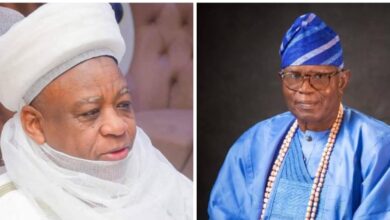
SULTAN MUHAMMAD SA’AD ABUBAKAR: The monarch who has made duty a covenant with his people
MAIN POINT:
A celebration of two decades of purposeful traditional leadership, religious responsibility, national unity and service to humanity

By BASHIR ADEFAKA
Royalty is often associated with honour, ceremony, prestige and privileges. Yet the deeper meaning of traditional authority lies in the responsibilities that accompany those privileges. For Sultan Muhammad Sa’ad Abubakar, the responsibilities of his office extend across religious, cultural, social and national boundaries.
As the Sultanate of Sokoto celebrates the 20th Coronation Anniversary of His Eminence, Alhaji Muhammad Sa’ad Abubakar III, CFR, mni, the occasion presents an opportunity to reflect on a reign that has placed duty, faith, peace, national unity and service to humanity at the heart of traditional leadership in Nigeria.
Twenty years on the throne, the Sultan’s story is not merely one of royal succession or the preservation of an ancient institution. It is also a story of responsibility: the responsibility of a monarch to his people, a religious leader to his community, a statesman to his country and a servant of God to humanity.
It is against this background that the description, “Sultan Muhammad Sa’ad Abubakar: The Most Dutiful Monarch in Nigeria,” becomes a fitting tribute to a reign whose defining feature is the enormous weight of responsibility attached to the office he occupies.
For a monarch whose influence extends beyond the boundaries of Sokoto State, the Sultan’s duties are neither confined to palace affairs nor limited to the spiritual concerns of Nigerian Muslims. His position places him at the intersection of traditional authority, religious leadership, interfaith engagement and national cohesion.
To appreciate the significance of his 20th anniversary, therefore, one must look beyond the splendour of the throne and examine the obligations that come with it.
FROM THE MILITARY TO THE THRONE
Born on August 24, 1956, Sultan Muhammad Sa’ad Abubakar came to the throne on November 2, 2006 following the demise of his predecessor, Sultan Muhammadu Maccido, who died in the October 29, 2006 air disaster near Abuja.
Before his emergence as the 20th Sultan of Sokoto, Muhammad Sa’ad Abubakar had pursued a distinguished military career, attaining the rank of Brigadier-General in the Nigerian Army.
His military background is an important part of the story of his leadership. The military profession demands discipline, organisation, courage, loyalty and an understanding of responsibility within a structured chain of command.
Although traditional leadership differs fundamentally from military service, the values of discipline and duty are relevant to both.
Upon ascending the throne, he assumed responsibility for an institution whose historical and spiritual significance reaches back to the nineteenth-century Sokoto Caliphate established under the leadership of Sheikh Usman Dan Fodio.
The Sultanate is not simply a royal establishment. It is also an institution deeply connected to Islamic scholarship, religious guidance, traditional administration and the historical identity of a substantial part of Nigeria’s Muslim population.
To occupy that throne is to inherit a legacy that must be protected, interpreted and transmitted to future generations.
The Sultan’s 20-year journey is therefore a measure not merely of time served but of the continuing responsibility to preserve the dignity of that institution while responding to the changing realities of contemporary Nigeria.
THE BURDEN OF DUTY BEHIND THE CROWN
Royalty is often associated with honour, ceremony, prestige and privileges. Yet the deeper meaning of traditional authority lies in the responsibilities that accompany those privileges.
For Sultan Muhammad Sa’ad Abubakar, the responsibilities of his office extend across religious, cultural, social and national boundaries.
As the spiritual leader of Nigerian Muslims within the traditional framework of the Sultanate, his position carries significant expectations concerning religious guidance, the preservation of Islamic values, the promotion of peaceful coexistence and the maintenance of unity among the faithful.
His role as President-General of the Nigerian Supreme Council for Islamic Affairs (NSCIA) further places him at the centre of national Muslim affairs.
These responsibilities require sustained engagement with Islamic scholars, traditional rulers, public institutions, community leaders and other stakeholders.
They also demand the ability to navigate disagreements without losing sight of the broader interests of the people.
This is where the idea of a dutiful monarch becomes particularly significant.
A monarch’s duty is not exhausted by attending ceremonies, receiving dignitaries or issuing statements on important occasions. It is demonstrated by the willingness to shoulder responsibility when the country is confronted by difficult questions involving religion, security, social harmony and the future of its people.
The Sultan’s office gives him a platform from which to encourage dialogue, appeal for restraint, promote understanding and remind Nigerians that the preservation of peace is a shared responsibility.
The true value of such a platform lies in how responsibly it is used.
A FATHER FIGURE BEYOND THE BOUNDARIES OF SOKOTO
One of the defining expectations of traditional rulers in a diverse country such as Nigeria is that they should serve as symbols of identity and continuity while encouraging harmony among their people.
The Sultan of Sokoto occupies a particularly important position in this regard.
Although his traditional authority is rooted in Sokoto, the reach of his religious leadership and public engagement extends across the country.
Nigerian Muslims look to the Sultanate as an important institution of religious authority, while his national engagements bring him into contact with people and institutions beyond the Muslim community.
His position also creates opportunities to promote understanding between Muslims and Christians, particularly through interfaith initiatives and engagements with leaders of other religious communities.
As co-chairman of the Nigeria Inter-Religious Council (NIREC), alongside the Christian Association of Nigeria’s leadership, the Sultan participates in an institutional framework designed to encourage dialogue between the country’s two major religious communities.
Such a role is particularly important in a nation where religious misunderstandings, communal tensions and insecurity have sometimes placed enormous pressure on relationships between communities.
The task of promoting peaceful coexistence is neither simple nor accomplished through speeches alone. It requires patience, engagement, trust-building and a willingness to keep channels of communication open, even when disagreements arise.
No single religious or traditional leader can resolve all of Nigeria’s divisions. Nevertheless, leaders who encourage dialogue and mutual respect can contribute to an environment in which peaceful solutions become more achievable.
That is an important dimension of the responsibility carried by the Sultan of Sokoto.
RELIGION AS A FORCE FOR PEACE AND HUMANITY
The Sultan’s religious leadership is inseparable from the expectations that accompany his office.
Islam places considerable emphasis on justice, compassion, trustworthiness, responsibility and the welfare of society. These values provide an important moral framework for religious leadership.
In a country confronting insecurity, poverty, unemployment, social inequality and mistrust, religious leaders have a responsibility to encourage conduct that strengthens society rather than deepens its divisions.
The Sultan’s national platform provides an opportunity to reinforce these principles.
His public engagements with religious institutions, traditional rulers, government representatives, diplomats and civil society organisations reflect the wide range of relationships through which traditional and religious leadership can contribute to public life.
His involvement in international interfaith engagement, including his association with Religions for Peace, also connects his work to wider conversations about religious cooperation and peaceful coexistence.
Such engagement matters because the challenges facing contemporary societies rarely respect religious, ethnic or national boundaries.
Violent extremism, intolerance and the persecution of innocent people are concerns that demand cooperation among communities and institutions.
The appropriate response from religious leadership is to uphold the sanctity of human life, reject the abuse of religion to justify violence and encourage communities to resolve differences through peaceful means.
For the Sultan, the moral authority of his office is most meaningfully exercised when religious conviction is accompanied by a commitment to justice, compassion and the protection of human dignity.
HIS DUTY TO NIGERIA: ABOVE PARTISAN DIVISIONS
Nigeria’s political environment presents a demanding test for traditional rulers and religious leaders.
Political competition can divide communities, strain relationships and turn differences of opinion into prolonged hostility. In such circumstances, institutions that command respect across different sections of society can help preserve channels of communication.
The Sultan’s position requires particular sensitivity in this regard.
As a prominent traditional and religious leader, he engages with public officials, political figures and other national stakeholders. Such engagements are a normal part of the responsibilities of an institution that remains relevant to contemporary public life.
However, engagement with political actors must be distinguished from partisan allegiance.
The value of a traditional institution’s national standing is strengthened when it can remain a place for dialogue among people with different political interests.
For a country approaching another electoral cycle, the importance of responsible leadership cannot be overstated.
Nigerians need political competition that respects the law, electoral processes that command public confidence and public discourse that does not encourage violence or religious hostility.
Traditional rulers and religious leaders can contribute by urging politicians to conduct themselves responsibly, encouraging citizens to participate peacefully in democratic processes and reminding all sides that the survival of the country is more important than the victory of any individual or political party.
The Sultan’s national responsibilities are best understood within this broader expectation: to promote the welfare of Nigerians and the stability of the country without allowing the institution he leads to become a vehicle for unnecessary partisan division.
Such a responsibility is not a minor addition to his royal duties. It is one of the most consequential obligations attached to his position.
THE SIGNIFICANCE OF THE 20TH ANNIVERSARY
Twenty years on the throne is a significant milestone for any monarch, particularly one who presides over an institution of considerable historical and religious importance.
It represents two decades of continuity, institutional stewardship and public responsibility.
But anniversaries also offer opportunities for honest reflection.
The celebration of a monarch should not be reduced to praise of his personality or the enumeration of the dignitaries who attend the occasion. It should also encourage reflection on the institution he represents, the expectations of the people and the responsibilities that remain ahead.
For the Sultanate of Sokoto, the anniversary provides an opportunity to reaffirm the values that have sustained the institution across generations: faith, learning, service, justice, respect for tradition and concern for the welfare of society.
It is also an opportunity to consider how traditional institutions can remain relevant to younger generations.
Nigeria’s youth face enormous challenges, including limited economic opportunities, insecurity, educational difficulties and uncertainty about the future.
Traditional and religious institutions can contribute by encouraging education, moral responsibility, peaceful civic engagement and productive relationships between communities and public authorities.
While these institutions cannot replace the responsibilities of government, they can help foster the social values and community relationships necessary for national development.
The Sultan’s next chapter on the throne will be shaped not only by the preservation of historical traditions but also by how effectively the institution continues to engage with the needs and aspirations of contemporary Nigerians.
A DUTY THAT DOES NOT END WITH CEREMONY
There is a reason the description of a dutiful monarch carries meaning beyond the language of celebration.
A throne is not merely a seat of honour. It is a position of trust.
The people look to traditional rulers for guidance, reassurance, mediation and the preservation of their cultural heritage. Religious communities also expect their leaders to uphold the values they profess.
These expectations create obligations that continue long after ceremonies have ended and visiting dignitaries have departed.
For the Sultan of Sokoto, the responsibilities of his office encompass the maintenance of the dignity of the Sultanate, the advancement of Muslim communal interests, the encouragement of religious harmony and participation in national conversations affecting the welfare of Nigerians.
The demands are substantial because the office itself is substantial.
Yet no fair assessment of a monarch’s performance should depend solely on admiration or ceremonial recognition. It should also consider the institution’s contribution to peace, public trust, social cohesion and the welfare of the people.
It is through these standards that the meaning of duty can be examined beyond personal affection or royal protocol.
And it is through the same standards that the next phase of the Sultan’s reign should be approached.
THE MAN, THE MONARCH AND THE MISSION AHEAD
At 70 years of age and 20 years on the throne, Sultan Muhammad Sa’ad Abubakar III occupies a distinctive place in Nigeria’s traditional and religious landscape.
His journey from military service to the Sultanate illustrates the transition from one form of national responsibility to another.
His present position requires him to preserve an inherited institution while responding to the realities of a changing country.
It calls for the wisdom to appreciate differing perspectives, the patience to encourage dialogue and the courage to uphold principles of peace, justice and human dignity.
Above all, it requires an understanding that the authority of a traditional ruler is accompanied by obligations to the people and to future generations.
The Sultan’s anniversary should therefore be celebrated as an occasion of gratitude, reflection and renewed commitment to the values that give traditional leadership its enduring relevance.
For the people of Sokoto, it is an opportunity to celebrate the continuity of their revered institution. For Nigerian Muslims, it is an opportunity to reflect on the responsibilities of religious leadership. For the wider Nigerian community, it is a reminder of the contribution that traditional institutions can make to peace, mutual understanding and national cohesion.
The task ahead remains significant. Nigeria needs more dialogue, stronger community relationships, greater respect for human life and a collective commitment to resolving disagreements without violence.
Traditional rulers, religious leaders, elected officials and citizens all have roles to play in achieving these objectives.
The Sultan’s 20th anniversary offers an opportunity to renew that collective commitment.
CONCLUSION: TWENTY YEARS OF THE THRONE, A CONTINUING CALL TO SERVICE
As Sultan Muhammad Sa’ad Abubakar III marks two decades on the throne of his forebears, the enduring message of his anniversary is that leadership is inseparable from responsibility.
The crown confers honour, but duty gives it meaning.
The throne commands respect, but service sustains its moral authority.
And tradition remains relevant when it continues to offer guidance, preserve identity and contribute to the welfare of society.
To celebrate the Sultan at 20 is, therefore, to celebrate the enduring importance of responsible traditional leadership in Nigeria.
It is to recognise the demanding expectations attached to his position and to encourage the continued use of his influence in the service of peace, religious understanding, national unity and human dignity.
Sultan Muhammad Sa’ad Abubakar III at 20: a monarch whose crown carries the weight of duty, whose office commands the responsibility of service, and whose next chapter offers another opportunity to contribute to the peace and unity of Nigeria.
May Almighty Allah continue to grant His Eminence good health, wisdom, strength and a long life of service. May Allah preserve the Sultanate of Sokoto, bless its people and guide the Sultan in the discharge of his sacred responsibilities.
May Nigeria enjoy lasting peace, justice, security and unity. Amiin.
Bashir Adefaka, CEO/Editor-in-Chief of Defender Media Limited publishers of The DEFENDER Newspaper, is Coordinator, Media Team of the Sultan of Sokoto.