Trump Threatens to Declare Strait of Hormuz U.S. Territory as Iran Rejects Ceasefire Claims
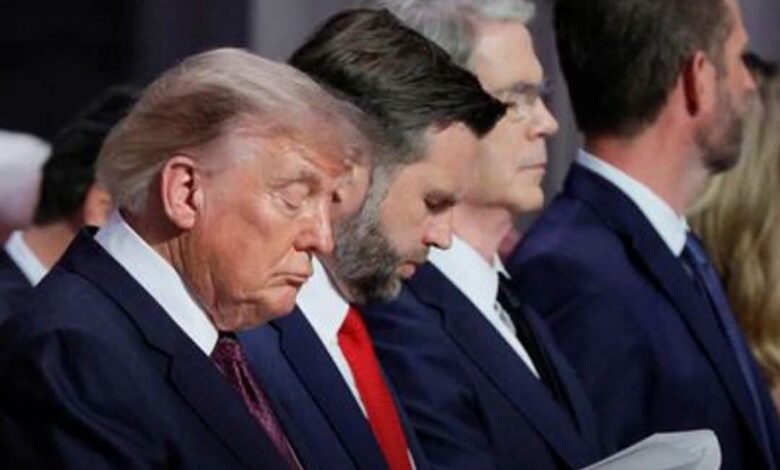
“Everyone is allowed to dream. So, when Trump is dreaming and saying what he saw in his dream, nobody should blame him. He only needs someone who is strong and courageous enough to wake him up to reality,” the analyst said.
U.S. President Donald Trump has said he could soon declare the strategic Strait of Hormuz a territory of the United States, escalating his rhetoric amid the continuing confrontation between Washington and Tehran.

Speaking in New York on Friday, Trump said that after what he described as the defeat of Iran, he would “pretty soon” declare the Strait of Hormuz a U.S. territory. He also claimed that the United States currently has a blockade in place and that ships cannot pass through the waterway without U.S. approval.
The remark, however, should not be interpreted as an actual U.S. move to annex the waterway. U.S. media reports indicated that Trump may have been joking, with a senior White House official reportedly saying the president had not discussed such a proposal with his advisers.
Iran swiftly rejected Trump’s statement. Iranian officials reiterated that the Strait of Hormuz remains under Iranian control and dismissed the idea that the United States could simply claim sovereignty over the strategically important waterway.
Iran Claims Another U.S. Drone Downed
Meanwhile, Iran’s Islamic Revolutionary Guard Corps said on Friday August 14, 2026 that its forces had shot down a U.S. MQ-9 Reaper drone over Hormozgan Province in southern Iran.
The claim has been reported by multiple outlets, but the Iranian military’s account should be distinguished from independently verified facts concerning how the drone was brought down and the circumstances surrounding the incident.
The reported incident comes as tensions remain high around the Strait of Hormuz, where maritime traffic has been severely disrupted. The strategic waterway is a major route for global energy shipments, making the confrontation between Iran and the United States a significant concern for international oil and shipping markets.
Dispute Over the 60-Day Agreement
There is also a disagreement between Washington and Tehran over the nature of the Islamabad Memorandum of Understanding.
Earlier reports described the agreement as establishing a 60-day diplomatic period following the June agreement between Iran and the United States. Iranian Foreign Minister Abbas Araghchi, however, has maintained that the memorandum was intended to formally end the war and begin a subsequent diplomatic process, rather than create a conventional 60-day ceasefire requiring an extension.
Pakistan, which facilitated the diplomatic process, described the agreement as a major step toward ending the conflict and urged the parties to implement it and work toward a final agreement.
Against this background, reports that Iran simply “refused to extend a 60-day ceasefire” should therefore be treated with caution. The two sides have publicly differed over how the agreement should be characterised and what obligations it created.
Analyst Criticises Trump’s Remarks
Reacting to Trump’s comments about the Strait of Hormuz, an analyst described the statement as unrealistic and questioned whether the president was being serious.
“Everyone is allowed to dream. So, when Trump is dreaming and saying what he saw in his dream, nobody should blame him. He only needs someone who is strong and courageous enough to wake him up to reality,” the analyst said.
Comparing Trump’s remarks with the broader behaviour of politicians, the analyst added: “I’ve warned all these politicians to stop taking drugs; they won’t listen. See what’s going on. See what politicians are saying.”
He further argued that repeated controversial statements from political leaders were damaging public confidence in them, claiming that “nobody is taking them seriously anymore, not even their supporters.”
The analyst also referred to Trump’s apparent laughter immediately after making the Strait of Hormuz comment as an indication that the president may not have been making a literal policy announcement.
Iran Rejects Calls to Back Down
Iran has continued to reject U.S. demands concerning the Strait of Hormuz and negotiations, insisting that any diplomatic process must address Tehran’s concerns and the circumstances that led to the resumption of hostilities.
Iranian officials have also pushed back against questions about threats against Trump. In one reported response, an Iranian position was paraphrased as saying there was no need to “kill Trump” because, in their view, he was already damaging the United States himself.
That statement, like other claims and rhetoric emerging from both sides of the conflict, should be understood as political commentary rather than an independently established fact.
For now, the Strait of Hormuz remains at the centre of the confrontation. Trump’s threat to declare the waterway U.S. territory, Iran’s continued assertion of control, the reported downing of an American MQ-9 Reaper and the unresolved dispute over the Islamabad agreement all point to a conflict in which military pressure and political rhetoric remain closely intertwined.