Trump administration offers 15-point ceasefire plan to Iran
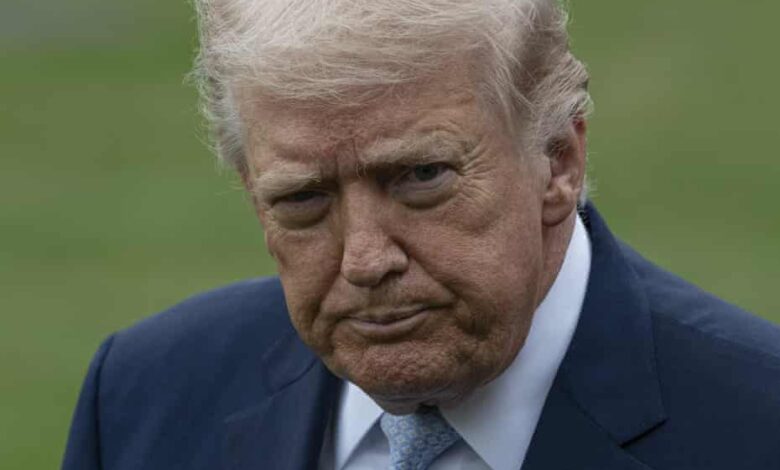
The Trump administration has offered a 15-point ceasefire plan to Iran as the US military prepares to call up at least 1,000 more troops to supplement the 50,000 already in the Middle East.


According to a person briefed on the proposal, the plan was submitted to Iran by intermediaries from Pakistan, who have offered to host renewed negotiations between Washington and Tehran.
The New York Times was the first to report that the plan had been delivered to Iranian officials.
The Pentagon is also in the process of deploying two Marine units that will add about 5,000 Marines and thousands of sailors to the region.
Iran war live updates: For all the latest news on the Middle East war, read our blog.
The moves are being framed as US President Donald Trump manoeuvring to give himself “max flexibility” on what he will do next, the person, who spoke anonymously because they were not authorised to speak publicly, added.
Israeli officials, who have been advocating for Mr Trump to continue the war against Iran, were surprised by the submission of a ceasefire plan, the person said.
The White House did not respond to requests for comment.
Earlier in the day, Mr Trump said the US was in talks with Iran to end the war as diplomatic efforts picked up and Iran issued a newly defiant statement.
Meanwhile, air strikes battered the Islamic Republic while Iranian missiles and drones targeted Israel and sites across the region.
Tehran’s chokehold on the crucial waterway has snarled international shipping, sending fuel prices skyrocketing and threatening the world economy.
Donald Trump, wearing a pink tie and a dark suit, stands behind a lectern
Donald Trump says his administration is dealing with the “right people” in what he claims is a peace process with Tehran. (Reuters)
Iran scoffs at suggestion talks are underway
However, an Iranian military spokesperson mocked US attempts at a ceasefire deal on Wednesday, local time, raising questions about whether the 15-point plan proposed by Washington had a chance to succeed.
The comments from Lieutenant Colonel Ebrahim Zolfaghari, a spokesperson for the Iranian military’s Khatam Al-Anbiya Central Headquarters, which jointly commands Iran’s regular military and paramilitary Revolutionary Guard, came after the plan was submitted to Iran by intermediaries.
Mr Trump has said that American officials are negotiating with Iran on the plan, but Lieutenant Colonel Zolfaghari, in a recorded video statement that aired on state television, suggested there were no talks.
“Have your internal conflicts reached the point where you are negotiating with yourselves?” he said.
“Our first and last word has been the same from day one, and it will stay that way: Someone like us will never come to terms with someone like you. Not now, not ever.”
Any talks between the US and Iran would face monumental challenges. Many of Washington’s shifting objectives, particularly over Iran’s ballistic missile and nuclear programs, remain difficult to achieve.
It is not clear who in Iran’s government has the authority to negotiate — or would be willing to, as Israel has vowed to continue killing the country’s leaders.
Iran remains highly suspicious of the US, which, twice under the Trump administration, has attacked during high-level diplomatic talks, including with the February 28 strikes that started the current war.
At least 1,000 troops from the 82nd Airborne Division will be sent to the Middle East in the coming days, three people with knowledge of the plans told The Associated Press.
The 82nd Airborne is considered the US Army’s emergency response force and can typically be deployed on short notice.
It’s the latest addition of American troops after US officials last week said thousands of Marines aboard several navy ships would be heading to the region.