BACKING OFF THE BRINK: USS Abraham Lincoln pulls back as Iran’s missiles rewrite the map?
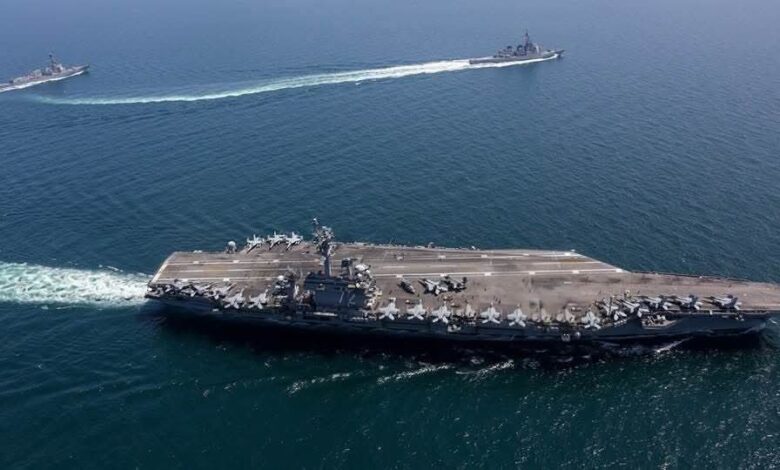
Early this morning, reports confirmed that the U.S. aircraft carrier strike group (AUG) led by the nuclear-powered USS Abraham Lincoln (CVN‑72) withdrew several hundred kilometers southwest of the Persian Gulf.


Let’s be clear: this is not a suspension of strike preparations against Iran.
This is a tactical retreat—a recalculation forced by reality.
The most likely reason for the pullback is simple: survivability. Remaining closer would have placed the carrier group squarely within range of Iran’s most dangerous anti‑ship weapons, including the Khalij Fars and Hormuz‑2 ballistic missiles (300–350 km range, with optoelectronic homing), as well as the Fateh‑313 and Zolfaghar missile families and multiple subsonic anti‑ship systems. The move also potentially reduces exposure to advanced threats such as the Chinese YJ‑18, should Iran possess or receive them.
There’s more.
Reports indicate the strike group repositioned itself behind Oman’s mountain ranges, suggesting a deliberate effort by the U.S. Navy to mask the carrier formation from Iranian radar and optoelectronic surveillance systems positioned in elevated terrain. In other words, the world’s most powerful navy is now using geography as cover.
Oman’s territory also becomes part of a broader A2/AD buffer, adding an extra layer of missile defense. Systems like Patriot PAC‑3 and NASAMS can now help thin out Iranian anti‑ship missiles and UAVs before they reach the carrier group. The withdrawal also buys time and space for SM‑6 interceptors and carrier-based aircraft to counter incoming threats.
This isn’t weakness—but it’s not dominance either.
It’s an admission that the Persian Gulf is no longer a free operating zone, and that Iran’s missile arsenal has fundamentally changed the risk equation. The carrier didn’t leave because the danger passed—it moved because the danger became too concentrated, too precise, and too lethal.
The message is clear:
Any war near Iran’s shores will be fought inside Iran’s envelope, on Iran’s terms, and at a cost Washington can’t ignore.
Posted as copied by Akintoye Obisesan, Diasporan South Af