Learn from France’s Emmanuel Macron how to respond to national emergency, ADC-PCC tells Tinubu
*Says Nigeria’s president lacks empathy
*As opposition Council faults him, contrasts his response to national tragedies with Atiku’s visit to Niger State
By OUR REPORTER

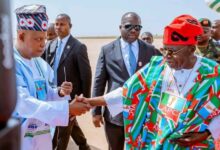
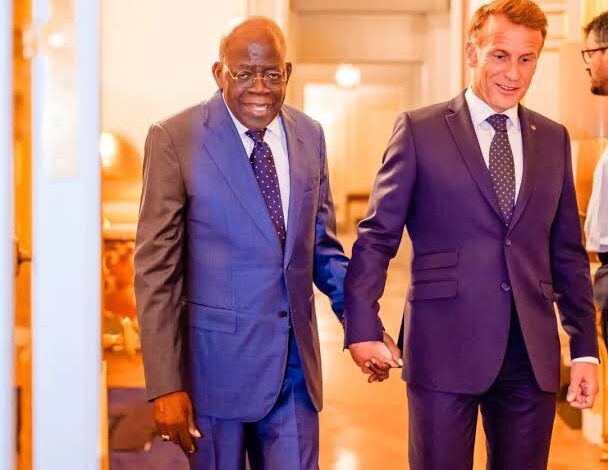
Macron postponed his scheduled state visit to Nigeria, initially planned for October 28–29, 2026, amid domestic challenges in France.
The African Democratic Congress Presidential Campaign Council (ADC-PCC) has criticised President Bola Ahmed Tinubu over what it described as his lack of empathy for Nigerians facing insecurity, hunger and economic hardship, urging him to learn lessons in responsive leadership from French President Emmanuel Macron.
The council’s reaction, contained in a statement signed by Kola Ologbondiyan, Director, Media and Publicity, ADC Presidential Campaign Council (ADC-PCC), follows reports that Macron postponed his scheduled state visit to Nigeria, initially planned for October 28–29, 2026, amid domestic challenges in France.
The proposed visit, which was also expected to include the France-Nigeria Business Forum in Lagos, was reportedly rescheduled for early 2027.
According to the ADC-PCC, the reported decision underscores the importance of a leader’s responsibility to remain attentive to pressing domestic concerns.
“A president will not travel when his home is contending with internal combustion,” a Nigerian official familiar with the development was quoted as saying
The council argued that the principle of placing citizens’ welfare at the centre of governance should guide leadership, particularly at a time when Nigerians are grappling with insecurity, rising living costs and other socioeconomic difficulties.
It cited persistent attacks and killings in Plateau, Niger, Benue, Zamfara, Kaduna, Kogi, Kwara, Katsina, Sokoto and other parts of the country, alongside reports of mass abductions, displacement of communities and unlawful detentions.
The ADC-PCC accused President Tinubu of failing to demonstrate sufficient public empathy in the face of these challenges, alleging that his official engagements have not adequately reflected the gravity of the suffering experienced by affected communities.
The council also raised concerns over a reported incident in Niger State involving the detention of more than 60 young Nigerians under allegedly inhumane conditions, with over 37 reportedly dying in custody.
It described the incident as a grave national concern that demanded urgent government attention, accountability and compassion for the affected families.
According to the council, President Tinubu’s response fell short of the level of public engagement it expected from the country’s leader.
It further claimed that Vice President Kashim Shettima’s eventual visit to the state came weeks after the incident and after former Vice President Atiku Abubakar had visited to commiserate with affected communities and bereaved families.
The ADC-PCC said Atiku’s visit reflected the importance of identifying with citizens during moments of grief, adding that public office holders should demonstrate concern not merely through official statements but also through visible engagement with affected people.
The council maintained that leadership requires more than the discharge of official duties, arguing that empathy, accountability and respect for human life are essential qualities in responding to national emergencies.
“President Macron has offered a reminder that the concerns of citizens must remain central to leadership. When a country faces a serious domestic crisis, its leadership must demonstrate urgency, compassion and a willingness to take responsibility,” the council said.
It urged the Tinubu administration to give greater priority to protecting lives, addressing insecurity and alleviating the economic hardship confronting Nigerians.
The ADC-PCC further called for greater accountability in the handling of incidents involving loss of life and alleged unlawful detention, insisting that affected families deserve answers and justice.
The council said Nigeria needs leadership that listens to citizens, responds decisively to emergencies and treats the protection of human life as a fundamental responsibility of government.