TINUBU’S BLAME GAME: How Can You Blame Opponents for the Hunger Created by Your Own Policies?
By BABA LAWAN
October 25, 2026
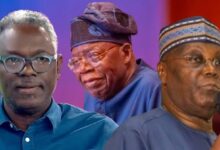

The fundamental question is simple: Who implemented the policies that have significantly affected the cost of living, and who is responsible for addressing their consequences?
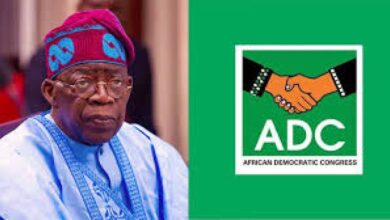
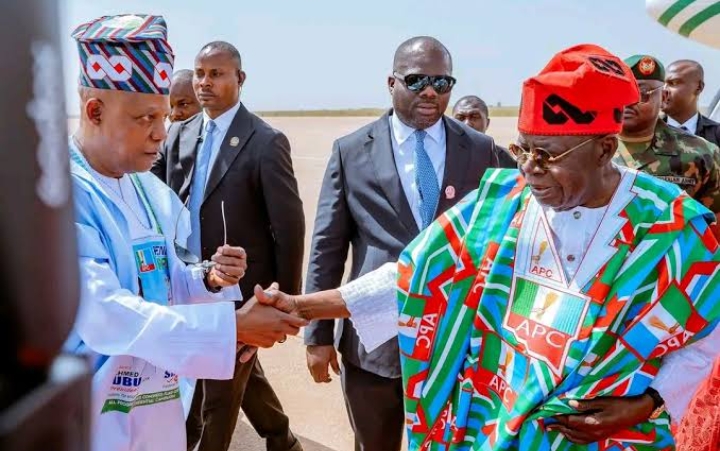
President Bola Ahmed Tinubu’s reported declaration at the APC presidential campaign flag-off in Kaduna on October 24, 2026, blaming opposition politicians for the hunger and poverty Nigerians are experiencing deserves serious scrutiny.
While the President has every right to defend his administration and criticise political opponents, he also has a responsibility to account for the consequences of policies implemented under his leadership.
The fundamental question is simple: Who implemented the policies that have significantly affected the cost of living, and who is responsible for addressing their consequences?
Nigeria’s economic problems did not begin with Tinubu’s presidency. Previous administrations contributed to the country’s structural weaknesses through corruption, insecurity, inadequate infrastructure, poor economic diversification and inconsistent policies. However, acknowledging these historical failures does not absolve the present administration of responsibility for its decisions.
A president cannot reasonably claim credit for improvements while transferring responsibility for every economic difficulty to his predecessors or political opponents.
The Impact of Fuel Subsidy Removal
One of the most consequential decisions of Tinubu’s administration was the removal of the petrol subsidy in May 2023.
Although the subsidy system had serious weaknesses, including corruption, smuggling and substantial fiscal costs, its removal had immediate consequences for ordinary Nigerians.
Petrol is not merely a commodity consumed by motorists. It is an essential input into transportation, agriculture, manufacturing and the distribution of goods.
When fuel prices rise, transport operators increase fares, farmers face higher production costs, traders spend more on moving goods, and manufacturers pay more to operate their businesses. These additional expenses are often transferred to consumers through higher prices.
Consequently, the cost of food, transportation and other necessities rises, placing enormous pressure on households whose incomes have not increased proportionately.
The subsidy system required reform, but the manner and consequences of its removal deserve critical examination.
The question is not simply whether subsidy removal was economically defensible, but whether the government adequately prepared citizens for the transition, protected vulnerable households and ensured that the savings generated translated into visible improvements in public welfare.
Economic Theory and the Reality of Hunger
The renowned economist John Maynard Keynes, in his 1936 work, The General Theory of Employment, Interest and Money, emphasised the importance of employment, effective demand and economic stability.
His ideas remind policymakers that economic decisions must be evaluated beyond government revenue and financial indicators.
When citizens lose purchasing power, businesses may experience declining sales, reduce production or lay off workers.
Although Keynes’s work does not establish that every subsidy should be retained, it highlights the importance of considering the wider consequences of economic policy.
Tinubu’s administration must demonstrate that the immediate costs imposed on Nigerians are producing sustainable improvements in employment, productivity and real incomes.
Another significant factor is the depreciation of the naira following the foreign-exchange reforms introduced in 2023.
The government intended to reduce distortions in the foreign-exchange market, improve transparency and attract investment. These objectives were legitimate, but the sharp depreciation of the currency also increased the cost of imported goods and production inputs.
Nigeria depends on imported machinery, industrial equipment, medicines and various agricultural inputs. When the naira loses value, importers generally require more naira to purchase the same amount of foreign currency.
These additional costs can be transferred to consumers. Even locally manufactured products may become more expensive when producers depend on imported raw materials, equipment or packaging.
The International Monetary Fund identified exchange-rate depreciation, higher energy costs and food-supply constraints among the factors contributing to Nigeria’s elevated inflation in 2024.
These factors demonstrate why the country’s economic hardship cannot reasonably be attributed simply to opposition politicians.
If the administration believes its foreign-exchange reforms were necessary, it must explain how those reforms will produce lasting currency stability, restore purchasing power and reduce the cost of living.
The success of economic policy should ultimately be measured by its impact on citizens’ lives, not merely by the intentions of policymakers.
Economic Growth Must Improve Citizens’ Lives
Nobel Prize-winning economist Amartya Sen provides a useful framework for evaluating this issue.
In Development as Freedom (1999), Sen argued that development should be understood through the expansion of people’s real capabilities and opportunities, rather than economic growth alone.
A country may record positive gross domestic product growth while millions of its citizens struggle to afford food, healthcare, education and decent housing.
A worker whose salary remains unchanged while the cost of essential goods increases substantially may become poorer in real terms, even when official statistics indicate economic expansion.
Sen’s perspective challenges the tendency to celebrate macroeconomic improvements without examining household welfare.
Economic growth becomes meaningful when it improves people’s ability to live healthy, productive and dignified lives.
Tinubu’s government must demonstrate progress through affordable food, improved wages, employment opportunities and access to essential services.
The late Nigerian political scientist Professor Claude Ake offers another important perspective.
In Democracy and Development in Africa (1996), Ake emphasised the importance of placing ordinary Africans and their interests at the centre of development.
His argument is particularly relevant to Nigeria, where economic reforms can improve selected government revenue indicators while imposing substantial immediate costs on vulnerable households.
Development should not be evaluated exclusively through the interests of governments, investors or financial institutions. It must also be assessed by examining who benefits, who bears the costs and whether citizens enjoy meaningful opportunities to influence decisions affecting their welfare.
Applied to Tinubu’s administration, Ake’s perspective raises an important question: If the reforms are intended to improve Nigeria’s economic future, what measures are being taken to ensure that ordinary Nigerians can survive the transition?
Joseph Stiglitz, another Nobel Prize-winning economist, has written extensively about economic crises, reform design and social protection.
His work highlights the importance of implementing economic reforms carefully and protecting vulnerable populations from their adverse consequences.
Nigeria’s subsidy removal and foreign-exchange reforms may have addressed genuine economic distortions. However, reforms require complementary policies, including support for farmers, improved rural security, affordable agricultural inputs, reliable infrastructure and effective assistance for low-income households.
If the government saves money through subsidy removal, Nigerians have a legitimate right to ask how those resources are being spent and what measurable benefits they are producing.
A reform cannot be considered fully successful merely because it has been announced or implemented. Its outcomes must be demonstrated through evidence.
Public Debt and Accountability
The question of public borrowing further complicates the administration’s economic record.
Borrowing is not inherently wrong. Governments may borrow to finance infrastructure, electricity, education, healthcare and industrial development.
However, the value of borrowing depends on how the funds are used and whether they generate sufficient economic and social returns.
Nigeria’s Debt Management Office reported total public debt of approximately ₦153.29 trillion as of September 30, 2025.
This figure included federal, state and Federal Capital Territory debt and should not be attributed exclusively to Tinubu’s administration.
Nevertheless, the scale of public debt raises legitimate questions about expenditure priorities, debt servicing and the effectiveness of public investment.
How much borrowed money has improved electricity supply, expanded employment, strengthened agriculture or reduced production costs?
How much has generated sustainable economic activity capable of supporting future debt repayments?
These are reasonable questions, not political hostility.
Borrowing that finances productive infrastructure can strengthen the economy. However, borrowing that produces limited public value may leave future generations with substantial obligations and insufficient benefits.
The depreciation of the naira creates another complication because the domestic-currency cost of servicing foreign-currency debt can rise even when the amount owed in dollars remains unchanged.
This makes prudent borrowing, transparent expenditure and productive investment particularly important.
Lessons from Ibn Khaldun
The historical perspective of Ibn Khaldun, the 14th-century North African thinker, is also instructive.
In Al-Muqaddimah, he examined the relationship between taxation, productive activity, political authority and state prosperity.
His analysis reminds us that government revenue cannot be separated from the economic conditions that enable citizens and businesses to prosper.
A government requires revenue to provide essential services, but its fiscal policies must also preserve productive activity.
If energy costs, inflation and other financial burdens place excessive pressure on businesses and households, investment and consumption may weaken, undermining the same economic activity on which future government revenue depends.
This is why economic reforms must be accompanied by measures that stimulate production, protect vulnerable citizens and create opportunities for sustainable growth.
Opposition Parties Cannot Bear the Government’s Responsibility
Tinubu’s accusation against the opposition raises a fundamental question of political accountability.
Nigeria’s economic difficulties developed over several administrations, and previous leaders should be judged by their records. However, historical responsibility is different from present accountability.
The opposition does not control the federal government’s budget, implement its fuel subsidy policy or independently determine its foreign-exchange decisions.
The government in office has the responsibility to explain its policies, manage their consequences and demonstrate that they are improving the economy.
This does not mean that opposition parties are free from criticism.
Political leaders who previously held public office must also answer for their decisions and propose credible alternatives. Nevertheless, their past failures do not exempt the current administration from scrutiny.
A balanced assessment should acknowledge that subsidy reform was intended to address genuine fiscal problems and that foreign-exchange reform sought to correct longstanding distortions.
The government may also point to improvements in revenue collection, investment or infrastructure where reliable evidence supports those claims.
However, such achievements must be evaluated alongside inflation, household purchasing power, employment and the cost of essential goods.
The ultimate test is whether Nigerians can afford food, businesses can operate sustainably, workers can earn adequate incomes and young people can find productive employment.
These outcomes matter more to ordinary citizens than campaign declarations or isolated economic statistics.
Reform Must Deliver Tangible Benefits
The intellectual perspectives of Keynes, Amartya Sen, Joseph Stiglitz, Claude Ake and Ibn Khaldun offer a common lesson: economic policy must be judged by its consequences for productive activity, social welfare and long-term prosperity.
Their ideas do not require Nigeria to abandon reform. Rather, they require reform to be responsible, transparent and directed towards improving people’s lives.
President Tinubu should therefore explain how his administration’s policies will translate into affordable food, improved purchasing power, productive employment, stable prices and sustainable economic development.
If the reforms are working, the government should demonstrate their benefits through measurable improvements in citizens’ living conditions.
A president cannot reasonably claim credit for the benefits of his policies while assigning all their adverse consequences to his political opponents.
Accountability must accompany authority.
Hunger is not an opposition party. Poverty is not a campaign slogan. And economic recovery cannot be established by political declarations alone.
Nigeria needs policies that increase domestic production, strengthen public services, create employment and restore public confidence.
It also needs transparent borrowing, responsible fiscal management and leaders willing to listen to criticism rather than dismiss it as political hostility.
Ultimately, the success of any administration should be measured by whether it creates the conditions in which citizens can live with dignity, security and opportunity.
That is the standard against which Tinubu’s government should be judged, just as every previous and future administration must be judged by the same principle.
— Baba Lawan