Even At N1,800 Per Kg Of Gas, Some Nigerian Households Have Not Cooked For Three Days Over Scarcity
By ABANIKANDA OLUMORO (UK)


“More troubling is the apparent absence of affordable alternatives. With kerosene also beyond the reach of many ordinary families, the question of how Nigerians will survive the continuing scarcity of cooking gas remains a serious concern.”
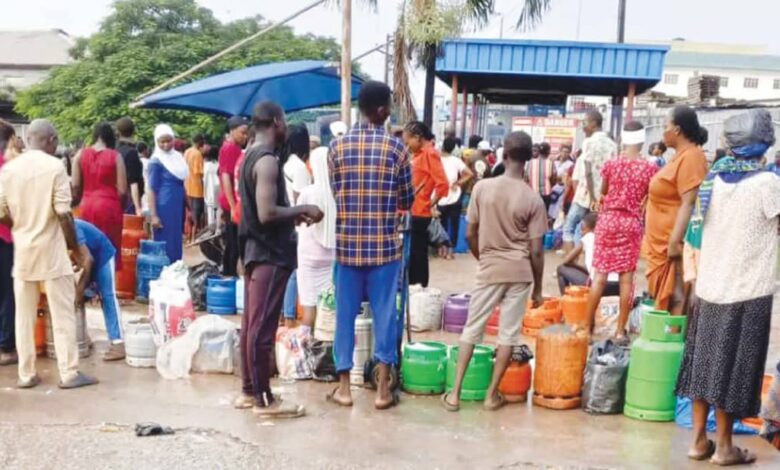
Even at N1,800 per kilogram, some Nigerian households have reportedly gone three consecutive days without cooking because of the scarcity of cooking gas, presenting another disturbing picture of the hardship confronting ordinary citizens under the administration of President Bola Ahmed Tinubu.
The situation raises serious questions about the ability of the Federal Government to guarantee the basic necessities of life for Nigerians, particularly at a time when the ruling All Progressives Congress (APC) and the Tinubu-led administration continue to present themselves as the country’s best option ahead of the 2027 general elections.
For millions of Nigerians, however, the immediate concern is not political propaganda or electoral calculations but survival. How are households expected to cope with a situation in which cooking gas has become increasingly expensive and, even at N1,800 per kilogram, is difficult to find?
More troubling is the apparent absence of affordable alternatives. With kerosene also beyond the reach of many ordinary families, the question of how Nigerians will survive the continuing scarcity of cooking gas remains a serious concern.
For households that have embraced cooking gas as their primary domestic fuel, the situation is particularly distressing. Families must now contend with the double burden of rising food prices and the difficulty of obtaining the energy required to prepare meals.
At a time when the cost of living continues to squeeze household incomes, the inability to secure cooking fuel adds another dimension to the hardship Nigerians are experiencing.
Yet, rather than concentrating public attention on how to ease the suffering of citizens, the country’s political atmosphere appears increasingly dominated by the struggle for power ahead of 2027.
From Sokoto to Kebbi, allegations of attacks and intimidation involving opposition political parties, particularly the African Democratic Congress (ADC) and the Nigeria Democratic Congress (NDC), have continued to generate concerns about political tolerance and democratic freedoms.
The reported disruption of an NDC town hall meeting in Oregun, Ikeja, Lagos State, is another development that raises questions about the safety of opposition political activities as the country approaches another election cycle.
These incidents, alongside the economic difficulties confronting ordinary Nigerians, present a troubling picture of national priorities.
Even the reported endorsement of President Tinubu’s re-election bid by some Yoruba traditional rulers, who expressed satisfaction with his economic policies and called for continuity beyond 2027, cannot automatically translate into public acceptance of the administration’s performance.
The fundamental question remains: how does the APC intend to convince Nigerians that it deserves another mandate when many households are struggling to afford food and obtain the fuel needed to cook it?
Political endorsements, campaign slogans and claims of economic progress must ultimately be measured against the everyday experiences of citizens.
A government is not judged merely by the number of political endorsements it receives or the strength of its campaign machinery. It is judged by its ability to protect lives, provide economic opportunities and ensure that citizens can afford basic necessities without enduring unnecessary hardship.
As the 2027 elections approach, Nigerians will have to decide whether the prevailing economic realities justify another four years of APC government.
For families who have not cooked for three days despite the price of gas reaching N1,800 per kilogram, the debate about political continuity may sound distant. Their immediate concern is much simpler: how to survive and provide their next meal.
That is the reality the Tinubu administration and the APC must answer to.