Atiku’s presidential fate lies with Nigerians, not Osuntokun, Says Media Adviser
Ibe equally challenged Osuntokun’s argument that another northern presidency would violate an expectation that power should remain in the South for eight years.
Paul Ibe, media adviser to former Vice President Atiku Abubakar, has criticised Akin Osuntokun over his article questioning Atiku’s presidential ambition, insisting that the former vice president’s political fate will ultimately be determined by Nigerian voters.
Ibe made the position known in an opinion article titled “Atiku’s Fate Will Be Decided by Voters, Not Osuntokun’s Tales by Moonlight,” published by The News Chronicle on Sunday, October 25, 2026.
He was reacting to Osuntokun’s article, “Atiku Abubakar Cannot Heckle His Way to the Presidency,” published in THISDAY on October 16, 2026.
Ibe described Osuntokun’s intervention as a mixture of selective history, political prejudice and recycled allegations, arguing that it relied on disputed accounts of private conversations rather than substantive assessments of Atiku’s presidential credentials.
He questioned Osuntokun’s reliance on an account attributed to former Cross River State Governor Donald Duke, who reportedly claimed that former military President Ibrahim Babangida once told former President Olusegun Obasanjo that Atiku could not rule Nigeria.
According to Ibe, the alleged conversation, said to have occurred more than two decades ago, should not be treated as a definitive judgment on Atiku’s suitability for the presidency.
He challenged those promoting the account to provide independent corroboration, asking whether Babangida had publicly authenticated the precise words attributed to him.
Ibe also questioned why an alleged private assessment from an earlier political era should constitute a permanent disqualification from democratic leadership.
Ibe Cites Obasanjo’s 2018 Endorsement
The media adviser argued that Osuntokun’s position overlooked Obasanjo’s public endorsement of Atiku for the presidency on October 11, 2018.
He recalled that Obasanjo, despite their previous disagreements, reconciled with his former deputy and publicly acknowledged his leadership credentials.
Ibe quoted Obasanjo as saying, “You surely understand the economy better.”
He added that the former president had also praised Atiku’s business experience, national and international connections, accessibility and capacity to provide leadership.
According to Ibe, Obasanjo’s public declarations deserved consideration alongside the alleged private conversation attributed to Babangida.
He argued that a balanced historical assessment should examine the full context of Atiku’s relationships with both former leaders rather than selectively rely on accounts that support a predetermined political conclusion.
Ibe maintained that neither Obasanjo nor Babangida had the authority to determine who could govern Nigeria, insisting that the ultimate decision rested with the electorate.
Age, Experience and Zoning
Ibe also faulted Osuntokun’s argument that Atiku’s age and repeated attempts to become president should persuade him to abandon his ambition and mentor younger politicians.
He described the argument as unpersuasive, maintaining that age and electoral experience should be assessed consistently across all presidential candidates, including incumbent President Bola Ahmed Tinubu.
According to him, age alone neither establishes competence nor automatically disqualifies an individual from leadership.
He argued that candidates should instead be assessed on their judgment, capacity, integrity, policies and ability to assemble a credible governing team.
Ibe said Atiku had experience in public administration, economic management, enterprise development and national leadership, adding that these credentials remained open to public scrutiny.
He equally challenged Osuntokun’s argument that another northern presidency would violate an expectation that power should remain in the South for eight years.
While acknowledging the importance of regional balance to national cohesion, Ibe argued that zoning was a political arrangement rather than a constitutional prohibition against qualified Nigerians seeking elective office.
He maintained that regional equity should be considered alongside competence, performance, national security and the economic welfare of citizens.
Ultimately, he said, it was the responsibility of voters to determine how these considerations would influence their electoral choices.
Opposition Coalition and Presidential Accountability
Ibe also rejected the suggestion that Atiku was principally responsible for divisions within the opposition.
He argued that opposition fragmentation could not reasonably be attributed to one individual without considering the ambitions, decisions and conduct of other political actors.
According to him, political parties are collective institutions, and responsibility for their successes and failures should be assessed accordingly.
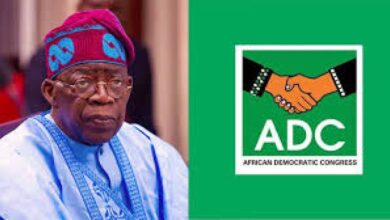
He noted that Atiku had participated in efforts to build a broader opposition coalition and was now leading the ADC presidential ticket alongside former Minister of Transportation Rotimi Amaechi.
Ibe said the coalition’s ability to persuade Nigerians would ultimately be determined through the democratic process rather than assumptions about Atiku’s electability.
He also dismissed criticism of Atiku’s reference to the President as “Bola,” arguing that using the President’s given name was neither a constitutional offence nor necessarily an expression of disrespect.
He maintained that the substance of political accountability should take precedence over arguments about titles and forms of address.
According to Ibe, public discourse should focus more on the consequences of government policies for household incomes, workers’ purchasing power, community security and the welfare of ordinary Nigerians.
He argued that these issues deserved greater attention than alleged private conversations from more than two decades ago.
‘Nigerians Will Decide’
Ibe acknowledged that Osuntokun was entitled to his political opinions and could argue against Atiku’s presidential ambition.
However, he maintained that a commentator’s personal assessment should not be presented as the verdict of the Nigerian electorate.
He insisted that presidential ambition could neither be granted nor extinguished by the approval of political columnists.
According to him, Nigerians would have the opportunity to assess the competing candidates, examine their records, consider their proposals and exercise their constitutional right to choose their next president.
Ibe concluded that Atiku did not require Osuntokun’s permission to seek the presidency, just as Tinubu did not require the columnist’s endorsement to pursue re-election.
Both politicians, he said, must submit themselves to the judgment of the electorate.
He reiterated that Atiku’s political future would be determined by voters rather than Osuntokun’s personal views, disputed anecdotes or historical interpretations.
Ibe, who writes from Abuja, is the media adviser to former Vice President Atiku Abubakar.