Tinubu appoints Gen Famadewa as Homeland Security Adviser
By OUR REPORTER
The presidency added that the appointment aligns with Tinubu’s broader “Renewed Hope Agenda,” particularly its focus on restoring public confidence in governance and improving national security outcomes.
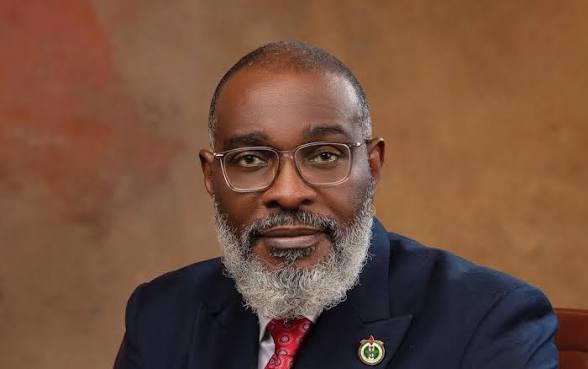
President Bola Tinubu has created the position of Special Adviser on Homeland Security, appointing retired Major General Adeyinka Famadewa to pioneer the office in what marks a significant shift in Nigeria’s federal security structure.
The appointment, announced on Monday through a statement issued by the Office of the Secretary to the Government of the Federation (OSGF), represents the first time a Nigerian president has established a dedicated homeland security advisory role within the presidency.
The announcement was conveyed in a circular signed by Secretary to the Government of the Federation, Senator George Akume, and released by the Permanent Secretary of the General Services Office, Dr Ibrahim Abubakar Kana.
According to the statement, the creation of the office reflects the Tinubu administration’s determination to strengthen internal security coordination, improve intelligence-led operations, and foster deeper collaboration among Nigeria’s security and intelligence agencies in response to evolving threats nationwide.
The presidency said the move is aimed at enhancing the country’s capacity to address complex security challenges, including terrorism, banditry, kidnapping, cyber threats, and other forms of organised crime that have continued to test Nigeria’s security architecture.
Until now, security advisory responsibilities at the federal level had largely been concentrated within the Office of the National Security Adviser (ONSA). While a few state governments had occasionally experimented with similar homeland security roles, no administration at the national level had institutionalised such a position.
Analysts view the establishment of the office as a notable restructuring of Nigeria’s security governance framework, potentially designed to improve coordination among intelligence agencies and ensure faster response mechanisms to emerging threats.
Major General Famadewa brings more than 30 years of military and intelligence experience to the newly created role. His career spans strategic security planning, counter-terrorism operations, intelligence coordination, and international security diplomacy.
One of the defining moments of his service career was his tenure as Principal General Staff Officer to the National Security Adviser between 2015 and 2021. During that period, he played a leading role in establishing Nigeria’s Intelligence Fusion Centre — a multi-agency intelligence coordination platform created to improve information sharing and strategic threat assessment among the country’s major security institutions.
The Intelligence Fusion Centre integrated personnel and operations from the Defence Intelligence Agency (DIA), National Intelligence Agency (NIA), Department of State Services (DSS), Nigeria Police Force, and the Armed Forces of Nigeria in an effort to streamline intelligence gathering and improve national security responses.
Following his retirement from active military service, Famadewa joined the Nigerian Army Resource Centre in Abuja as a Senior Research Fellow, where he remained actively involved in policy discussions on national security reform, policing, and civil-military cooperation.
He is also recognised for his scholarly contributions to security policy and is the author of the monograph Policing and National Security in Nigeria, a publication regarded in policy circles as a practical guide for strengthening collaboration between civilian institutions and security agencies.
President Tinubu expressed confidence in Famadewa’s ability to drive the administration’s homeland security agenda, stating that the retired general’s expertise would help deepen intelligence integration, improve proactive risk management, and strengthen coordination of security initiatives across the country.
The presidency added that the appointment aligns with Tinubu’s broader “Renewed Hope Agenda,” particularly its focus on restoring public confidence in governance and improving national security outcomes.