Tension as House of Rep retains manual option in electoral act amendment
By SUMAYYAH ADEFAKA
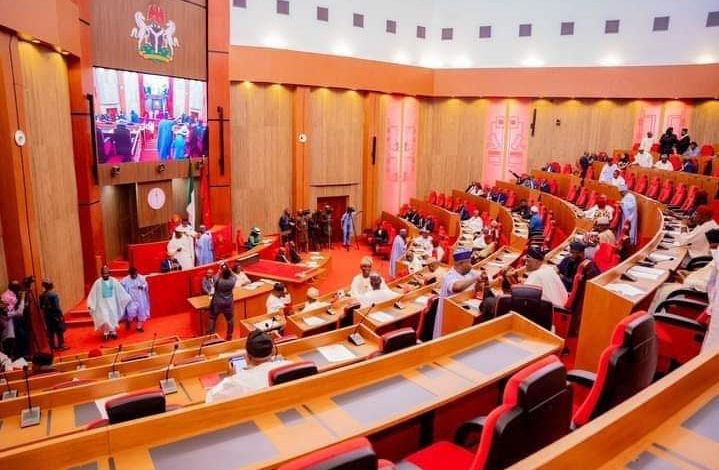
Proceedings at the House of Representatives on Tuesday descended into chaos before ending in a dramatic U-turn as lawmakers of the ruling All Progressives Congress (APC) and their opposition counterparts clashed over the mode of transmitting election results ahead of the 2027 general elections.
During consideration of a bill to repeal and reenact the Electoral Act 2022, the APC-dominated House adopted a provision accommodating both manual and electronic transmission of results — reversing what opposition members described as the earlier push to make electronic transmission the sole method.
The tense plenary, presided over by Deputy Speaker Benjamin Kalu, was marked by shouting, prolonged protests and a walkout by opposition lawmakers, who accused the Tajudeen Abbas-led leadership of attempting to railroad far-reaching electoral amendments.
Trouble began when the House took up A Bill for an Act to Regulate the Conduct of Federal, State, Area Council and FCT Elections and for Related Matters (HB 2479).
House Leader Julius Ihonvbere moved the motion for consideration, explaining that the bill provides a comprehensive legal framework for federal, state and FCT elections.
Minority Leader Kingsley Chinda seconded the motion before the House dissolved into the Committee of the Whole for clause-by-clause consideration.
Chairman of the House Committee on Electoral Matters, Adebayo Balogun, informed lawmakers that the proposed legislation contains over 150 clauses covering funding mechanisms and election administration.
Calm soon gave way to confusion when Kalu attempted what opposition lawmakers described as an expedited consideration of the bill instead of a strict clause-by-clause process. Lawmakers from the Peoples Democratic Party, Labour Party and New Nigeria Peoples Party protested, chanting “clause by clause” for over 30 minutes and complaining that harmonised copies of the bill had not been provided.
Kalu later conceded to demands for clause-by-clause consideration — a move seen as a temporary retreat. However, tension resurfaced when deliberations reached Clause 60(3), which accommodates proposal for both manual and electronic transmission of election results.
The Deputy Speaker struck the gavel approving the clause, triggering outrage from opposition lawmakers. Some, including Victor Afam of the Labour Party caucus, moved toward the presiding officer, pointing accusing fingers before eventually staging a walkout.
Undeterred, Rep. Bamidele Salam (PDP, Osun) moved an amendment seeking to delete the proviso allowing manual transmission and make electronic transmission mandatory.
Kalu made a motion for revision, and Minority Leader Chinda seconded the proposal. But when put to a voice vote, the Deputy Speaker ruled that “the nays have it,” effectively rejecting the amendment.
Another proposal, championed by Rep. Ikenga Ugochinyere and seconded by Ginger Obinna, sought to make electronically transmitted results prevail in the event of discrepancies with manually recorded results on Form EC8A sheet.
That amendment was also defeated by the majority of APC members.
Addressing journalists after the walkout, Chinda said the opposition deemed it necessary to brief Nigerians on developments, which was is antithetical to democratic practices.
“It is necessary at every point in time to bring those who have given us the authority and mandate to be here up to speed,” he said.
According to him, the opposition’s position is that election results “shall and should be transmitted electronically” without any proviso that could create room for manipulation.
He further argued that where there is a conflict between manually collated results and electronically transmitted results, the electronic version should prevail.
“These positions were turned down, not on grounds of fact but on grounds of political party configuration,” he alleged.
Chinda also raised concerns over Section 84 relating to party primaries, insisting that political parties should retain the discretion to determine whether to adopt direct, indirect or consensus primaries.
But the House Spokesperson, Mr. Akin Rotimi, defended both the process and substance of the amendments.
He described the session as historic and said the extraordinary sitting became necessary because new considerations arose after the joint conference committee between the House and Senate had harmonised earlier versions of the bill.
Rotimi explained that while electronic transmission at polling units remains mandatory, the inclusion of manual transmission serves as a fail-safe mechanism in case of technological failure.