‘IT’S A BIG MISTAKE’: Israelis feel betrayed, angry after signing of US-Iran MoU
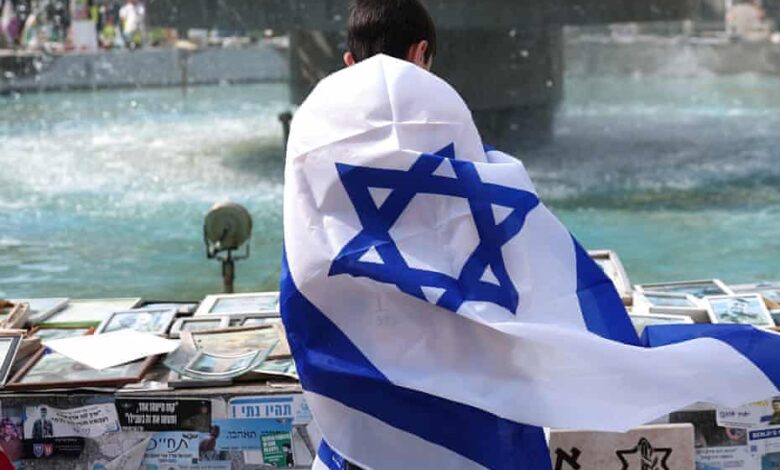
As Israel enters a new political season, the public’s reaction to the U.S.-Iran agreement is likely to remain a central issue—one that could shape both the country’s domestic politics and its approach to regional security for years to come.
A growing sense of frustration, uncertainty, and betrayal is spreading across Israel following the recently signed peace agreement between the United States and Iran, with many Israelis questioning whether the deal has enhanced or undermined their country’s security.

In cafés, town squares, and communities near Israel’s northern border, residents expressed concern that the agreement may allow Iran to recover from recent military setbacks while leaving Israel to confront ongoing regional threats largely on its own.
“We were betrayed by President Trump,” said Avi Perez, a 55-year-old engineer speaking at a popular brasserie in Rehovot, a city often viewed by pollsters as representative of mainstream Israeli public opinion.
The agreement, brokered by Washington and signed earlier this week, has triggered a wave of criticism from Israeli commentators, security analysts, and ordinary citizens who argue that the deal falls short of addressing the threats posed by Iran and its regional allies.
Security concerns dominate public debate
Many Israelis fear that despite the diplomatic breakthrough, the underlying security challenges remain unresolved.
Residents pointed to ongoing hostilities involving Hezbollah in Lebanon and Hamas in Gaza as evidence that the agreement has not fundamentally altered the strategic landscape.
“It is strange,” said Shaham Nowick, 35. “One day we were in bomb shelters with our children, and the next day we’re told everything is normal again. But nothing has really been resolved.”
Those concerns intensified following renewed fighting along Israel’s northern border, where Israeli airstrikes and Hezbollah attacks continued despite broader diplomatic efforts to reduce tensions.
Security experts note that many Israelis view Hezbollah and Iran as inseparable strategic actors, making any agreement that does not directly address Hezbollah’s military capabilities difficult to accept.
“Israelis believe the war in Lebanon is a just war,” said political strategist Udi Tenne. “Most people here see Iran and Hezbollah as part of the same threat.”
Northern communities fear long-term consequences
In northern Israel, where communities have lived under the threat of cross-border attacks for years, reaction to the agreement has been particularly negative.
Residents of Metulla, located near the Lebanese border, voiced concern that the ceasefire arrangements could limit Israel’s ability to respond to future attacks while allowing Iran-backed groups to regroup.
“Everyone was pleased with the military campaign against Iran,” said restaurateur Daniel Dorfmann. “But this agreement is not good for Israel. It’s a big mistake.”
Others questioned whether the war achieved its stated objectives, including dismantling Iran’s nuclear program, eliminating its ballistic missile capabilities, and weakening the country’s regional influence.
Political fallout for Netanyahu
The agreement has also intensified debate about the leadership of Prime Minister Benjamin Netanyahu, who now faces growing political pressure ahead of expected national elections later this year.
Critics argue that Israel entered the conflict with ambitious goals but emerged with limited influence over the diplomatic process that ultimately ended it.
Several commentators have noted that while Israel initially coordinated closely with the United States during military operations, the final negotiations were largely conducted without direct Israeli participation.
Political analysts say Netanyahu now faces the challenge of convincing voters that his security strategy remains effective despite the outcome of the negotiations.
“Netanyahu clearly defined ambitious goals,” said public opinion researcher Tamar Hermann. “When those goals are not fully achieved, voters naturally begin asking difficult questions.”
The prime minister’s political standing had already been weakened by longstanding domestic controversies and criticism surrounding the events leading up to the October 2023 Hamas attack.
Public remains deeply divided
While criticism of the agreement is widespread, support for Netanyahu remains significant among many voters.
Recent polling suggests that a substantial portion of the electorate still views him as the leader best equipped to confront Iran and manage Israel’s security challenges.
“Netanyahu makes mistakes because he’s human,” said Avi Perez. “But he knows how to fix them. He understands what Israel needs.”
Others, however, argue that years of political polarization have left the country deeply divided.
Doctor Lee Novick, 34, said many Israelis are increasingly frustrated that domestic concerns such as housing costs and inflation have been overshadowed by constant security crises.
“I believe Iran when it says it wants to destroy Israel,” she said. “But I also think politicians are using the conflict to push other agendas and remain in power.”
Opposition figures echoed concerns about growing political fragmentation, warning that public debate has become increasingly polarized.
Yet some analysts argue that despite political disagreements, Israelis still share broad consensus on key national issues, including security, economic policy, and the future character of the state.
Looking toward elections
With national elections expected in the coming months, the political consequences of the U.S.-Iran agreement remain uncertain.
Many observers believe the vote could become a referendum on Netanyahu’s leadership and on Israel’s broader approach to regional security.
Despite public frustration, analysts caution against underestimating Netanyahu’s political resilience. The veteran leader has repeatedly overcome crises throughout his long political career and remains a formidable campaigner.
For many ordinary Israelis, however, the debate extends beyond politics.
Dahlia Perez, a 55-year-old resident of Rehovot, said recent events have left her pessimistic about the prospects for lasting peace in the region.
“I hoped there would be an end to the wars,” she said. “But now it feels like we will always have to rely on ourselves. We have learned that we cannot depend on anyone else for our security.”
As Israel enters a new political season, the public’s reaction to the U.S.-Iran agreement is likely to remain a central issue—one that could shape both the country’s domestic politics and its approach to regional security for years to come.