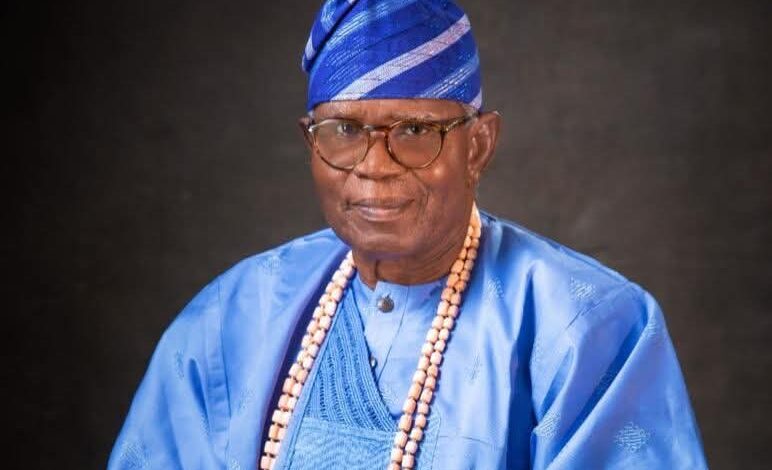
Day Nigeria stood for Gen Tajudeen Olanrewaju, a psycho-strategic military juggernaut, at 80
By BASHIR ADEFAKA

The tribute carried particular symbolic weight given the Sultan’s own distinguished military background, reinforcing the esteem in which Olanrewaju is held within the Nigeria’s armed forces establishment.
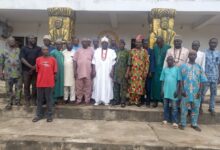
On Friday, May 8, 2026, the grand hall of the Civic Centre in Victoria Island, Lagos became more than a venue for a birthday celebration. It transformed into a national theatre of memory, gratitude, and reflection as Nigeria’s political elite, military establishment, traditional leaders, diplomats, scholars, and ordinary citizens gathered to honour Major General Tajudeen Olanrewaju (Rtd) on his 80th birthday.
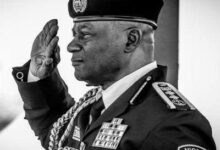
For hours, tributes flowed with unusual unanimity for a man many speakers described as not merely a retired military officer, but a “psycho-strategic military juggernaut” — a soldier-scholar whose influence extended far beyond the battlefield into governance, diplomacy, national cohesion, and strategic statecraft.
The atmosphere carried both celebration and solemnity. Beneath the ceremonial elegance and military protocol was an unmistakable sense that the nation was paying homage to one of the last surviving figures of a defining generation — officers forged during Nigeria’s most turbulent decades and entrusted with the burden of preserving the state through war, instability, and political transition.
The event, chaired by renowned political scientist Professor Adele Jinadu, attracted an imposing array of dignitaries from across the country. Among those present were former Governor of Rivers State and former Minister of Transportation, Rt. Hon. Chibuike Rotimi Amaechi; former Governor of Osun State and former Minister of Interior, Ogbeni Rauf Aregbesola; former Governor of Lagos State and former Minister of Power, Works and Housing, Mr. Babatunde Raji Fashola (SAN); former Lagos East Senator, Mr. Gbenga Asafa; former Inspector-General of Police, IGP Musliu Smith (Rtd); former Assistant Inspector-General of Police, AIG Tunji Alapini (Rtd); members of the Nigerian Army led by the Chief of Army Staff, Lt. Gen. Wahidi Shaibu, ably represented, members of De Renaissance Patriots Foundation, families, friends and associates among others.
Yet beyond the distinguished guests and ceremonial tributes, what dominated the gathering was the story of a life intertwined with Nigeria’s post-independence history.
A Soldier Formed by History
General Olanrewaju’s military career traversed some of the country’s most defining moments. From his early military training as one of the pioneering Lagos indigenes admitted into the Nigerian Defence Academy (NDA) after the creation of Lagos State in 1967, to his service during the Nigerian Civil War, his journey reflected the trajectory of Nigeria itself — turbulent, contested, yet enduring.
Over the decades, he rose through the ranks in the Nigerian Army, earning a reputation for intellectual depth, operational discipline, and strategic clarity. His service took him across several critical appointments, including Commander of the Corps of Artillery, General Officer Commanding (GOC) 3 Division Nigerian Army, Deputy Defence Adviser in Moscow during the era of the Soviet Union, and eventually a member of Nigeria’s Provisional Ruling Council (PRC).
His tenure as Minister of Communications would later leave an enduring imprint on Nigeria’s technological evolution with the deregulation of the telecommunication sector that brought for Nigeria the wireless (land phone) telecoms systems and now metamorphosed into the GSM telecoms system.
Again and again throughout the evening, speakers returned to one central theme: Olanrewaju belonged to a fading generation of military intellectuals — officers who combined tactical competence with ideological grounding and national vision.
Former colleagues recalled his analytical precision, calm disposition under pressure, and uncommon ability to understand not only military operations but also the psychology behind power, conflict, and negotiation.
“He understood that warfare was not simply about guns and troop movement,” one retired officer remarked privately during the event. “He understood morale, perception, fear, persuasion, and national psychology long before those ideas became fashionable in modern strategic studies.”
It was this blend of military command and psychological insight that inspired repeated references to him as a “psycho-strategic” thinker.
Sultan of Sokoto Leads National Tributes
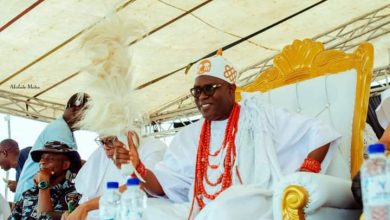
Among the most notable tributes contained in his commemorative publication: “Resilience, Strength & Honour” was that of the Sultan of Sokoto and Co-President of World’s Religions for Peace headquartered in New York, His Eminence Alhaji Muhammad Sa’ad Abubakar CFR, mni.
The Sultan, himself a retired General and former military diplomat, described Olanrewaju — fondly called “Gasper” by childhood friends and military colleagues very close to him — as a patriot whose life had been marked by courage, discipline, and unwavering commitment to Nigeria.
“As a war veteran who has paid his dues as an officer of the Nigerian Army in various capacities within and outside the country, your contributions to national unity, stability, and development remain indelible,” the Sultan stated.
He added that the retired General had consistently stood “as a pillar of strength in times of trial and as a guiding light in times of progress.”
The tribute carried particular symbolic weight given the Sultan’s own distinguished military background, reinforcing the esteem in which Olanrewaju is held within the Nigeria’s armed forces establishment.
Tinubu Hails ‘Father of Modern Telecoms’
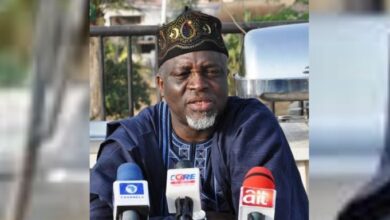
Perhaps the most politically significant tribute came from President Bola Ahmed Tinubu, who personally signed an extensive birthday message celebrating the octogenarian as “a distinguished patriot and elder statesman.”
In one of the most striking descriptions of the day, Tinubu referred to Olanrewaju as the “father of Nigeria’s modern telecoms sector,” crediting him with laying the groundwork for the eventual liberalisation of telecommunications in the country.
The President noted that during his tenure as Minister of Communications, Olanrewaju initiated policies that weakened the long-standing monopoly of the Nigerian Telecommunications Limited (NITEL), opening pathways that eventually culminated in the GSM revolution which transformed communication across Nigeria.
“His subsequent service as Minister of Communications contributed significantly to the early foundations of the deregulation and modernisation of Nigeria’s telecommunications sector,” Tinubu stated.
The President also highlighted Olanrewaju’s military accomplishments and international training across the United Kingdom, the United States, and India, describing him as “a brilliant officer, strategic thinker, and disciplined patriot.”
But Tinubu’s tribute went beyond institutional achievements. He acknowledged the personal and political trials that marked parts of Olanrewaju’s public life, praising his resilience and dignity through difficult periods.
“Despite difficult moments during his national service, he remained steadfast, dignified, and committed to humanity and to serving the downtrodden,” the President stated, adding that his eventual pardon and restoration represented “the enduring value of justice, reconciliation, and national healing.”
Your life a testament to discipline, says Defender President, AIG Hadeija Rtd
In his tribute celebrating General Olanrewaju at 80, further Assistant Inspector-General of Police Works Department, AIG Mu’azu Idris Hadeija (Rtd.), said, “Your life has been a shining testament to discipline, courage, and unwavering commitment to the service of our great nation. As a distinguished officer of the Nigerian Army, your career was defined not only by gallantry in uniform but also by exemplary leadership, integrity, and an enduring dedication to national unity and progress. You stood firm in moments that demanded strength, and you led with wisdom when guidance was most needed.
“Beyond your years in active service, your contributions to national discourse and development have remained invaluable. You have continued to inspire generations with your insights, patriotism, and steadfast belief in a better Nigeria. Your legacy transcends the barracks; it lives on in the institutions you strengthened, the lives you touched, and the ideals you upheld.
“On a personal note, I hold in high regard your sense of duty, humility, and statesmanship. Your journey has been one of honor, and your example remains a guiding light for both serving and retired officers across all arms of service.”
Beyond the Barracks
As speeches continued deep into the evening, a portrait emerged of a figure whose influence extended far beyond military circles.
Speakers repeatedly described Olanrewaju as a bridge-builder in a country often fractured by ethnic distrust and political division. Even after retirement from active service, they said, he remained deeply engaged in public discourse, offering interventions on national unity, democratic consolidation, and Nigeria’s evolving security architecture.
Several younger military officers present listened intently as veterans recounted stories of operations in which Olanrewaju’s strategic restraint reportedly prevented escalation and preserved civilian confidence.
Others spoke of his intellectual mentorship, describing him as a disciplinarian who nevertheless invested deeply in nurturing younger generations.
Family tributes added emotional depth to the occasion. His wife, Chief (Mrs) Oluyemisi Olanrewaju, alongside children Kemi, Bukola, Wonuola, Aderemi, and Muhammed, joined relatives, friends, and associates in celebrating the man they described as both stern and compassionate.
Particularly touching was a tribute from his nephew, Olayinka Olanrewaju, whom the General reportedly mentored closely over the years. The tribute ended with the deeply personal line: “I remain your Stupid Boy and Runaway Soldier.”
The hall erupted in warm applause at the point the General’s second grand child, Tofunmi Kusemiju, read his profile and concluded successfully despite having battled with words crafted in mother tongue without involving in any grammatical accident.
The Lagos Legacy
For many Lagos indigenes present, Olanrewaju’s legacy also carries a distinct political significance.
Speakers on the floor of the hall or in media interview referenced General Tajudeen Olanrewaju’s influential role in the expansion of Lagos State’s local government structure from 12 to 20 local governments — a development many attendees described as transformative in strengthening grassroots governance and political representation within the state.
To admirers and well wishers, that intervention remains one of his most enduring contributions to Lagos political history and a testament to the influence he wielded within the Federal military establishment during his years as Minister of Communications of the Federal Republic of Nigeria.
A Living Archive of Nigeria’s Story
As the evening drew to a close, the celebration increasingly resembled something larger than a birthday ceremony. It became a meditation on Nigeria itself — its crises, transitions, unfinished democratic journey, and the individuals who shaped its trajectory through moments of uncertainty.
Again and again, speakers returned to the same conclusion: Nigeria was not merely celebrating longevity, but honouring legacy.
At 80, General Tajudeen Olanrewaju stood before the gathering not simply as a retired soldier, but as what many called “a living archive” of service, sacrifice, resilience, and strategic thought.
In a country often polarised by politics, ethnicity, and competing historical narratives, the gathering achieved something rare: consensus.
For one evening in Lagos, Nigeria stood united in recognition of a man many believe devoted his life to preserving the stability, cohesion, and future of the nation.
And as applause echoed through the Civic Centre hall, it became evident that the celebration was not only about the past.
It was also about the enduring relevance of wisdom, discipline, courage, and strategic leadership in a nation still searching for its finest path forward.