CISLAC, lawmakers hold dialogue on fossil fuel phase-out, clean energy transition, others
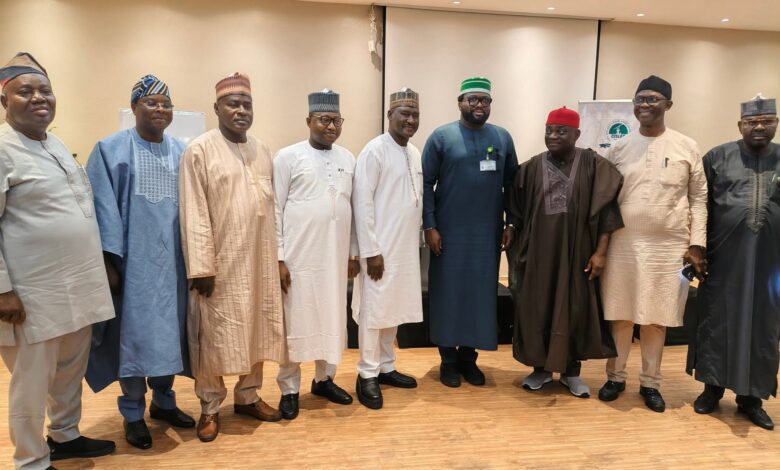
*Countries make money from their forests, Nigeria should do same and not leave its forests to bandits to thrive – Dr. Bassi Dieter
By KEMI KASUMU
The NEITI Director did not conclude his paper until he had examined the issues to the point that he said, “The crisis between pastoralists and and farmers in Northern Nigeria is direct indication of climate change that has now been interpreted into different kinds of things, because places people were not farming before have now become farmland for farmers.”
In its usual effort committing to transparent justice, accountable leadership and advocacy against corruption and bad governance, civil liberty organisation, the Civil Society Legislative Advocacy Centre (CISLAC), has again made an intervention in matter of climate change as it affects the living environment especially in Nigeria.
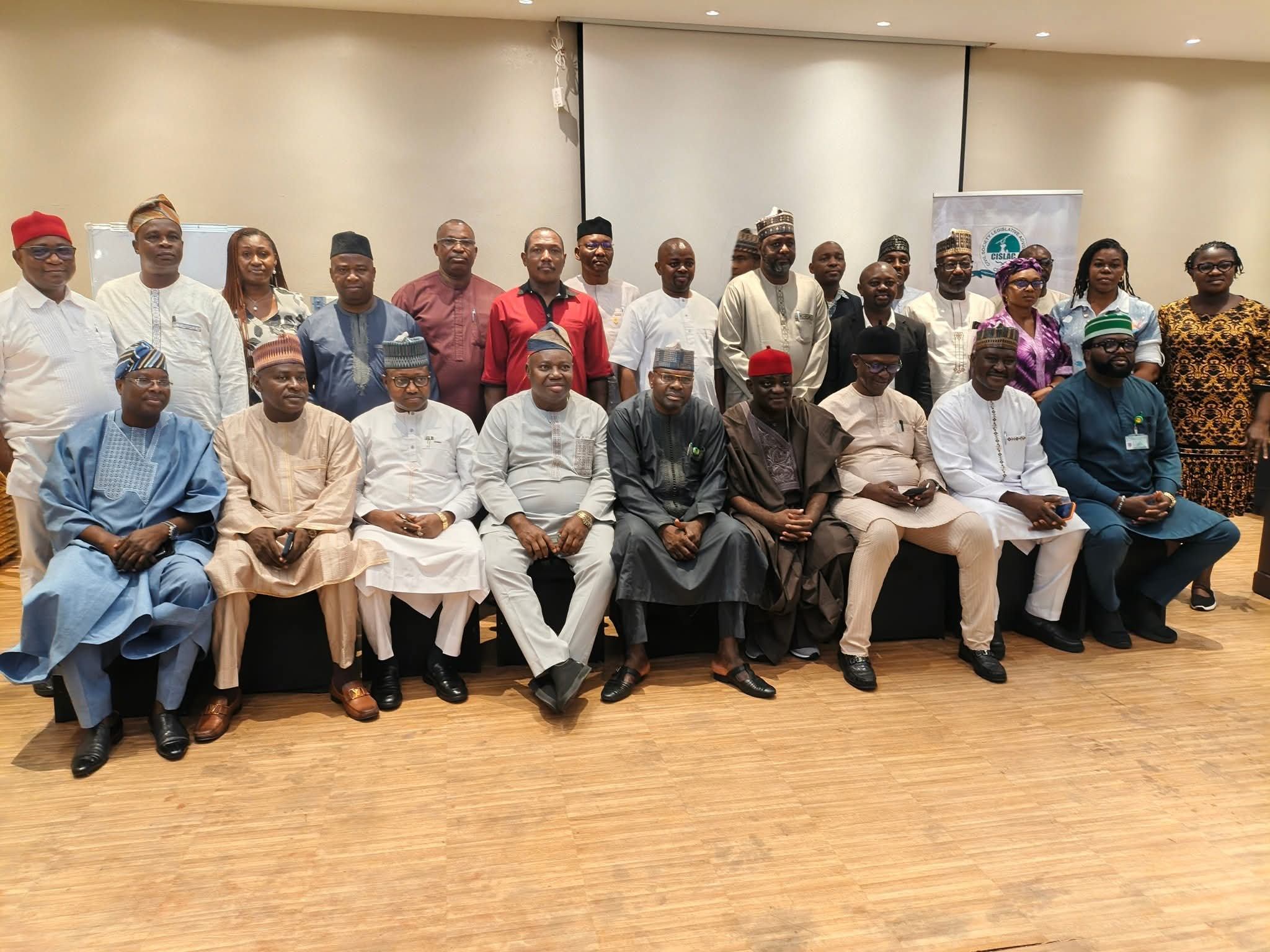
For this reason, it convened a landmark policy dialogue, which it held with top members of the country’s legislature, who took the sacrifice to travel down from Abuja, the nation’s capital, to Lagos focusing on fossil fuel phase-out and Nigeria’s energy transition plan (ETP) at the Sheraton Hotel, Ikeja.
The high-level engagement brought together parliamentary representatives, civil society leaders, and policy stakeholders to shape legislative pathways for renewable adoption, climate action, and equitable economic growth.
The DEFENDER reports that, at the event, Speaker of the House of Representatives, Rt. Hon. Tajudeen Abbas, ably represented, graced the occasion along with other principal officers concerned with the subject matter.
The Chairman House Committee on Media and Public Affairs, Hon. Akin Rotimi, who represented the Speaker, described the event l as “timely and strategic,” saying it aligns directly with the National Assembly’s Legislative Agenda (2023–2027).
He highlighted his House’s priority commitments to ensure effective implementation of Energy Transition Plan in the country which include the strengthening of NESREA, enforcement of the Climate Change Act, accelerating renewable energy adoption, reducing gas flaring, and restoring polluted communities.
Hon. Rotimi reaffirmed Parliament’s central role in designing fiscal instruments that stimulate renewable investment while protecting livelihoods.
“The transition must empower, not exclude. We must protect workers who depend on traditional energy value chains,” he said.
Welcoming participants, CISLAC Executive Director, Auwal Ibrahim Musa (Rafsanjani), set the tone for a policy dialogue focused on climate responsibility, resource governance, and the future of Africa’s energy landscape. He acknowledged the representatives of the Speaker, committee chairpersons, clerks, the Chairman of the African Parliamentary Network on Illicit Financial Flows and Tax (APNIFFT), civil society organisations, and the media.
Rafsanjani emphasized the urgency of moving away from fossil fuel dependency, highlighting Nigeria’s vulnerabilities as an oil-dependent economy confronted by climate threats and the global shift toward decarbonization.
“This conversation could not be more timely. Nigeria stands between its long-standing dependence on fossil fuels and the imperative to pursue a cleaner, more resilient, and economically inclusive future.”
He underscored the importance of the Nigeria Energy Transition Plan (ETP), which maps a route to net-zero emissions by 2060.
According to him, the ETP is only viable if backed by strong fiscal policy reforms, transparent taxation systems, and incentivized capital inflows into renewable and transition fuels.
“Despite being Africa’s largest economy, Nigeria remains energy-insecure and fossil-dependent, with renewable penetration still below 10 percent of total energy consumption. This reality leaves millions vulnerable to electricity deficits, pollution, and environmental hazards,” he said.
Rafsanjani praised Nigeria’s climate progress, notably the Climate Change Act of 2021, which established the National Council on Climate Change and mandated a national Climate Action Plan. However, he insisted that implementation must move beyond institutional frameworks.
“The Legislature has gone beyond establishing the frameworks, it must ensure effective implementation, transparency, accountability, and mobilize climate financing,” he said.
He warned against harmful fiscal regimes that provide tax holidays to fossil fuel enterprises, cautioning that poorly designed incentives undermine public interest. Parliament, he argued, must steer fiscal instruments toward decarbonization pathways that: Drive divestment from high-emission assets; Expand access to transition fuels, including natural gas; Stimulate investment in solar, wind, hydrogen and other clean technologies; Protect national revenues from wasteful incentive structures; Promote equitable transition outcomes for disadvantaged communities.
In a critical addition, Rafsanjani highlighted a less-recognized obstacle to climate progress: intra-African mobility barriers. He lamented visa challenges faced by researchers, activists, and innovators across the continent, noting that many Nigerian delegates are denied entry or face prolonged delays when traveling to African climate summits.
He linked cross-border restrictions to stalled policy collaboration: “Energy transition is not only a technical matter, it is a question of access, mobility, and African solidarity. When African citizens cannot travel to African countries, we weaken the momentum of regional cooperation.”
He called on parliamentarians, including Hon. Dr. Ahmed Adamu Saba is a member of the House of Representatives Committee on Climate Change, who were present to pursue continental-level mobility reforms, insisting that free movement is essential to a just transition.
Hon. Oluwole Oke cautioned against the global backslide into fossil dependency. He cited the United States’ repeated exit from the Paris Agreement, Canada’s reopening of oil projects, Europe’s coal resurgence following the Russia–Ukraine conflict, and Nigeria’s escalating coal extraction in Okaba, Kogi State.
“We must decide where we stand as a Parliament and as a people. We must preserve the planet, there is no other home.”
Hon. Fatoba Olusola Steve, speaking from a public health perspective, linked fossil taxation to environmental and health justice. He noted that emissions from fossil fuels trigger asthma, respiratory infections, cardiovascular disease, and poison soils and water in mining communities.
He insisted that fiscal reform must complement environmental regulation to phase out toxic pollutants: “As we transition to low-carbon fuels, fiscal policy must protect the health of Nigerians, especially vulnerable groups.”
Delivering a goodwill message, Hon. Kalejaiye Paul PhD celebrated Lagos State as Nigeria’s economic heartbeat and a model of urban resilience.
“Lagos is not just a city; it is a vision built on innovation, opportunity, and the dreams of millions. From our marketplaces to our world-class infrastructure, Lagos continues to define development across the nation.”
He commended the State Governor for transformative leadership that has expanded infrastructure, improved mobility and security, empowered youth and women, and strengthened inclusive governance.
“Under his stewardship, Lagos has become a place where dreams are not only nurtured but realized. With unity, resilience, and visionary leadership, we will continue shaping a Lagos that shines as a beacon of excellence across Nigeria and Africa.”
In his paper presentation titled, “Climate Change and Nigeria’s Energy Transition Plan: The Role of Legislators to a Justice Energy Transition for Nigeria,” Dr. Bassi Ahmed Dieter, Director Policy Planning and Strategy of NEITI, looked into governance as a way to address issue of climate change, noting that there are countries lune Gabon, which make money from their forests and wondered why it is not the case in Nigeria.
According to Dieter, “Nigeria too can do this (earning money from forests like others), instead of leaving our forests to bandits to thrive.”
Considering the target by the Nigerian system to reduce carbon emission to 20 percent as envisaged, Dr. Bassi Ahmed Dieter harped on legislation as “very, very important in enabling local power generation and distribution.
He cited the power plant in Akwa Inom called Inom power station and which production was suffering what he described as wasted energy due to rejection of its generated electricity by national grid because of law impediment. “Now, with the legislation, Inom Power’s hitherto wasted energy is being distributed locally.”
The NEITI director frowned at the idea of a Nigeria that claims to be pursuing green-energy whereas its people are fully engaged in charcoal exportation and asked, “What is the raw material for charcoal” if not the same trees bring planted to protect the environment to mitigate the effects of climate change? All of these, he said, are causes of climate change.
He was not in happy mood that despite muchmouthed publicity done about mitigating the effect of climate change, Nigeria had still to show anything for it, the the reason “whether you are on Band A, Band B or Band W, Nigeria has no adequate power supply. That is power poverty,” he said.
He raised political instability and conflict as part of the issues and challenges militating against effort to effectively address the effect of climate change in Nigeria, Dr. Dieter made a case of the legislative pathway to a Justice Transition as a solution, calling for enactment of supportive legislation because “The ETP requires a concrete legal foundation. Legislators should draft and pass a Renewable Energy Law to provide clarity on licensing, incentives and market rules for clean energy.
The NEITI Director did not conclude his paper until he had examined the issues to the point that he said, “The crisis between pastoralists and and farmers in Northern Nigeria is direct indication of climate change that has now been interpreted into different kinds of things, because places people were not farming before have now become farmland for farmers.”
Rafsanjani concluded by expressing gratitude to legislators and regional partners such as Tax Justice Network Africa (TJNA), stressing the importance of collaborative climate policy.
He urged lawmakers to: Demand transparency in incentive administration; Conduct evidence-based oversight on tax exemptions; Champion continent-wide mobility reforms that strengthen African climate cooperation; Safeguard Nigeria’s long-term prosperity through a just energy transition.