Nigeria fails fiscal transparency test for second year — US Report
MAIN POINTS:
*Budget figures fail to match implementation
*Auditor-General’s independence questioned
*Procurement information remains opaque
*Transparency gaps could fuel corruption
*Nigeria records some positives
*US gives Nigeria six-point reform agenda
*Presidency: Transparency remains a priority
*BudgIT backs US assessment
*Global picture, as fresh pressure mounts on Tinubu administration
By OUR REPORTER
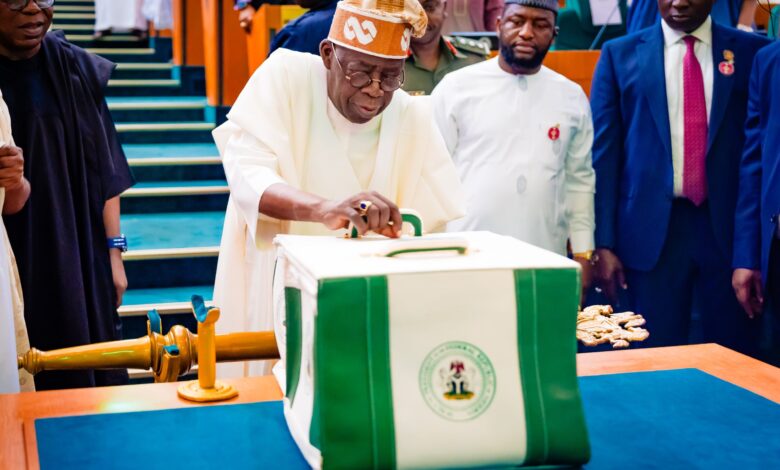
According to the report, Nigeria’s budget should provide detailed information on revenue sources, including oil and non-oil revenue, spending by ministries and allocations to state-owned enterprises and special accounts. The US government said Nigeria fell short of these requirements. The report also criticised the government for failing to publish its executive budget proposal within the required timeframe. Under the US standard, the proposal should be made public at least one month before the beginning of the fiscal year and before legislative approval, allowing citizens and lawmakers adequate time to scrutinise it.
Nigeria has failed the United States’ minimum fiscal transparency test for the second consecutive year, with the US Department of State raising concerns over the country’s budget process, audit system, procurement disclosures and the reliability of budget execution.
The findings are contained in the 2026 Fiscal Transparency Report, released by the US Department of State, which assessed 139 governments and the Palestinian Authority.
Only 73 governments met the minimum fiscal transparency requirements, while 67 failed to meet the standards. Of those that failed, 14 recorded significant progress during the review period, while 53 countries, including Nigeria, were classified as making no significant progress.
The assessment covered information gathered between January 1 and December 31, 2025, from US diplomatic missions, government agencies, international organisations and civil society groups.
The report comes amid growing concerns in Nigeria over budget implementation, transparency and the management of public resources, particularly as the federal government continues to deal with multiple budget cycles.
Budget figures fail to match implementation
The US State Department delivered a particularly critical assessment of Nigeria’s budget process, saying budget documents did not provide a sufficiently complete picture of government revenues and expenditures.
It also found that actual government revenues and expenditures did not reasonably correspond with figures contained in the enacted budget.
According to the report, Nigeria’s budget should provide detailed information on revenue sources, including oil and non-oil revenue, spending by ministries and allocations to state-owned enterprises and special accounts.
The US government said Nigeria fell short of these requirements.
The report also criticised the government for failing to publish its executive budget proposal within the required timeframe. Under the US standard, the proposal should be made public at least one month before the beginning of the fiscal year and before legislative approval, allowing citizens and lawmakers adequate time to scrutinise it.
The finding represents a deterioration from the previous assessment, when the US said Nigeria’s budget documents provided a substantially complete picture of planned government revenues and expenditures and were generally reliable.
Auditor-General’s independence questioned
Nigeria’s audit system also came under scrutiny.
The US State Department said the Office of the Auditor-General for the Federation did not meet international standards for independence and had failed to publish substantive audit reports.
The report stressed that an effective supreme audit institution should independently audit the executed national budget, verify annual financial statements and publish its findings within a reasonable period.
The US said the absence of sufficiently independent and publicly available audit reports weakened the ability of lawmakers and citizens to hold government accountable for the use of public funds.
Procurement information remains opaque
Public procurement was another major area of concern.
The report said Nigeria did not make sufficient information on government contracts easily accessible to the public, making it difficult for citizens to determine how public contracts were awarded and implemented.
On natural resources, the US acknowledged that Nigeria has laws specifying the criteria and procedures for awarding extraction contracts and licences.
However, it said basic information about awarded concessions—including the geographical area, resource involved, duration and company receiving the award—was not made publicly available after decisions were taken.
The report also introduced a tougher requirement on the public disclosure of the terms and conditions of sovereign loans, including liabilities and collateralised assets.
While Nigeria made information on debt obligations, including major debt owed by state-owned enterprises, publicly available, the US did not determine whether the country met the new standard on disclosure of loan terms.
Transparency gaps could fuel corruption
The State Department stressed that fiscal transparency goes beyond publishing figures.
According to the report, transparency allows citizens to understand how public money is collected and spent, strengthens accountability, improves investor confidence and helps create a more competitive business environment.
It also warned that weak transparency can create conditions that enable corruption, financial crimes, unfair practices and predatory lending.
The US noted, however, that failing the fiscal transparency test does not automatically mean that significant corruption exists in a country.
Nigeria records some positives
Despite its criticisms, the US report acknowledged some areas where Nigeria met the required standards.
The government was credited with making the enacted national budget and end-of-year report widely accessible to the public, including through online platforms.
Nigeria also received recognition for making information on its debt obligations, including debt associated with major state-owned enterprises, publicly available.
The report further noted that Nigeria’s sovereign wealth fund operates under a sound legal framework and discloses its source of funding and general approach to withdrawals.
The State Department, however, said these achievements were insufficient to move Nigeria above the minimum fiscal transparency threshold.
US gives Nigeria six-point reform agenda
Washington urged the Nigerian government to take concrete steps to improve fiscal transparency.
Among other recommendations, it called on Abuja to:
- Publish the executive budget proposal online within the required timeframe.
- Provide complete and detailed revenue and expenditure information.
- Clearly identify spending by ministries and executive offices.
- Ensure actual revenues and expenditures correspond with the approved budget and explain significant deviations.
- Strengthen the independence of the Auditor-General’s office and publish audit reports.
- Make public procurement and contract information easily accessible.
Presidency: Transparency remains a priority
Reacting to the report, Special Adviser to the President on Media and Public Communication, Sunday Dare, said the Federal Government had taken note of the findings and remained committed to improving transparency and accountability.
Dare said the report should be viewed as an external benchmark rather than a comprehensive assessment of all fiscal reforms being undertaken by the Nigerian government.
He pointed to initiatives including the Open Treasury programme, public budget documentation, debt disclosures and reforms in public procurement as evidence of ongoing efforts to strengthen fiscal management.
He said the government would continue working to improve the quality and timeliness of fiscal reporting, strengthen audit institutions and expand public access to procurement information.
According to him, the ultimate objective is to create a more transparent and credible fiscal system capable of strengthening public confidence and attracting investment.
BudgIT backs US assessment
The Country Director of BudgIT, Vahyala Kwaga, however, agreed with the US assessment, particularly its concerns over budget implementation.
Kwaga said while Nigeria’s federal budget was generally clear in its presentation of revenue and expenditure components, the government had struggled to provide timely and comprehensive reports on actual budget implementation.
He also criticised the lack of independence of the Auditor-General’s office, arguing that its investigative authority and personnel management were not sufficiently independent.
Kwaga further raised concerns over capital expenditure, procurement transparency and the use of broad budget headings that make it difficult to determine precisely how public funds are being spent.
He said procurement information, including details of competitive bidding processes, was often unavailable to the public.
Global picture
Nigeria was not alone in failing the US fiscal transparency test.
The 67 governments that failed to meet the minimum requirements included major economies such as China, Egypt, Saudi Arabia, Pakistan and Ukraine.
However, 14 of the countries that failed the test recorded significant progress during the review period. They included Bangladesh, Cameroon, Chad, the Central African Republic, Dominican Republic, Ecuador, Ethiopia, Laos, Lebanon, Liberia, Libya, Niger, São Tomé and Príncipe and Senegal.
Nigeria was among 53 countries classified as making no significant progress.
Fresh pressure on Tinubu administration
The US verdict is likely to intensify scrutiny of the Federal Government’s management of public finances as Nigeria prepares for another budget cycle.
It also comes amid controversy over several provisions in the 2026 budget, including allocations for religious infrastructure, constituency projects placed under ministries without direct mandates for such projects, alleged duplication of projects across government agencies and large lump-sum provisions described as special interventions or miscellaneous spending.
For the Tinubu administration, the report presents both a challenge and an opportunity: while the government can point to improvements in the publication of budget and debt information, Washington’s assessment makes clear that significant gaps remain in budget credibility, audit independence and procurement transparency.
With Nigeria now failing the US fiscal transparency test for two consecutive years, pressure is mounting on the Federal Government to demonstrate measurable improvements before the next assessment.