Nigeria’s Real Challenge: Ending Ethnic and Religious Double Standards and Holding Our Own People Accountable
By BASHIR ADEFAKA
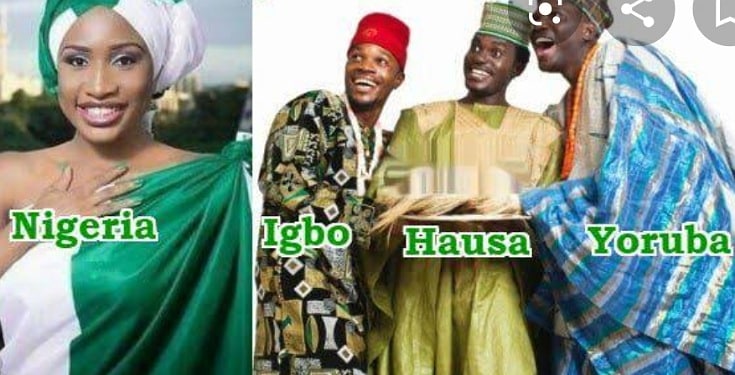
The real challenge is whether Nigerians are prepared to abandon ethnic and religious double standards and demand accountability from their own people with the same courage with which they demand it from other people. That is the conversation Nigeria needs. Not North versus South. Not Muslim versus Christian. Not Yoruba versus Hausa. Not Fulani versus Igbo. Nigeria versus bad governance.
There is a disturbing habit in Nigeria’s political discourse: whenever a Northerner occupies the Presidency and Nigerians experience hardship, some voices in the South, particularly in the Yoruba-speaking South-West, quickly interpret the country’s problems through the prism of the North.
The argument is often that the North has dominated Nigeria for too long and is responsible for the country’s failures.
But history tells a far more complicated story.
Nigeria’s problems cannot honestly be reduced to the fact that a President is from the North. The country has been governed by people from different regions, under military and civilian administrations, and yet many of the fundamental problems remain.
The more important question, therefore, is this: Why should an entire region be blamed for the failures of governments, political parties, institutions and individuals from across Nigeria?
And, more importantly, why should Nigerians apply one standard when a Northerner is President and another when a Southerner occupies Aso Rock?
If Nigerians believe in God—and particularly if they accept the Islamic and Christian teaching that human beings are accountable for their conduct—then hypocrisy should concern us all. The religious principle is straightforward: justice should not depend on who benefits from it.
Nigeria’s political crisis since 1999 has, among other things, exposed the danger of selective outrage.
Let us go back before 1999
I will begin with an example involving a legal personality of Yoruba South-Western extraction whose name I will deliberately withhold.
The individual was reportedly quoted on two separate occasions making statements that deserve examination.
On one occasion, he reportedly attributed Nigeria’s problems largely to military officers of Northern and Muslim extraction who had dominated governance.
On another occasion, he reportedly suggested that, if Nigeria wanted good leaders, an Ogun deity—the traditional Yoruba deity associated with iron—should be placed before political office seekers so that they could swear before taking office.
Whether such remarks were made in precisely those words is a matter for the original reports to establish. But the broader question remains important.
If one Nigerian’s religious tradition is presented as the instrument through which political leaders should swear, what happens to Nigerians whose faith is Islam, Christianity or another religious tradition?
And if military rule is condemned simply because many of the military rulers were Northerners, are we not guilty of the same ethnic reductionism that we accuse others of practising?
Was the military really the problem?
This is where history deserves to be examined honestly.
The Second Republic did not collapse simply because Northern military officers wanted to seize power.
The 1983 elections were accompanied by serious allegations of electoral malpractice, violence, intimidation and political disorder. In parts of the old Western Region, particularly in the South-West, political violence became a major problem.
Political thuggery, including groups popularly described as Janduku, became associated with the violent political atmosphere.
The crisis contributed to the conditions that culminated in the military coup of December 31, 1983, which brought Major General Muhammadu Buhari to power.
That does not mean the South-West should be blamed for the coup. Nor does it mean the North should be absolved of every problem associated with the Second Republic.
The lesson is simply that Nigeria’s democratic failures have never belonged exclusively to one region.
Political actors from different parts of the country have contributed to the country’s successes and failures.
Buhari and the 19-state Nigeria
When Major General Muhammadu Buhari became Head of State in 1983, Nigeria consisted of 19 states.
His government introduced the War Against Indiscipline (WAI) campaign, which sought to enforce discipline and public order.
Whatever one’s opinion of military rule, the administration succeeded in creating an atmosphere in which punctuality, public conduct, respect for rules and official discipline were strongly emphasised.
Buhari’s administration also appointed military officers to govern several states from which they originated.
Navy Commodore Michael Bamidele Otiko was appointed Governor of Ondo State; Group Captain Gbolahan Mudashiru became Governor of Lagos State; Colonel Oladipo Diya became Governor of Ogun State; and Colonel Oladayo Popoola became Governor of Oyo State.
Ondo State at that time covered the territory that would later produce Ondo and Ekiti states, while Oyo would later be divided to create Osun State.
The important point is that these were Northern and Southern Nigerians operating within the same national system.
And ordinary Nigerians continued to interact across regional boundaries.
Yoruba traders travelled from towns such as Iju, Akure, Ekiti and other parts of the old Ondo State to Onitsha in the old Anambra State to purchase goods.
Kola-nut traders from Ekiti, Akoko, Akure, Osogbo, Ibadan and Ogbomoso travelled through the old Kwara axis to markets as far north as Sokoto, Gongola and Borno.
These commercial relationships demonstrate that ordinary Nigerians historically understood something that today’s political class sometimes appears to have forgotten:
Nigeria works when Nigerians see one another as fellow citizens rather than permanent ethnic competitors.
Buhari maintained the 19-state structure until General Ibrahim Badamasi Babangida later embarked on further state creation.
It is therefore difficult to sustain the argument that the mere presence of Northern military officers in power explains all of Nigeria’s failures.
Indeed, many major infrastructure projects that Nigerians continue to use today were conceived or executed during military administrations.
The Third Mainland Bridge in Lagos is one prominent example.
The question therefore remains: If Northern military domination was supposedly the fundamental cause of Nigeria’s problems, how do we explain the infrastructure and institutional developments achieved during military administrations?
The answer is that history is more complicated than ethnic slogans.
Yoruba traders travelled from towns such as Iju, Akure, Ekiti and other parts of the old Ondo State to Onitsha in the old Anambra State to purchase goods. Kola-nut traders from Ekiti, Akoko, Akure, Osogbo, Ibadan and Ogbomoso travelled through the old Kwara axis to markets as far north as Sokoto, Gongola and Borno. These commercial relationships demonstrate that ordinary Nigerians historically understood something that today’s political class sometimes appears to have forgotten: Nigeria works when Nigerians see one another as fellow citizens rather than permanent ethnic competitors.
June 12: another history that cannot be reduced to North versus South
The June 12, 1993 presidential election is another example.
Chief M.K.O. Abiola, a Yoruba Muslim from the South-West, defeated Bashir Tofa, a Kano-born candidate, in the presidential election according to the results released before the election was annulled.
Abiola’s support was not confined to the South-West. Available historical accounts show that he won substantial support outside the region, including in parts of the North.
The election was subsequently annulled by the military government of General Ibrahim Babangida.
But the events surrounding June 12 cannot honestly be reduced to a simple story of “the North cancelling a Yoruba man’s election.”
The political and legal battles surrounding the election involved military authorities, politicians, courts and political organisations from different parts of Nigeria. The Association for Better Nigeria, associated with Senator Arthur Nzeribe, was among the organisations that pursued legal action during the crisis.
The annulment itself was made by the military government.
Therefore, Nigerians should resist the temptation to turn June 12 into another ethnic weapon.
The tragedy of June 12 belongs to Nigeria.
1999: who helped Obasanjo become President?
When democracy returned in 1999, General Olusegun Obasanjo emerged as President.
This is another historical episode that challenges the narrative that the North has always opposed the political aspirations of the South-West.
Northern political support was crucial to Obasanjo’s victory.
Indeed, political alliances that crossed ethnic and regional boundaries were fundamental to the formation of the government that emerged in 1999.
Obasanjo was followed by President Umaru Musa Yar’Adua, who died in office in 2010. His Vice-President, Goodluck Jonathan, succeeded him.
The emergence of Jonathan created a major political debate around the informal arrangement that power should rotate between the North and South.
That arrangement was not a constitutional provision. It was a political understanding.
Jonathan nevertheless contested the 2011 presidential election and won.
What followed is significant.
The North did not simply abandon democracy.
Muhammadu Buhari contested and reportedly received about 12.5 million votes, while Jonathan won the election.
Millions of Northerners nevertheless voted for a Southern candidate.
That is evidence that Nigerian political behaviour has never been as simple as the North versus the South.
2015 and the Buhari presidency
Muhammadu Buhari returned to power through the ballot box in 2015.
His victory was opposed by some Southern political activists and groups.
There were also serious security and economic challenges caused by Southern elements who resolved to make Nigeria ungovernable for his administration.
The elements included the Niger Delta Avengers that emerged and were attacking oil infrastructure in the Niger Delta, while the Nnamdi Kanu-led Indigenous People of Biafra (IPOB) was formed in the South East and its activities intensified to several levels including spreading misinformation, rumour and hate speech not only against the personality of President Muhammadu Buhari but also his religion of Islam, tribe of Fulani and region of Northern Nigeria. Two Yoruba persons including then serving governor of Ekiti State, Ayodele Fayose, and former Minister Femi Fani-Kayode identified with IPOB during that sad period of our national experience.
It is important, however, not to make the mistake of blaming every Southern Nigerian for the activities of these groups.
The same principle must apply to the North: Boko Haram, bandits and other criminal organisations cannot be used as evidence that every Northerner supports violence.
The real issue is whether Nigerians will judge political violence according to the same standard regardless of who commits it.
Two Yoruba persons including then serving governor of Ekiti State, Ayodele Fayose, and former Minister Femi Fani-Kayode identified with IPOB during that sad period of our national experience. It is important, however, not to make the mistake of blaming every Southern Nigerian for the activities of these groups. The same principle must apply to the North: Boko Haram, bandits and other criminal organisations cannot be used as evidence that every Northerner supports violence.
Buhari, agriculture and infrastructure
The Buhari administration pursued agricultural diversification and several infrastructure projects.
It also promoted local production and sought to reduce Nigeria’s dependence on imported food.
There were significant appointments of people from the South-West and other regions to important positions in the Federal Government.
Vice-President Yemi Osinbajo was Yoruba.
Several prominent Yoruba politicians and professionals also served as ministers and senior officials.
Yet the administration faced intense political opposition in parts of the South-West.
At various points, protests and campaigns calling for Buhari to leave office were visible in Lagos and other areas.
Again, political opposition is legitimate.
But the standard should remain consistent.
If protesting against a Northern President is regarded as patriotism, protesting against a Southern President should equally be regarded as patriotism.
The fuel subsidy issue: where the argument must be precise
The petrol subsidy argument requires particular care.
During Buhari’s final period in office, petrol sold at prices around ₦185–₦195 per litre in much of the country, although prices varied by location and period. NNPC played a central role in petrol importation and in financing subsidy-related costs.
It would, however, be inaccurate to say simply that Buhari had permanently abolished subsidy and that Tinubu merely inherited a subsidy-free petroleum market.
The outgoing Buhari administration had budgeted for petrol subsidy only up to part of 2023, and the issue remained unresolved when Tinubu assumed office.
Then came May 29, 2023.
President Bola Ahmed Tinubu declared in his inaugural address:
“The fuel subsidy is gone.”
The announcement was immediately followed by a sharp increase in petrol prices. NNPC subsequently adjusted prices to between roughly ₦488 and ₦555 per litre, depending on location.
That was a major policy decision of the Tinubu administration.
It is therefore legitimate for Nigerians to hold the administration accountable for the consequences of its economic reforms.
At the same time, it would be simplistic to attribute every subsequent increase in the cost of living to subsidy removal alone. The naira’s depreciation, exchange-rate reforms, global oil prices, logistics costs, food supply constraints and other policies have also affected prices.
There is also evidence that subsidy-related support did not disappear as neatly as the initial declaration suggested. Reuters later reported that NNPC faced a multibillion-dollar backlog linked to petrol payments, while other analyses found evidence of continued implicit subsidy arrangements.
So the honest argument is not that “Buhari did everything right and Tinubu caused everything wrong.”
The stronger argument is that Tinubu inherited an unresolved subsidy system but made the decisive policy announcement that ended the previous arrangement and immediately produced a major increase in petrol prices.
That distinction matters.
Tinubu’s Lagos legacy must also be examined
The legitimate question is broader: Why should any modern economy allow informal political structures to become so powerful that ordinary traders, transporters and businesses feel compelled to pay multiple unofficial charges? This is not merely a Lagos question. Lagos is Nigeria’s commercial centre. Costs imposed on businesses in Lagos eventually affect consumers throughout Nigeria. When transportation becomes expensive in Lagos, the cost of moving goods to other states rises.
President Tinubu’s political influence did not begin in Abuja.
He was Governor of Lagos State from 1999 to 2007 and subsequently became one of Nigeria’s most influential political figures.
There have been persistent public controversies over the relationship between Lagos politics and informal economic structures, including transport unions, market associations, street-level collections, advertising and land administration.
Figures such as Musiliu Akinsanya, popularly known as MC Oluomo, became prominent within Lagos transport-union politics.
But claims that specific members of the Tinubu family personally control particular economic sectors must be treated as allegations unless supported by documentary evidence.
The legitimate question is broader:
Why should any modern economy allow informal political structures to become so powerful that ordinary traders, transporters and businesses feel compelled to pay multiple unofficial charges?
This is not merely a Lagos question.
Lagos is Nigeria’s commercial centre. Costs imposed on businesses in Lagos eventually affect consumers throughout Nigeria.
When transportation becomes expensive in Lagos, the cost of moving goods to other states rises.
When traders face multiple charges, the cost is passed to consumers.
When logistics costs rise, food becomes more expensive.
Therefore, anyone who genuinely wants to understand Nigeria’s cost-of-living crisis must examine the entire economic chain rather than blaming only the Federal Government or only one region.
The media and economists must also look beyond theory
There is another issue that deserves attention.
Nigeria has many economists, analysts and media commentators who discuss inflation, interest rates, exchange rates and GDP figures every day.
These are important.
But economic analysis must also reflect the lived reality of ordinary Nigerians.
A trader does not experience inflation as a statistical percentage.
He experiences it when the cost of transporting a bag of goods rises.
A family does not experience exchange-rate depreciation as an abstract macroeconomic variable.
They experience it when the price of food, medicine, school fees and household necessities rises.
A worker does not experience economic reform through government statistics.
He experiences it when his salary cannot take him through the month.
Therefore, economists and journalists must connect economic theory with the realities of Nigerian households.
But one question must be asked: Where is the same level of political outrage that Nigerians displayed when previous Presidents were in power? This is not to say that no Southerner has criticised Tinubu. Many have. Nor is it fair to accuse every Yoruba person or every Southerner of supporting the President. The issue is the political culture in which some people become extraordinarily vocal when power belongs to an ethnic or religious group they distrust, but become remarkably quiet when the same problems occur under someone they identify with. That is hypocrisy. And hypocrisy has consequences.
The greatest problem is selective outrage
This brings us to the heart of the matter.
Since 2023, Nigeria has experienced enormous economic pressure. The Tinubu administration says its reforms are necessary and that the economy is gradually stabilising. In May 2026, President Tinubu argued that his reforms had improved public finances, investor confidence and other macroeconomic indicators, even while acknowledging widespread hardship.
Critics, meanwhile, point to inflation, high food and transport costs and the erosion of household purchasing power.
Both sides should be allowed to make their arguments.
But one question must be asked:
Where is the same level of political outrage that Nigerians displayed when previous Presidents were in power?
This is not to say that no Southerner has criticised Tinubu. Many have.
Nor is it fair to accuse every Yoruba person or every Southerner of supporting the President.
The issue is the political culture in which some people become extraordinarily vocal when power belongs to an ethnic or religious group they distrust, but become remarkably quiet when the same problems occur under someone they identify with.
That is hypocrisy.
And hypocrisy has consequences.
A word to the South
If you supported Tinubu because he is Yoruba, that is your political choice.
But if you supported him because you believed he would govern well, then you must be prepared to criticise him when his policies hurt you.
If you condemned Buhari because you believed his policies were damaging Nigeria, you must apply the same standard to Tinubu.
If you demanded accountability from Obasanjo, Jonathan or Buhari, you must demand accountability from Tinubu.
If you protested against petrol prices under a Northern administration, you must be prepared to protest against high petrol prices under a Southern administration.
If you condemned corruption when the alleged perpetrator was from another region, you must condemn it when the alleged perpetrator is Yoruba.
If you demanded justice when the victim was Yoruba, you must demand justice when the victim is Hausa, Fulani, Igbo, Kanuri, Ijaw or any other Nigerian.
That is what patriotism means.
And a word to the North
The answer is not for Northerners to develop their own form of ethnic blindness.
The North should not support a politician simply because he is Northern.
It should not excuse corruption because the person involved is Hausa, Fulani, Kanuri or from any other Northern ethnic group.
It should not defend incompetence simply because the President or governor is Muslim.
The North’s voting strength should be used intelligently—not merely to return Northern politicians to power, but to elect leaders capable of protecting the interests of all Nigerians.
The North should seek competent leadership, economic development, security, education, agriculture, infrastructure and justice.
Nigeria does not need a North-versus-South war
The solution to Nigeria’s problems is not for the North to defeat the South.
Neither is it for the South to defeat the North.
Nigeria needs to defeat bad governance, corruption, institutional weakness, political impunity, ethnic prejudice and religious bigotry.
The South cannot blame the North for everything.
The North cannot blame the South for everything.
A Northern President is not automatically a good President.
A Southern President is not automatically a good President.
A Muslim President is not automatically a good President.
A Christian President is not automatically a good President.
The only meaningful question should be:
Is the government working for Nigerians?
If the answer is no, Nigerians must demand change—regardless of the President’s ethnic group, religion or region.
The final lesson
Nigeria’s greatest political tragedy is not simply bad leadership.
It is the willingness of citizens to defend bad leadership when the leader is “our own” and condemn the same conduct when the leader belongs to “the other side.”
That is how a country destroys itself.
If the South wants to criticise the North, let it first examine its own political record.
If the North wants to criticise the South, let it also examine its own record.
If Nigerians want to criticise Tinubu, let them do so with facts.
If they want to defend him, let them defend him with facts.
But let nobody blame an entire region for the failures of individual governments.
The hardship Nigerians are experiencing today cannot honestly be explained by the fact that a Northerner was once President.
And it cannot be solved simply because a Southerner is now President.
The real challenge is whether Nigerians are prepared to abandon ethnic and religious double standards and demand accountability from their own people with the same courage with which they demand it from other people.
That is the conversation Nigeria needs.
Not North versus South.
Not Muslim versus Christian.
Not Yoruba versus Hausa.
Not Fulani versus Igbo.
Nigeria versus bad governance.
Until Nigerians develop the courage to make that their common political identity, the country will continue to change Presidents while ordinary citizens continue to bear the cost.