How to relocate, strengthen and empower Fulani pastoralists: From cattle rearers in the bush to modern cattle breeders
– an investigated report by The DEFENDER –

One of the greatest mistakes government could make would be to create settlements where pastoralists remain permanently dependent on government handouts. The programme should instead provide a pathway to ownership. Eligible families could receive access to land through leases, cooperative ownership or other legally secure arrangements, alongside livestock-development loans, improved cattle breeds, veterinary support and training.
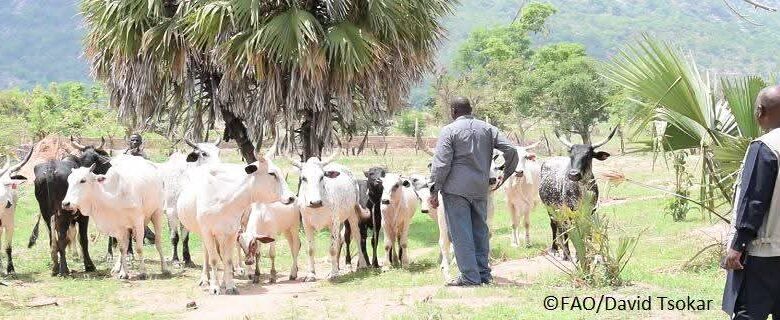
For decades, the image of the Fulani pastoralist in Nigeria has been associated with cattle moving across forests, farmlands and open spaces in search of pasture and water. This traditional system of livestock production has sustained generations of families, but it has also become increasingly difficult to maintain in a country experiencing rapid population growth, expanding agriculture, climate change, insecurity and intense competition over land and water.
The time has therefore come to think beyond the traditional distinction between the “herder” and the “farmer”.
Nigeria needs a deliberate national programme to transform pastoralism into modern livestock production — moving willing pastoralist families from vulnerable, unplanned bush migration into properly designed livestock settlements, ranches and cattle-breeding communities where they can become owners and operators of profitable agricultural businesses.
This should not be understood as an attempt to uproot the Fulani or destroy their culture. Rather, it should be an economic empowerment programme designed to give pastoralist communities a more secure future while protecting farmers, improving food production and strengthening national security.
From cattle rearers to cattle breeders
There is an important difference between merely keeping cattle and running a modern cattle-breeding enterprise.
A cattle rearer depends largely on natural pasture, moving animals from one location to another. A modern cattle breeder, by contrast, controls breeding, nutrition, veterinary care, water supply, animal health, record-keeping, reproduction and marketing.
The objective should therefore be to help pastoralists make that transition.
A modern Fulani livestock entrepreneur should be able to own a defined piece of land, maintain a herd, cultivate pasture, produce or purchase animal feed, access veterinary services, improve the genetics of the herd, insure the animals and sell milk, meat, hides and other livestock products through organised markets.
That transformation would turn cattle from a means of subsistence into a genuine business asset.
Establish voluntary livestock settlements
Government should identify suitable areas for the development of voluntary livestock settlements and ranching communities, particularly in states with appropriate land, water, pasture and market access.
Such settlements should not become overcrowded camps. They should be properly planned agricultural communities with:
- Secure land tenure;
- Water infrastructure;
- Veterinary clinics;
- Schools;
- Primary healthcare centres;
- Electricity and solar power;
- Roads and transportation;
- Police and community-security structures;
- Feed mills and fodder farms;
- Milk collection centres;
- Abattoirs and meat-processing facilities;
- Warehouses and cold-chain infrastructure;
- Digital livestock identification and registration systems.
The pastoralist family should not simply be moved from the bush into another impoverished settlement.
It should be moved into an economic ecosystem.
Give families ownership, not dependency
One of the greatest mistakes government could make would be to create settlements where pastoralists remain permanently dependent on government handouts.
The programme should instead provide a pathway to ownership.
Eligible families could receive access to land through leases, cooperative ownership or other legally secure arrangements, alongside livestock-development loans, improved cattle breeds, veterinary support and training.
The assistance should be structured as an investment.
A family that begins with a modest herd should be able to expand over time through improved breeding, better animal nutrition and access to markets.
Government can support the initial transition, but the ultimate objective should be self-sustaining livestock enterprises.
Develop pasture as a serious agricultural industry
Nigeria cannot modernise cattle production while treating pasture as an afterthought.
Pasture cultivation should become a major agricultural activity.
Livestock settlements should have designated areas for growing grasses, legumes and other suitable fodder crops. Farmers could also be encouraged to cultivate feed crops specifically for the livestock industry.
This would create another economic opportunity for surrounding farming communities.
Instead of cattle entering farmers’ fields in search of food, livestock owners would have an organised supply of feed within their production system.
This single change could significantly reduce conflict between crop farmers and pastoralists.
Water is central
Many pastoral conflicts are fundamentally intensified by competition over water.
A modern livestock settlement must therefore have reliable water infrastructure.
Boreholes, reservoirs, dams and properly managed water points should be developed according to environmental assessments and local needs.
Water infrastructure should serve both livestock and human communities where appropriate, with clear management arrangements to prevent new disputes.
Modernise cattle breeding
Nigeria also needs to move from quantity to quality.
Pastoralists should be trained and supported to improve the productivity of their cattle through scientifically managed breeding programmes, artificial insemination where appropriate, animal-health management and better nutrition.
The objective should not simply be to own more cattle.
It should be to own healthier and more productive cattle.
A smaller herd producing substantially more milk or meat can be economically more valuable than a much larger herd with poor productivity.
Build a powerful dairy industry
Perhaps the greatest untapped opportunity is milk.
Nigeria imports substantial quantities of dairy products despite having millions of cattle.
Pastoralist families should become shareholders and suppliers in a modern domestic dairy industry.
Milk collection centres can be established within livestock settlements. Refrigerated transportation can connect those centres to processing plants.
From there, milk can be processed into yoghurt, cheese, butter, powdered milk and other products.
This would create jobs not only for cattle owners but also for women, young people, transporters, processors, technicians and traders.
Fulani women, in particular, should be deliberately integrated into dairy cooperatives and given access to finance and processing equipment.
The objective should be to transform milk production from a household activity into a commercial enterprise.
Create livestock cooperatives
Individual pastoralists often have limited bargaining power.
Cooperatives can change this.
Pastoralist cooperatives can collectively purchase animal feed, veterinary medicines and equipment while negotiating better prices for milk, cattle and other products.
They can also access larger loans and insurance products than individual farmers might obtain.
A cooperative model would enable small livestock owners to participate in a modern agricultural economy without requiring every family to become a large commercial rancher.
Give young Fulani people a different future
The transformation must pay particular attention to young people.
A young Fulani should not be forced to choose between remaining a traditional nomadic herder and abandoning livestock altogether.
There should be a third option:
becoming a trained livestock entrepreneur.
Young people should receive training in veterinary assistance, animal nutrition, artificial insemination, farm management, agricultural technology, machinery operation, dairy processing, meat processing, digital marketing and cooperative management.
Universities, colleges of agriculture, veterinary institutions and private agricultural companies should participate.
The young livestock entrepreneur of the future should be as comfortable using a smartphone to monitor his herd as he is handling cattle.
Digitise the livestock industry
Every commercially managed herd should eventually have digital records.
Animal identification and traceability can help determine ownership, monitor diseases, facilitate vaccination and improve security.
A digital livestock system could also make it easier to distinguish legitimate livestock businesses from stolen cattle and reduce disputes over ownership.
Technology can further support weather information, veterinary advice, market prices, insurance and access to financial services.
Make security part of the programme
No economic transformation can succeed without security.
Livestock settlements should not become targets for bandits, cattle rustlers or other criminal groups.
Government must therefore provide effective policing and community-based security mechanisms while ensuring that security arrangements respect the rights of both pastoralists and neighbouring farming communities.
At the same time, livestock owners must accept responsibilities.
Every cattle owner should register animals, comply with movement regulations, respect farmland boundaries and cooperate with law-enforcement agencies.
Modernisation must come with accountability.
Build farmer-herder partnerships
The programme should not be designed exclusively for Fulani pastoralists.
Crop farmers should benefit as well.
There is enormous potential for integrated agriculture in which crop farmers produce fodder, livestock owners provide manure and both sides participate in organised markets.
Cattle manure can improve soil fertility, while agricultural by-products can become livestock feed.
Such cooperation can turn what has historically been a source of conflict into an economic partnership.
The message should be simple:
The farmer does not have to lose for the herder to prosper, and the herder does not have to lose for the farmer to prosper.
Relocation must be voluntary and lawful
Any relocation or settlement programme must respect constitutional rights, land laws and the legitimate interests of host communities.
Government should not forcibly relocate communities merely because they are pastoralists.
Instead, participation should be based on consultation, incentives and demonstrable economic benefits.
Host communities must also be involved from the beginning.
Traditional rulers, local governments, farmers’ organisations, pastoralist associations, women, youth and religious leaders should all have representation in the planning and management structures.
A settlement imposed on a community without consultation is likely to create another conflict.
A settlement developed with the community can become a model of coexistence.
Establish livestock development zones
Nigeria could establish dedicated Livestock Development Zones in suitable parts of the country.
These zones could combine ranches, dairy farms, feed production, veterinary services, livestock markets, processing plants, research centres and training institutions.
Rather than scattering government interventions across thousands of locations, these zones could concentrate infrastructure and investment where they can produce economies of scale.
Private investors should be encouraged to establish dairy factories, feed mills, meat-processing facilities and veterinary businesses within these zones.
Financing the transformation
The biggest obstacle will be financing.
Government cannot reasonably be expected to carry the entire cost.
A combination of federal and state government funding, development-finance institutions, commercial banks, agricultural funds, private investors and international development partners could finance the programme.
Loans should be long-term and appropriately structured because livestock investments do not necessarily produce immediate returns.
Insurance should also be expanded to protect livestock owners against disease, drought, theft and other risks.
The larger national opportunity
Modernising pastoralism could produce benefits far beyond the Fulani community.
It could increase domestic meat and milk production, reduce dependence on imported dairy products, create jobs, strengthen rural economies, improve food security and generate new tax revenue.
It could also reduce one of the most persistent sources of farmer-herder tension.
Most importantly, it could change the national narrative.
Instead of seeing the Fulani pastoralist primarily through the lens of conflict, Nigeria could begin to see him as a livestock entrepreneur, farmer, employer, investor and contributor to national economic development.
A new social contract
The ultimate objective should be a new social contract between pastoralist communities, farming communities and the Nigerian state.
Government would provide the infrastructure, security, land-access framework and economic incentives.
Pastoralists would embrace modern livestock management, respect land-use regulations and invest in productive enterprises.
Farmers would participate in integrated agricultural systems and respect legally established livestock zones.
Private investors would provide processing, financing, technology and markets.
Traditional and community leaders would help build trust and resolve disputes.
And young people would be given the skills to transform livestock production into a modern profession.
Nigeria does not have to choose between pastoralism and modernity.
It can modernise pastoralism.
The goal should not be to take the Fulani away from cattle. On the contrary, it should be to help them become better cattle owners, better breeders and more prosperous agricultural entrepreneurs.
The journey should therefore be from wandering to settled production; from survival to enterprise; from cattle rearing to cattle breeding; from conflict over pasture to investment in livestock; and from marginalisation to economic empowerment.
If properly conceived, transparently implemented and voluntarily embraced, such a transformation could benefit not only Fulani pastoralists but farmers, consumers, investors and the Nigerian economy as a whole.