KU8+ moves to reshape Nigerian universities with AI, research, collaboration
By NAJIMDEEN MAHMOUD and TORIOLA YESEERAH


“The question confronting every university is not simply: ‘What do we know?’ Rather, it is: ‘How does what we know get into the minds of people?’” he stated.
The KU8+ Consortium has called for a fundamental transformation of Nigeria’s university system, with member institutions urged to pool their expertise, embrace responsible artificial intelligence and turn research into practical solutions to the country’s development challenges.

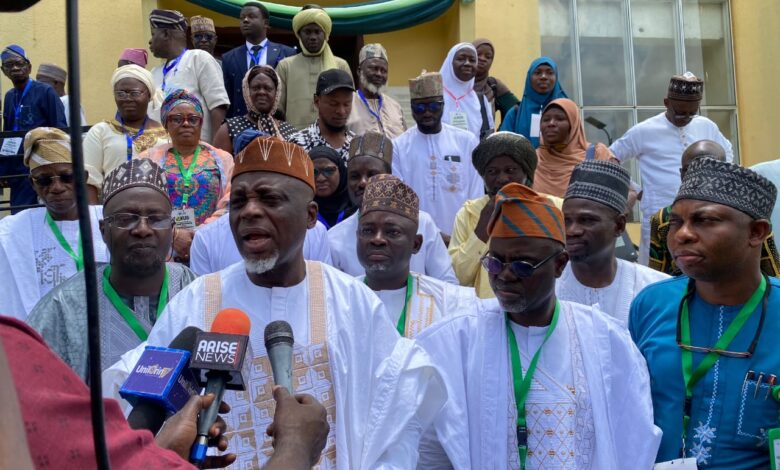
The call formed the thrust of the opening of the 2026 International Conference of the consortium at Summit University, Offa, Kwara State, on Friday, as university administrators, academics, policymakers, researchers, government officials, industry leaders, development partners and students converged to deliberate on the future of higher education.
The conference, with the theme centred on strengthening higher education for inclusivity and resilience through research, practice and societal impact, placed collaboration, digital transformation, innovation and institutional resilience at the centre of discussions.
The Vice-Chancellor of the host institution, Summit University, Offa, Prof. Abiodun Musa Aibinu, welcomed participants and expressed appreciation to the consortium for selecting the university to host the 2026 conference.
Aibinu reaffirmed the institution’s commitment to research, innovation, academic excellence and strategic partnerships capable of producing solutions to national and global challenges.
He stressed the importance of creating stronger institutional partnerships as universities confront rapidly changing technological, economic and social realities.
The Chairman of the KU8+ Consortium and Vice-Chancellor of the University of Ilorin, Prof. Wahab Olasupo Egbewole, SAN, described the consortium as a strategic alliance established to reposition higher education through collective action, knowledge sharing and impactful collaboration.
Egbewole maintained that universities could no longer afford to work in isolation if they were to respond effectively to emerging societal needs.
He called for sustained cooperation among member institutions in teaching, research, innovation and community engagement while maintaining high standards across the university system.
The Chairman of the occasion and Commandant, Navy College of Health Sciences, Offa, Commodore Ogbeche Richard Ochagu, commended the consortium for promoting partnerships among universities.
Ochagu urged the institutions to sustain collaborative initiatives capable of translating education, research and innovation into practical responses to Nigeria’s developmental challenges.
Delivering the keynote address, former Executive Secretary of the National Universities Commission, Emeritus Professor Peter A. Okebukola, OFR, challenged African universities to move beyond consuming artificial intelligence technologies and begin creating solutions that address the continent’s peculiar needs.
Okebukola urged the KU8+ Consortium to establish an AI hub that would bring scholars and experts from different disciplines together to develop AI tools tailored to various fields.
He argued that the initiative could strengthen research, generate practical solutions to societal problems and position the consortium as a pace-setter in AI development in Nigeria and Africa.
He also called for stronger partnerships among universities, government, industry and development organisations, describing collaboration as critical to building a sustainable and globally competitive higher education system.
Okebukola proposed the establishment of a permanent KU8+ secretariat to coordinate the consortium’s activities, shared digital infrastructure, expanded staff and student exchange programmes and 20 collaborative projects covering teaching, research, innovation, entrepreneurship and community service.
He further advocated the responsible integration of AI into teaching, learning, research, assessment and university administration.
The lead paper presenter I, Prof. Yusuf Olaolu Ali, SAN, who was represented by Prof. Bashiru Adeniyi Omipidan, the Dean, Faculty of Law, University of Ilorin, he challenged universities to move beyond knowledge generation and demonstrate their relevance through measurable societal impact.
Ali questioned whether universities should merely respond to changes or become agents of change.
“The question confronting every university is not simply: ‘What do we know?’ Rather, it is: ‘How does what we know get into the minds of people?’” he stated.
He identified digital infrastructure, cybersecurity, research capacity, financial sustainability and migration to a new flow of knowledge as major areas requiring urgent attention in the university system.
Ali called for greater investment in digital infrastructure, responsible adoption of artificial intelligence and stronger support for interdisciplinary research.
He urged universities to commit their research to societal challenges, deepen institutional collaboration and pursue digital transformation responsibly.
The second lead paper presenter, Emeritus Professor Olugemiro Jegede, called for a deliberate strategy to retain Nigeria’s brightest graduates and reduce the impact of the japa syndrome, arguing that the country’s best students should be encouraged to stay and contribute to the training of the next generation and the development of Nigeria, while those seeking further opportunities abroad could pursue them without undermining the country’s intellectual capacity.
Jegede identified funding disparities, brain drain and industrial friction among the major challenges confronting the Nigerian university system.
He urged the KU8+ Consortium to pursue practical initiatives that would allow member institutions to share expertise, infrastructure and opportunities.
Among his proposals were credit transfer systems, staff and student exchange programmes, smart administration and governance, a unified academic and learning ecosystem, a shared postgraduate school, faculty exchange programmes in the health sciences and a centre for agricultural innovation.
Jegede warned that the decline of Nigerian universities should no longer be treated as merely an academic concern but as a national emergency.
The professor expressed the hope that the KU8+ Consortium would emerge as a model for the rejuvenation of Nigeria’s university system and inspire similar initiatives across Nigeria and West Africa.
In a goodwill message, the Chairman of the Board of Trustees of the KU8+ Consortium, Emeritus Professor Ishaq Oloyede, called for greater attention to agriculture, particularly in Kwara State.
Oloyede, a former Registrar of the Joint Admissions and Matriculation Board, maintained that academics had a responsibility to provide intellectual solutions to the challenges confronting society.
Oloyede expressed optimism that the KU8+ initiative would strengthen higher education and contribute to the development of Kwara State and Nigeria.
The Olofa of Offa, Ọba Muftau Muhammed Gbadamosi, Ajagungbade I, Esuwoye II, commended the consortium for bringing stakeholders together to deliberate on the future of higher education.
The monarch noted that Kwara State, with its growing number of universities, was strategically positioned to become a major centre of higher education in Nigeria. He noted that the state now has 13 universities and expressed confidence that Kwara could, in the near future, produce some of the best universities in the country.
The Ẹkẹfa of Iyalode Ibadan, Chief Mojisola Ladipo also commended the organisers and Okebukola for the initiative. She described the conference as an opportunity for stakeholders to learn, exchange ideas and reflect on the challenges confronting education.
Mojisola expressed the hope that the KU8+ Consortium would inspire similar collaborative initiatives in other parts of the country.
The conference continues on Saturday with a plenary session and is expected to end with a closing ceremony later in the day.