Misguided Bombs and Dangerous Narratives: When the Fight Against Terror Misses Its Target
By MALLAM IBRAHIM AGUNBIADE

For the first time in Nigeria’s modern history, the United States has carried out a direct military strike on Nigerian soil under the pretext of fighting terrorism. This troubling development follows earlier threats by former U.S. President Donald Trump, who had repeatedly alleged a so-called “Christian genocide” in Nigeria and hinted at possible military intervention.

What makes this incident deeply alarming is not merely the involvement of a foreign power, but the grave misrepresentation of Nigeria’s security realities and the reckless choice of targets allegedly hit during the operation.
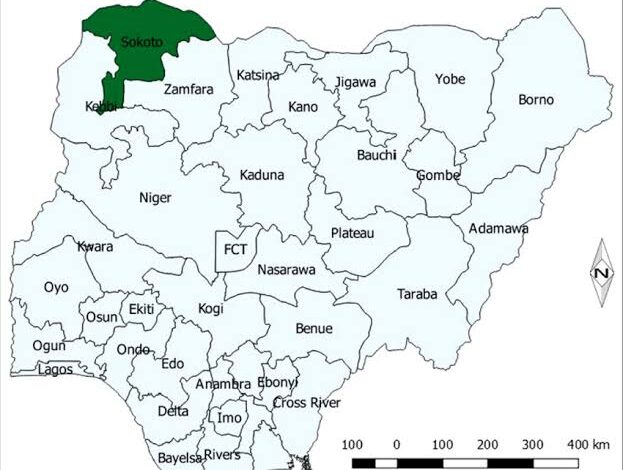
Credible accounts from residents, particularly in parts of Sokoto State, indicate that the area struck has no established history of bandit or terrorist activity. Eyewitnesses insist that innocent civilians were affected, raising serious questions about intelligence accuracy and operational intent. Even more disturbing, a careful review of available footage suggests that the bombardment targeted populated city areas, not the forests, hideouts, or remote terrains where terrorist groups are known to operate.
This pattern mirrors a broader and dangerous narrative problem. Nigeria’s terrorism challenge is real, but it is geographically specific and well-documented. Boko Haram and ISWAP remain largely concentrated around the North-East, particularly Maiduguri and its environs. Armed banditry and insurgent violence plague Zamfara and parts of Niger State, mostly in forested regions such as the Rugu and Kamuku forests. These are not urban centres. They are not civilian neighbourhoods. Any counterterrorism effort that ignores these realities is either grossly incompetent or deliberately misleading.
By conflating Nigeria’s complex security challenges with simplistic and sectarian narratives, external actors risk inflaming religious tensions in a country already struggling to maintain fragile unity. Framing Nigeria’s crisis as a religious war. Muslim versus Christian, is not only false but profoundly irresponsible. Terrorism in Nigeria has never been a religious project of the Nigerian state, nor has it been confined to one faith community as victims include Muslims and Christians alike.
Weaponising religion to justify foreign military action is a dangerous precedent. It emboldens misinformation, delegitimises Nigeria’s sovereignty, and places innocent lives at risk. Worse still, it suggests that political lobbying and ideological pressure, rather than verified intelligence, may now shape decisions of war and peace.
Nigeria does not need bombs dropped on its cities. It needs cooperation rooted in truth, intelligence sharing grounded in reality, and respect for its territorial integrity. Any genuine ally in the fight against terrorism must understand that misguided strikes create more enemies than they eliminate, and civilian casualties only deepen resentment and instability.
If the goal is truly to defeat terrorism, then accuracy, accountability, and restraint must come first. Anything short of this is not counterterrorism, it is a reckless intervention with potentially devastating consequences for a fragile nation.
agunbiadeib@gmail.com – 26th December, 2025