‘Your World Order Is Collapsing’: Putin Challenges Western Dominance, Pitches BRICS as Model for Multipolar World
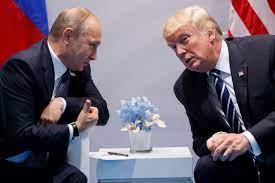
Speaking at the BRICS Business Forum in New Delhi on September 11, Putin argued that the world economy was experiencing what he described as a period of profound structural change, with new centres of economic growth emerging to challenge the dominance historically associated with Western economies.
Russian President Vladimir Putin has intensified his criticism of what he describes as Western dominance of global affairs, arguing that the international system is undergoing a fundamental transformation and that emerging powers are increasingly demanding a greater role in shaping global economic and political relations.
Putin made the remarks in the context of the 2026 BRICS Summit in New Delhi, India, where he presented the expanded BRICS grouping as an increasingly important platform for economic cooperation and a possible pillar of a more multipolar international order.
The Russian leader’s comments come amid growing debate over the future of the post-World War II international system, including the role of institutions such as the United Nations Security Council and the Bretton Woods financial institutions.
Putin points to changing global power balance
Speaking at the BRICS Business Forum in New Delhi on September 11, Putin argued that the world economy was experiencing what he described as a period of profound structural change, with new centres of economic growth emerging to challenge the dominance historically associated with Western economies.
According to Putin, BRICS countries accounted for more than 40 per cent of global GDP over the preceding five years, while the Group of Seven (G7) accounted for about 29 per cent during the same period.
He also said BRICS countries were responsible for nearly half of global economic growth during those five years, compared with about 18 per cent attributed to the G7.
Putin further stressed the demographic weight of the grouping, saying BRICS countries are home to roughly half of the world’s population.
The expanded BRICS now comprises 11 full members and represents nearly half of the global population, although analysts note that the grouping remains politically and economically diverse, with members maintaining different strategic interests and relationships with Western powers.
‘No single country should dominate’
Putin has portrayed BRICS as operating on principles of equality, cooperation and respect for national interests rather than domination by a single power.
At the BRICS Outreach/Plus meeting in New Delhi, he described the format as providing opportunities for direct dialogue among equal members, partner countries and other organisations interested in cooperation.
He said BRICS’ economic potential remained far from exhausted and pointed to the possibility of deeper cooperation in manufacturing, technology, trade, services, energy, transport and digital infrastructure. Putin said the group’s internal trade had reached about $1.2 trillion and that its members accounted for almost a quarter of global exports.
He also said BRICS was seeking to develop a common growth platform that would combine the economic strengths and complementary capabilities of its members.
A challenge to Western-led rules
Putin’s message was particularly critical of what he described as efforts by Western countries to preserve their previous position of global economic leadership.
At the BRICS Business Forum, he accused Western competitors of using sanctions and other economic measures to protect their former dominance. He also criticised restrictions affecting international trade, transportation and investment.
Those assertions reflect the Russian government’s longstanding position that Western sanctions and other economic measures are instruments of geopolitical pressure. They are contested by Western governments, which have imposed sanctions on Russia as part of their response to Russia’s actions in Ukraine and other foreign-policy disputes.
Putin also cited the number of sanctions imposed on Russia, claiming that more than 30,000 restrictions had been placed on the country.
BRICS and the future of global governance
Putin’s argument goes beyond economics. He has increasingly linked the rise of BRICS and other organisations in Asia, Africa and Latin America to what he describes as the emergence of a multipolar international system.
At an earlier Shanghai Cooperation Organisation summit in Bishkek in September, Putin said the creation of what he called a “new, truly just” multipolar world order was irreversible. He nevertheless said the United Nations should remain central to international affairs and called for reforms that would give greater representation to countries from the Global South and East, including in the Security Council.
This is significant because Putin’s position is not simply that existing international institutions should disappear. Rather, he has argued that they should be reformed to reflect what he considers to be the changing distribution of global economic and political power.
UN also calls for institutional reform
The debate is not limited to Russia.
UN Secretary-General António Guterres, speaking at the 18th BRICS Summit in New Delhi, said the world had changed substantially since 1945 and that global institutions needed to adapt to contemporary realities.
Guterres specifically called for reforms to the UN Security Council and the Bretton Woods institutions, while arguing that the movement towards a more multipolar world could produce greater balance if accompanied by institutional reform.
BRICS foreign ministers have similarly called for a more representative and equitable global governance system, while reaffirming the central role of the United Nations Charter and international law.
BRICS faces internal differences
Despite Putin’s portrayal of BRICS as an emerging alternative platform for global cooperation, the grouping is not a unified political or military alliance.
Its members have different economic systems, foreign-policy priorities and strategic relationships. The 2026 summit itself took place against the backdrop of conflicts in Ukraine and the Middle East, as well as continuing tensions between the United States and China.
Analysts cited by CNN noted that BRICS’ economic weight is substantial but that its internal political diversity and divisions can make coordinated action difficult. One analyst described the group’s principal objective as providing alternatives and reforms to existing financial and economic governance rather than simply acting as an anti-Western bloc.
Putin’s wider warning
On October 1, Putin separately warned that international conflicts were likely to continue as the world undergoes what he described as fundamental geopolitical changes.
He said such changes were creating new opportunities but also encouraging governments to take greater risks in pursuit of strategic gains. At the same time, he called for avoiding catastrophic scenarios and said the international situation could improve as Western dominance declines.
Taken together, Putin’s recent statements present BRICS as part of a broader shift in global economic and political power. His argument is that countries representing a large share of the world’s population and economic growth should have greater influence over the rules governing international affairs.
Whether BRICS can translate its growing economic and demographic weight into a cohesive alternative to existing global institutions remains an open question. For now, however, the grouping’s expansion and the debate surrounding reform of the international system demonstrate that the structure of global power is undergoing significant change.