Yemen’s Ansarullah says US, Israel have lost control of war

He said Iran proved to be far stronger than anticipated, adding that signs of confusion, disarray, and loss of control quickly became evident in statements by opposing officials shortly after the aggression began.
A senior member of Yemen’s Ansarullah movement says the US-Israeli enemy has lost control of the battlefield and strategic balance since the second week of the aggression.
IRNA on Saturday quoted Nasr al-Din Amer as saying that Iran’s “rapid and powerful” response in the first hours after the assault demonstrated that the enemy’s calculations were flawed.
He said Iran proved to be far stronger than anticipated, adding that signs of confusion, disarray, and loss of control quickly became evident in statements by opposing officials shortly after the aggression began.
Amer noted that the enemies had counted on internal unrest in Iran, expecting the public to turn against the government and armed forces.
“That did not happen,” he said, emphasizing that Iranians instead rallied in support of the state and military, taking to the streets in large numbers and surprising their opponents.
He described the sustained public presence as a key factor in the enemy’s failure, saying it was no less significant than missile and drone operations or the closure of the Strait of Hormuz.
Iran hints at the prospect of additional momentous pressure on aggressors and their allies with potential closure of the Bab el-Mandeb Strait.
Amer added that one of the main expectations of the opposing side had been mass riots leading to instability and the collapse of Iran’s system. “Instead, public mobilization against the aggression dealt a heavy blow to those plans,” he said.
He also pointed to early calls by US President Donald Trump and Israeli Prime Minister Benjamin Netanyahu urging Iranians to “rise up,” saying such rhetoric has since disappeared.
According to Amer, the focus of the opposing side has shifted from regime change to concerns over reopening the Strait of Hormuz, which he said had previously remained open without restrictions.
He argued that past experiences in the Red Sea and Bab al-Mandeb Strait have made the enemies cautious, noting they have avoided threatening to reopen strategic waterways by force.
Amer further stressed that the United States and its allies had previously failed to secure maritime routes in those regions, adding that even Israeli ports remained closed during the Gaza genocide.
He warned that any potential ground offensive by the United States would provide Iran with an opportunity to inflict greater losses.
Amer also said that, despite ongoing threats, US aircraft carriers have not been brought close to the war zone, attributing this to the diminished deterrence of such forces following past confrontations.
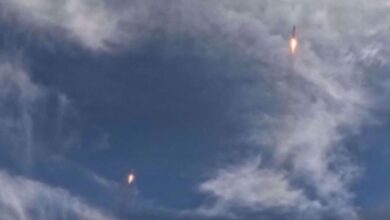
The United States and the Israeli regime began their latest bout of unprovoked aggression against Iran on February 28, prompting the Islamic Republic’s Armed Forces to launch Operation True Promise 4.
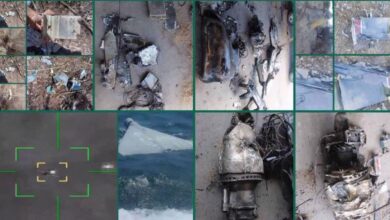
In addition to the aviation losses, the US’s outposts and interests across the region have come under firm retaliation, which has also dealt significant blows to sensitive and strategic Israeli targets throughout the occupied territories.