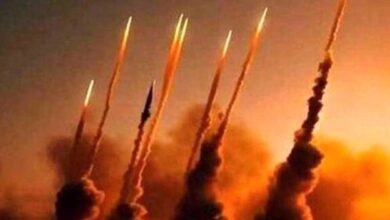
Viral missile strike claims rock Israeli leadership as Iran–Israel war enters dangerous information warfare phase – Report

*Information Warfare, Social Media, and the Modern Battlespace of Narratives
Viral online claims alleging Iranian missile strikes on the residences of Israeli Prime Minister Benjamin Netanyahu and National Security Minister Itamar Ben-Gvir have triggered global scrutiny as analysts warn that the Iran–Israel confrontation is increasingly spilling into the information warfare domain.
A wave of unverified claims alleging that Iranian missile strikes targeted the private residences of Israeli Prime Minister Benjamin Netanyahu and National Security Minister Itamar Ben-Gvir has ignited a global information shockwave, exposing how the fog of war in the escalating Iran–Israel conflict can rapidly transform unverified narratives into strategic signals circulating across global defence and geopolitical networks.
Social media records show that in Africa’s who support the misinformation by Israel are Nigerians and that the Nigerians who are in this act are those described as data boys and girls working hard for re-election of their “master strategist” Bola Ahmed Tinubu in 2027.
The allegations gained traction after former U.S. Marine Corps intelligence officer and United Nations weapons inspector Scott Ritter asserted during an appearance on The Sanchez Effect—a program hosted by Rick Sanchez—that Iranian missile strikes had struck the homes of Netanyahu and Ben-Gvir, claims that immediately began spreading across digital ecosystems already saturated with geopolitical anxiety and military escalation narratives.
Ritter framed the alleged attack as evidence that Iran had successfully neutralised Israeli and American defensive architectures, stating that Tehran’s missile capabilities had effectively “made [U.S. and Israeli defenses] blind and deaf,” a remark that amplified strategic concern despite the absence of corroboration from Israeli authorities, Iranian officials, or independent verification channels.
Israel
Iran could theoretically view the residences of Israeli Prime Minister Benjamin Netanyahu and National Security Minister Itamar Ben-Gvir as symbolic strategic targets because both figures represent the political leadership directing Israel’s military campaign against Tehran and shaping the operational framework of the ongoing Iran–Israel confrontation.
The logic of such targeting would be rooted in retaliation dynamics after Israeli and U.S. strikes reportedly killed Iran’s Supreme Leader Ali Khamenei and several senior Iranian military officials during the opening phase of the war, an unprecedented operation aimed at dismantling Iran’s leadership structure.
The killing of Khamenei, alongside other high-ranking Iranian defence and intelligence commanders, fundamentally altered the strategic environment of the conflict by demonstrating that Israel was willing to directly target the highest level of Iran’s political and military leadership.
Within this context, Iranian planners could frame any potential strike against the homes of Israeli political leaders as a form of retributive deterrence intended to signal that Israel’s leadership would face equivalent vulnerability following attacks on Iran’s command hierarchy.
Netanyahu, as the central political authority directing Israeli military operations against Iran, represents a strategic symbol of the campaign that Tehran views as threatening the survival of the Islamic Republic and its regional military posture.
Ben-Gvir, serving as Israel’s National Security Minister and a prominent advocate of hard-line security policies, embodies the domestic security apparatus responsible for shaping Israel’s wartime internal and operational response.Berita Keselamatan
From a military-strategic perspective, targeting the residences of these leaders would serve as a psychological and political signalling operation designed to demonstrate that Iranian missile forces could penetrate Israel’s security architecture and threaten the decision-makers responsible for military escalation.
Such an action would also communicate to regional and domestic audiences that Iran retains the capability to impose strategic costs on Israeli leadership despite suffering losses within its own political and military hierarchy.Pertahanan Asia Tenggara
However, attacking the homes of political leaders would represent a dramatic escalation beyond conventional military targeting because it would shift the conflict toward direct leadership targeting and potential decapitation strategies.
At present, the widely circulating claims that Iranian missiles struck the residences of Netanyahu and Ben-Gvir remain unverified, meaning the narrative exists within the broader fog of war surrounding the Iran–Israel conflict rather than as confirmed battlefield events.
Nevertheless, Israel maintained a strict military censorship regime over security-related reporting, under which domestic and international media outlets operating inside the country must comply with censorship guidelines before publishing information concerning attacks, strategic infrastructure damage, or sensitive national security developments.
Such information controls enable Israeli authorities to limit the public release of operational details relating to missile strikes or military incidents that could potentially affect public morale, political stability, or the perceived effectiveness of Israel’s defence architecture.
This censorship structure grants Israeli security authorities the power to delay, edit, or block media reports concerning sensitive incidents, thereby creating information gaps that can inadvertently fuel speculation, misinformation, and rapidly spreading unverified narratives across global digital media ecosystems during periods of conflict.Berita Keselamatan
Iran
The claims that Iranian missiles struck the private residences of senior Israeli political leaders emerged from a highly charged geopolitical environment in which strategic messaging, information warfare, and battlefield ambiguity increasingly intersect within global digital media ecosystems.
Scott Ritter asserted during the interview that Iranian missile strikes had hit the home of Prime Minister Benjamin Netanyahu, alleging that the strike resulted in the death of Netanyahu’s brother, Iddo Netanyahu, a claim that has circulated widely online despite lacking confirmation from any official Israeli source.
Ritter further claimed that the residence of Israel’s National Security Minister Itamar Ben-Gvir had also been struck by Iranian missiles, alleging that Ben-Gvir had been seriously wounded and may not have survived the attack, assertions that immediately triggered a surge of speculation across international social media networks.
The former intelligence officer also questioned reports suggesting Ben-Gvir had been involved in a car accident, implying that such coverage might serve as a cover narrative designed to obscure the alleged missile strike, stating sarcastically during the broadcast that Ben-Gvir’s “home is on fire” and jokingly suggesting that he might have “crashed his car into his house.”
These assertions rapidly circulated across multiple digital platforms including X, formerly known as Twitter, as well as Facebook, Instagram, and a range of alternative news websites that frequently act as accelerators for geopolitically charged narratives during active military confrontations.
The speed with which the allegations propagated highlights the structural vulnerability of modern information ecosystems during periods of conflict, where military speculation, political narratives, and algorithm-driven amplification can rapidly transform individual claims into perceived geopolitical developments.
Within hours of Ritter’s remarks appearing online, the claims had been reposted and discussed across numerous international defence forums, geopolitical commentary channels, and digital media platforms focused on the ongoing Iran–Israel confrontation.Pertahanan Asia Tenggara
The viral spread of the allegations underscores how contemporary strategic communication environments increasingly blur the boundaries between verified battlefield developments and speculative narratives that circulate during periods of heightened geopolitical tension.
At the same time, the rapid amplification of these claims illustrates how modern digital platforms can transform isolated commentary into perceived strategic intelligence signals within global security discourse.
Absence of Official Confirmation and the Strategic Weight of Information Gaps
Despite the widespread circulation of the allegations across global digital networks, there has been no official confirmation from the Israeli government that Iranian missiles struck the homes of either Prime Minister Benjamin Netanyahu or National Security Minister Itamar Ben-Gvir.Berita Keselamatan
Similarly, Iranian authorities have not issued any statements confirming that such strikes occurred or indicating that Iranian forces targeted the residences of Israeli political leaders during recent missile operations.
The absence of confirmation from either government highlights the strategic ambiguity that often characterises wartime information environments, where the lack of verified data can allow competing narratives to proliferate rapidly.
In highly volatile geopolitical crises, unverified reports can acquire disproportionate influence because the absence of official information creates a vacuum that speculative narratives quickly fill.
This dynamic has been particularly evident during the early 2026 escalation between Iran and Israel, where missile strikes, retaliatory threats, and military signalling have unfolded alongside intense information warfare across global digital media channels.
While Iranian missile operations have reportedly targeted Israeli sites during the current confrontation, available verified reports indicate that those strikes were directed toward military infrastructure rather than the personal residences of Israeli political leaders.
The discrepancy between the viral claims and the known pattern of reported targets illustrates how wartime rumours can diverge significantly from verified military developments on the ground.
Information gaps during conflict environments often provide fertile ground for narratives that align with broader perceptions of escalation or strategic breakthrough, even when supporting evidence remains absent.
As a result, analysts monitoring the Iran–Israel confrontation must treat rapidly circulating online claims with caution, particularly when those claims originate from commentary rather than official military disclosures.
The rapid spread of the alleged Iranian missile strikes illustrates how social media platforms have become integral components of the modern battlespace, where narratives can shape geopolitical perceptions even before battlefield events are verified.
Platforms such as X, Facebook, Instagram, and alternative digital news networks now function as accelerators of strategic messaging, enabling information to travel across global audiences within minutes of initial publication.
In this environment, individual claims can quickly evolve into geopolitical talking points if they resonate with existing narratives surrounding military escalation or technological capability.
The allegations about missile strikes on Israeli leadership residences appeared during a period when the Iran–Israel confrontation had already generated intense international scrutiny and speculation about the trajectory of the conflict.
Under such conditions, claims that suggest dramatic escalation or unprecedented military outcomes can attract significant online engagement regardless of their verification status.
The phenomenon reflects the increasingly complex interaction between traditional military operations and the digital information sphere, where narratives can influence strategic perception even without physical battlefield confirmation.
For defence analysts and policymakers monitoring the crisis, the viral circulation of these claims demonstrates how information warfare now operates alongside conventional military confrontation.Pertahanan Asia Tenggara
In practical terms, this means that strategic communication, perception management, and digital narrative control have become central components of modern geopolitical conflict dynamics.
Consequently, the proliferation of such claims during the Iran–Israel crisis illustrates how digital media ecosystems can magnify the fog of war rather than clarify battlefield realities.
The rumours surrounding alleged Iranian missile strikes on Israeli leadership residences emerged against the backdrop of an escalating confrontation between Iran and Israel during the early months of 2026.
This confrontation has been characterised by missile barrages, retaliatory threats, and heightened military readiness across multiple theatres of the Middle East.
Reports indicate that Iranian missile strikes have targeted Israeli sites and U.S. military bases in the region as part of the broader escalation cycle unfolding between Tehran and its regional adversaries.
However, the available verified information indicates that those attacks have focused primarily on military infrastructure rather than the personal residences of political leaders.
The distinction between military targets and political residences is strategically significant because targeting leadership homes would represent a major escalation in the nature of the conflict.
Such an action could potentially alter the political and military dynamics of the confrontation by transforming it from a strategic military exchange into a direct leadership targeting campaign.
At present, the available information does not support the conclusion that Iran conducted such strikes against Israeli political residences.
Instead, the narrative appears to have emerged from commentary during a broadcast discussion rather than from confirmed operational developments.
This distinction underscores the importance of separating commentary and speculation from verified military events when assessing rapidly evolving geopolitical crises.
The circulation of unverified claims about missile strikes on Israeli leaders illustrates the enduring impact of the “fog of war,” a phenomenon in which uncertainty, incomplete information, and competing narratives obscure the reality of unfolding events.
In modern conflicts, this fog is intensified by the speed of digital communication and the decentralised nature of global information networks.
The Iran–Israel confrontation provides a clear example of how rapidly circulating claims can generate confusion about battlefield developments before verified information becomes available.
During periods of intense military escalation, misinformation and unverified rumours can emerge not only from deliberate information operations but also from speculation, misinterpretation, or premature reporting.
The viral narrative about missile strikes on Netanyahu’s and Ben-Gvir’s homes illustrates how such dynamics can unfold within hours of a single public statement.
Once circulating online, these claims can become embedded in broader geopolitical discussions, even if they lack independent verification.
This dynamic poses challenges for policymakers, analysts, and military observers who must navigate a complex landscape of information while attempting to assess real operational developments.
In the absence of confirmation from official Israeli or Iranian sources, the alleged strikes remain part of the wider information environment rather than established battlefield events.
As the Iran–Israel confrontation continues to evolve, the rapid spread of such claims highlights the importance of maintaining analytical discipline when evaluating information emerging from highly contested geopolitical crises.