US begins final withdrawal from Iraq after 23 years as troops shift to Jordan
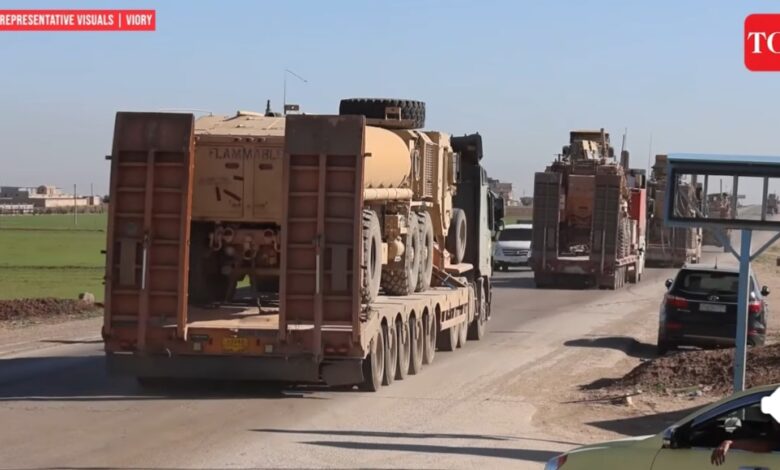
The drawdown marks the end of a 23-year American military presence that began with the US-led invasion of Iraq in 2003 and later evolved into a much smaller counterterrorism mission against Islamic State militants.
The United States has begun removing its remaining military personnel, vehicles, weapons and other equipment from Iraq as Washington moves to complete the withdrawal of its forces from the country by September 30, 2026.

The drawdown marks the end of a 23-year American military presence that began with the US-led invasion of Iraq in 2003 and later evolved into a much smaller counterterrorism mission against Islamic State militants. Under an agreement reached by Washington and Baghdad in 2024, the US-led international coalition’s military mission in Iraq is scheduled to formally end on September 30.
Hundreds of American troops remain in northern Iraq, particularly around Erbil in the Kurdistan Region, but a US military official said most of those personnel are expected to be redeployed to Jordan and other locations in the Middle East rather than return to the United States. Military equipment, including air-defence systems, is also being withdrawn.
The Iraqi government has described September 30 as the fixed and final date for ending the coalition’s military mission and completing the departure of foreign forces. Iraqi officials say the transition is intended to open a new phase of bilateral security cooperation between Baghdad and coalition countries.
The US military presence in Iraq had already been substantially reduced before the current phase of the withdrawal. American forces left several major bases in other parts of the country last year, leaving the Erbil area as the principal location of the remaining US military presence.
Air Defence Systems Also Being Removed
The withdrawal includes US air-defence systems deployed in Erbil. The systems have been particularly important to the protection of US and allied personnel in northern Iraq amid attacks involving missiles and drones.
Their removal has generated concern in the Kurdistan Region about a potential gap in protection against aerial threats. Iraqi authorities, however, have been working to strengthen the country’s own air-defence capabilities, with contracts for new systems reportedly concluded with suppliers from the United States, South Korea and Türkiye.
Iraq’s air-defence modernisation programme is being accelerated as the coalition prepares to leave, with the government planning to deploy new systems to protect strategic infrastructure, including oil facilities and other vital national assets.
Militia Disarmament Remains a Major Challenge
The American withdrawal is taking place alongside another major security issue facing Baghdad: the government’s effort to ensure that weapons are held exclusively by the state.
Prime Minister Ali al-Zaidi has repeatedly stressed the need to bring weapons held by non-state armed groups under government authority. However, Iran-aligned factions have signalled that they are not prepared to surrender their weapons simply because the US-led coalition is leaving.
Reports indicate that some of the powerful armed groups have maintained their position that the question of their weapons should be addressed through political negotiations. The issue has therefore emerged as one of the major challenges facing the Iraqi government as the American military presence comes to an end.
The Iraqi government has said that future arrangements will focus on ensuring that all weapons are ultimately brought under state control, although the mechanism and timing remain subjects of political negotiations.
US Mission Ends, Regional Presence Continues
Although the withdrawal ends the American military mission in Iraq, it does not amount to a complete US military departure from the Middle East.
The redeployment of American troops to Jordan and other regional locations means that Washington’s military footprint is being redistributed rather than eliminated. A US official said the Erbil counterterrorism base had become less strategically important as the threat posed by Islamic State declined, while American forces in northern Iraq had increasingly faced attacks from Iran and Iran-aligned Iraqi militias.
Iraq’s government has meanwhile indicated that the end of the coalition mission will not mean the end of cooperation with coalition countries. Future relations are expected to include areas such as intelligence sharing, information exchange, weapons programmes and other forms of security cooperation.
The US-led coalition was established in 2014 after Islamic State seized large territories in Iraq and Syria. Iraq declared in December 2017 that it had retaken all of its territory from the group, although Islamic State remnants have continued to carry out sporadic attacks.
The September 30 deadline therefore represents a significant transition for Iraq: the formal end of the US-led coalition’s military mission after more than two decades of American military involvement, alongside a shift toward Iraqi responsibility for national security and a new model of bilateral cooperation with Washington.