U.S. court reportedly orders release of files in Tinubu-linked ‘drug probe’
According to a report published on April 20, 2026, the case—filed under the Freedom of Information Act (FOIA)—is approaching a key disclosure deadline of June 1, 2026, following years of legal disputes over access to the documents.
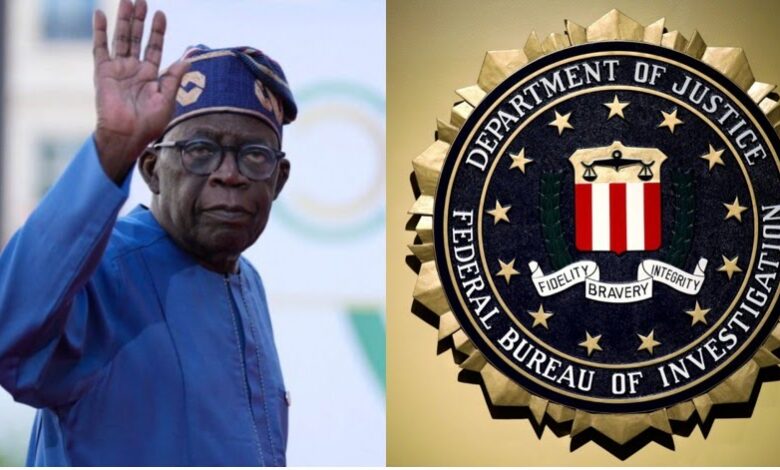
A United States federal court has ordered the release of long-sought records connected to a 1990s narcotics investigation in Chicago in which Nigerian President Bola Ahmed Tinubu has been referenced in historical documents.


According to a report published on April 20, 2026, the case—filed under the Freedom of Information Act (FOIA)—is approaching a key disclosure deadline of June 1, 2026, following years of legal disputes over access to the documents.
Background to the FOIA Case
The legal battle began in 2022 when transparency advocate Aaron Greenspan, founder of PlainSite, submitted FOIA requests to several U.S. agencies. These included the Federal Bureau of Investigation (FBI), Drug Enforcement Administration (DEA), Internal Revenue Service (IRS), State Department, Central Intelligence Agency (CIA), and the Executive Office of U.S. Attorneys.
The requests sought records related to a Chicago-based investigation into alleged narcotics-linked financial activities during the early 1990s. Investigative journalist David Hundeyin reportedly assisted in the broader research effort.
After agencies declined to release the documents, Greenspan filed a lawsuit in 2023, escalating the matter to federal court.
Agencies Cited Delays
Court filings show that the FBI and DEA repeatedly delayed their responses, at times projecting timelines extending into 2026. Both agencies also issued “Glomar responses,” a legal position allowing them to neither confirm nor deny the existence of requested records.
Officials cited inter-agency consultations and procedural requirements as reasons for the delays, though substantive disclosures were not made during that period.
Court Ruling and Deadline
In a ruling issued on February 3, 2026, U.S. District Judge Beryl A. Howell rejected several of the agencies’ arguments, including their reliance on Glomar responses, stating they were not sufficiently justified.
The court ordered the FBI and DEA to begin structured disclosure of non-exempt materials and directed the DEA to produce a detailed “Vaughn index” explaining any redactions or withheld content.
A firm compliance deadline of June 1, 2026, was set, with interim status updates required ahead of that date.
Nature of the Records
The documents relate to a decades-old investigation into alleged narcotics-related financial activity in Chicago. Historical records, including affidavits attributed to former IRS Special Agent Kevin Moss, reference civil forfeiture proceedings involving approximately $460,000 allegedly linked to drug trafficking proceeds.
There has been no criminal conviction recorded against President Tinubu in connection with those proceedings.
Thousands of pages of FBI investigative files remain unreleased and are now subject to the court’s disclosure order.
Political and Legal Context
The Nigerian government has previously maintained that publicly circulated materials from the period do not establish wrongdoing and have been misinterpreted in some instances.
Lawyers involved in the FOIA case argue that full disclosure is necessary to clarify the historical record.
The court has emphasized that the case concerns only the release of documents under transparency laws and does not make findings of criminal liability against any individual named.
Broader Transparency Issues
The case reflects wider tensions in the United States over access to sensitive government records. Courts have increasingly scrutinized the use of broad exemptions, particularly in cases involving historical investigations and strong public interest.
With the June deadline approaching, the FBI and DEA are expected to complete phased disclosures and justify any remaining redactions. A joint status report due in early May 2026 will indicate whether the agencies are on track to comply fully with the court’s order.