Truth about Tinubu’s APC campaign in Kaduna on Saturday October 24
MAIN POINTS:
*Between promises of prosperity and the reality of hunger, what the President’s campaign flag-off revealed about the 2027 election battle
*Despite mobilisatiion from across 19 Northern states, APC failed to fill up Kaduna’s 5,000 capacity stadium for Tinubu’s campaign flag-off, Says Solomon Dalung

By SHERIFDEEN ABBAS
The moment Tinubu came to power, all of these areas of people’s economy went astronomically up under his one hour in office and hasn’t come down since then. Hajj went from N1.6 million to N10 million, petrol from N184, N185 per litre N1,800 and fluctuated later between N850 until it now got black up to N1,400 per litre, bag of rice from N25,000 to N100,000 to the current artificial N50,000 or more , bag of cement went from between N2,500 and N3,000 to N8,000; N10,000; N12,000 and now N13,000, and Naira to Dollar exchange went from N431 to N2,000 before the current artificial N1,400 to one Dollar, Lagos-Abuja and Lagos-Sokoto flight went from very predictable ticket of between N40,000 and N45,000 to N100,000 and now between N260,000 and N350,000, school fees in any Federal or state university in Nigeria went from between N15,000 and N25,000 now to between N164,000 N350,000. But the same President Tinubu went to flag off his campaign in Kaduna, telling already charged and angered Nigerians that opposition and not him that afflicted the hardship on them and still asked to be allowed make another promise to perform?
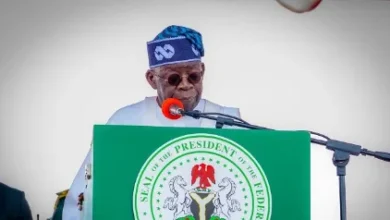
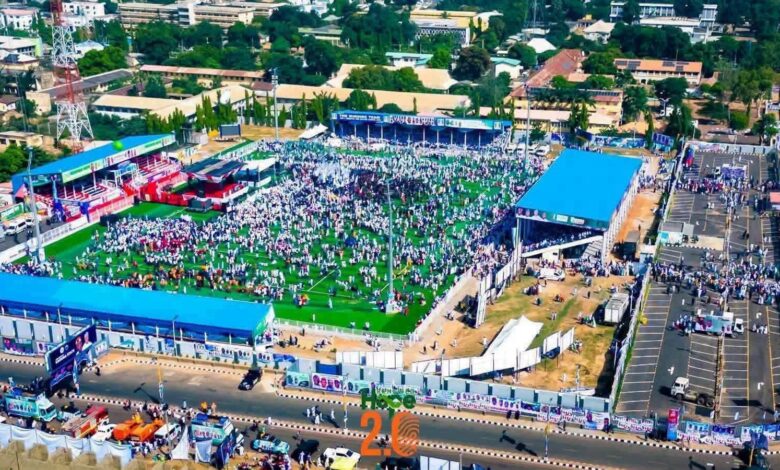
President Bola Ahmed Tinubu’s decision to launch his re-election campaign in Kaduna on Saturday, October 24, 2026, was more than a routine political gathering. It was the formal beginning of the battle for a second term, an opportunity for the ruling All Progressives Congress (APC) to demonstrate its organisational strength and a moment for the President to defend his economic policies before Nigerians who have endured years of rising living costs.
But the most consequential message from the rally at Kaduna Township Stadium was not merely Tinubu’s request for another mandate. It was his declaration that the opposition had created the hunger and poverty it now criticises his administration for failing to address.
“I hear my opponents talking about hunger and poverty. Who created it? They did. They created hunger. They created poverty. We are trying to eradicate it,” Tinubu told the gathering.
That statement captured the central political question confronting the President as the country approaches the January 2027 presidential election: who should take responsibility for Nigeria’s economic difficulties, and what evidence can the government present to convince voters that its policies are delivering the promised benefits?
The truth about Saturday’s campaign, therefore, lies not simply in the size of the crowd or the enthusiasm of party supporters, but in the issues the President raised, the questions he left unanswered and the economic and political circumstances in which he is seeking a renewed mandate.
THE CAMPAIGN BEGINS WITH AN ECONOMIC DEFENCE
Tinubu’s campaign began with a defence of his administration’s record.
Since assuming office in May 2023, the President has pursued major economic reforms, including the removal of the petrol subsidy and changes to the foreign exchange regime. His government has argued that the measures are necessary to correct structural weaknesses, reduce distortions and create conditions for sustainable economic growth.
However, the transition has come with substantial costs for households and businesses.
Higher petrol prices have increased transportation expenses and contributed to pressure on the cost of moving goods. Food prices and other essential expenses have remained major concerns for families struggling to maintain their living standards.
These difficulties have made economic policy a central issue in the emerging campaign.
At Kaduna, Tinubu insisted that his government was working to eradicate hunger and poverty, while promising prosperity, continuity, progress and development if returned to office.
He also defended the end of fuel subsidy, declaring that the policy belonged to the past and promising to tackle corruption, fraudulent invoicing and fuel smuggling.
The President’s argument is that Nigerians should judge his administration by the long-term benefits of its reforms rather than the immediate difficulties associated with their implementation.
That position, however, raises an important question: how long should citizens wait for the benefits, and what measurable improvements should they expect before deciding whether the reforms are working?
For a family struggling to pay rent, purchase food or transport children to school, the promise of future prosperity must eventually translate into tangible relief.
WHO CREATED THE HUNGER?
Tinubu’s accusation against the opposition is politically significant because it attempts to shift the debate from the performance of his administration to the historical responsibility of previous governments and the credibility of those challenging him.
The APC governed Nigeria under former President Muhammadu Buhari from 2015 to 2023 before Tinubu succeeded him. The current President has therefore inherited some longstanding national challenges, while his own policies and decisions have also shaped the economic environment since 2023.
A fair assessment must recognise both realities.
Nigeria’s economic difficulties did not begin with Tinubu’s inauguration. Structural problems involving productivity, infrastructure, insecurity, public finances and dependence on oil revenues predate his administration.
Yet the fact that some problems existed before 2023 does not remove the responsibility of the current government to explain the consequences of its decisions and demonstrate progress towards resolving them.
Equally, the opposition cannot establish its economic credibility merely by criticising the President. Its alternative proposals must be examined for their feasibility, funding requirements and likely effects on households.
This is where Saturday’s argument becomes particularly important.
Rather than allowing the campaign to revolve entirely around accusations about who created the problem, Nigerians need answers about what each political camp intends to do to reduce food prices, improve household purchasing power, create employment and strengthen economic security.
The question is not only who created the hunger. It is also who can demonstrate a credible plan to end it.
Rabiu Kwankwaso wrapped it up when he said, “If you are coming for the first time, you should tell the people what you intend to do. But after four years, it is what you have done you should tell the people.”
At the APC’s presidential campaign flag-off rally in Kaduna, Tinubu not only failed to tell the people what he has done in the past four years to deserve another four years but also dodged responsibility for the bad governance-generated indefensible hardship, the unbearable hunger and the unprecedented poverty level that Nigerians have been plunged into since he came to power on May 29, 2023.
The first APC Federal Government led by Muhammadu Buhari saw Hajj going for N1.6 million, petrol for N184, N185 per litre, bag of rice highest N25,000, bag of cement between N2,500 and N3,000 and Naira to Dollar exchange at N431, Lagos-Abuja and Lagos-Sokoto flight at very predictable ticket of between N40,000 and N45,000, school fees in any Federal or state university in Nigeria were between N15,000 and N25,000. All of these possible even as Buhari still subsidy either directly from Federal Government’s pulse or pulse of the Nigerian National Petroleum Corporation Limited (NNPCL).
The moment Tinubu came to power, all of these areas of people’s economy went astronomically up under his one hour in office and hasn’t come down since then. Hajj went from N1.6 million to N10 million, petrol from N184, N185 per litre N1,800 and fluctuated later between N850 until it now got black up to N1,400 per litre, bag of rice from N25,000 to N100,000 to the current artificial N50,000 or more , bag of cement went from between N2,500 and N3,000 to N8,000; N10,000; N12,000 and now N13,000, and Naira to Dollar exchange went from N431 to N2,000 before the current artificial N1,400 to one Dollar, Lagos-Abuja and Lagos-Sokoto flight went from very predictable ticket of between N40,000 and N45,000 to N100,000 and now between N260,000 and N350,000, school fees in any Federal or state university in Nigeria went from between N15,000 and N25,000 now to between N164,000 N350,000. But the same President Tinubu went to flag off his campaign in Kaduna, telling already charged and angered Nigerians that opposition and not him that afflicted the hardship on them and still asked to be allowed make another promise to perform?
THE NORTH AND THE POLITICS OF EXPECTATIONS
The choice of Kaduna for the campaign flag-off also carries political significance.
The North-West is an important electoral region, and Kaduna provides a platform for the APC to mobilise party structures, engage supporters and project its appeal beyond the state’s borders.
The rally brought together party leaders, governors, elected officials and supporters, with Vice President Kashim Shettima highlighting Tinubu’s history of political engagement with northern leaders. Governor Uba Sani and other APC figures also used the occasion to rally support for the President’s second-term bid.
For the APC, such a gathering offers an opportunity to demonstrate unity and coordinate its political machinery ahead of the election.
But the North’s political importance cannot be measured by rally attendance alone.
Northern communities face a combination of economic and security challenges, including food insecurity, unemployment, rural poverty, banditry and kidnapping. These problems affect the relationship between citizens and government at federal and state levels.
Kaduna itself has experienced serious security incidents, including the December 2023 military drone strike that killed civilians attending a religious gathering in Tudun Biri.
Consequently, a presidential campaign in the state provides an opportunity not only to seek votes but also to explain what the government has done to protect vulnerable communities and what further measures are planned.
The political significance of Kaduna will ultimately depend on whether campaign assurances can be translated into improvements that residents can recognise in their daily lives.
BUT THE CROWD?
Former Minister of Youth and Sports, Mr. Solomon Dalung Esq, revealed the truth of the crowd the All Progressives Congress (APC) has wrongfully celebrated on social media saying, “A “massive” rented crowd, reportedly drawn from all 19 Northern states, gathered to receive Tinubu in Kaduna.
“Yet, even with a stadium capacity of just 5,000, the combined crowd from 19 states couldn’t fill it.
“At this point, does Tinubu need more advisers, or should we just let them continue deceiving him?”
THE SUBSIDY QUESTION WILL NOT DISAPPEAR
One of the most contentious aspects of Tinubu’s economic programme remains the removal of petrol subsidy.
The government has defended the policy as part of its effort to eliminate the financial burden and alleged abuses associated with the subsidy system. Critics, however, have focused on the immediate effect of higher fuel costs on transportation, food prices and production.
At Saturday’s rally, Tinubu reiterated that the subsidy era was over and pledged to tackle practices he associated with corruption and fuel smuggling.
The unresolved issue is how the government intends to ensure that the costs of reform do not continue to fall disproportionately on ordinary citizens.
Removing a subsidy may change the structure of government expenditure, but the practical test for households is whether alternative support, increased incomes, lower production costs and improved public services compensate for the additional expenses they face.
For businesses, the question is whether the reforms create a sufficiently predictable environment for investment, production and employment.
For workers, it is whether earnings can keep pace with essential expenses.
For farmers, it is whether the cost of fuel, transportation, fertiliser and other inputs allows them to produce food at prices consumers can afford.
These are measurable questions that cannot be answered by campaign slogans alone.
ATIKU AND THE OPPOSITION RESPONSE
Tinubu’s remarks immediately provided his opponents with an opportunity to challenge his account of the economic crisis.
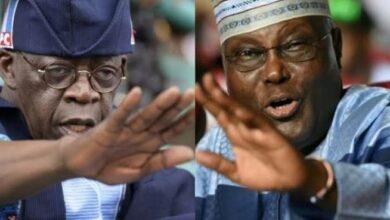
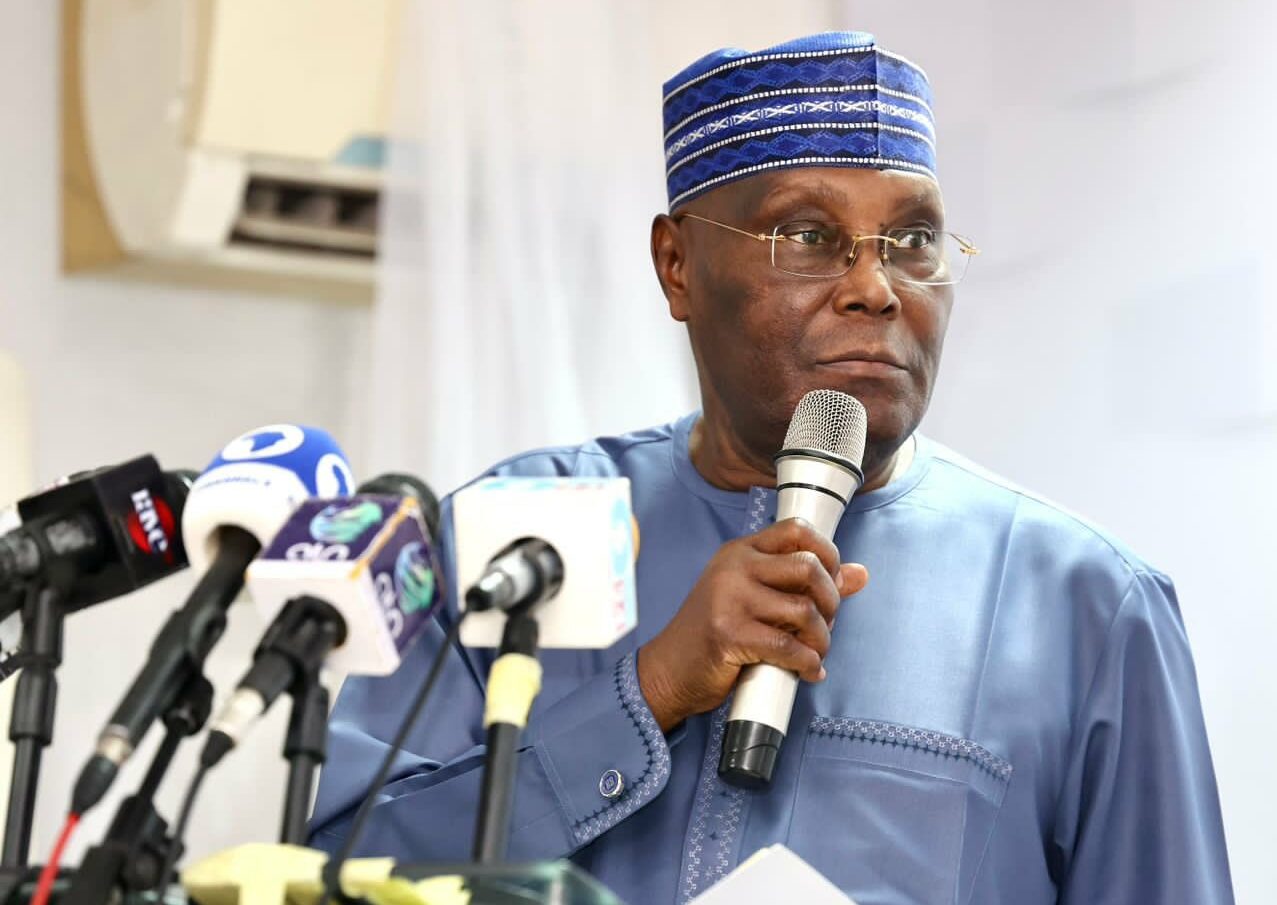
Former Vice President Atiku Abubakar, the presidential candidate of the African Democratic Congress (ADC), responded by accusing the President of evading responsibility for the hardship Nigerians are experiencing.
In a statement issued by Phrank Shaibu, Director of Strategic Communication of the ADC Presidential Campaign Council, Atiku argued that the APC had governed Nigeria for eight years before Tinubu took office and that the current administration must account for its own record.
He questioned the impact of subsidy removal, the depreciation of the naira, rising poverty and government expenditure, insisting that Nigerians wanted answers about the policies implemented since 2023.
Atiku’s response reflects the opposition’s strategy of making the cost of living a central issue in the 2027 campaign.
However, the credibility of the opposition’s alternative will also depend on the details of its proposals. Nigerians will need to know how any promised reduction in living costs would be achieved, financed and sustained.
The emerging contest is therefore about more than competing accusations. It is a contest between economic records, policy explanations and promises that voters will have to assess critically.
THE REAL TEST BEGINS AFTER THE RALLY
Saturday’s campaign flag-off has given the APC an opportunity to organise its supporters and present Tinubu’s case for another term.
But a successful political gathering is not, by itself, evidence that the country’s economic challenges have been resolved. Neither does criticism from the opposition automatically prove that its proposed alternatives would work.
The decisive issues are measurable: food affordability, employment, household income, access to healthcare and education, infrastructure delivery and the protection of lives and property.
The President has promised prosperity, growth, recovery and opportunity. His opponents have challenged him to explain why those benefits have not sufficiently eased the burden on many Nigerians.
Both claims deserve scrutiny against verifiable evidence.
As the campaign progresses, the government will need to explain how its reforms are improving living conditions, while opposition parties will need to demonstrate that their alternatives are practical and capable of producing better outcomes.
The 2027 election will give voters an opportunity to assess these competing arguments.
The truth about Tinubu’s Kaduna campaign is that the battle for a second term has begun, but the battle over the meaning of his economic record is only just intensifying.
The crowd at the stadium may have marked the start of the campaign. The more important verdict will emerge from what Nigerians experience in their homes, workplaces, farms and markets before they cast their votes.
For the President, the challenge is to demonstrate that the promised recovery is reaching ordinary people. For the opposition, it is to show that its criticism is backed by workable solutions.
And for the electorate, the responsibility is to distinguish campaign rhetoric from evidence, promises from performance, and political blame from practical answers.
That is the real test of the 2027 election—and the question Saturday’s rally has placed firmly before the nation.