THE EYO FESTIVAL: Indigeneship, Heritage, and the Duty of Preservation
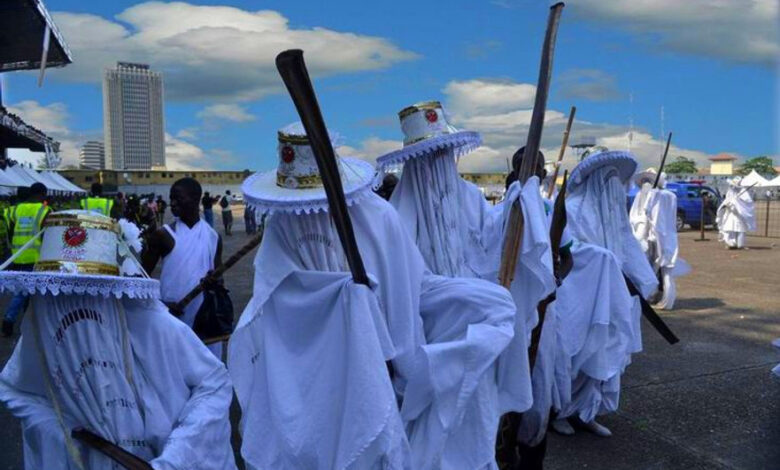
The Eyo cultural display is unique to Eko and inseparable from its indigenous structure. Across Lagos Island, the Mainland, Lekki, Apapa, Shomolu including Bashua, Asogbon, and Bajulaiye as well as Ajegunle and Ojora, land-owning families and chieftaincy houses use the festival to reaffirm their age-long loyalty to the heritage of their forefathers. These communities are not participants by convenience; they are custodians by birth, history, and obligation.
The Eyo Festival stands as one of the most enduring affirmations of Lagos indigeneship and cultural continuity. For over three centuries, since its advent from Iperu, the Eyo institution has remained firmly rooted among the indigenous people of Eko, preserved without dilution and transmitted across generations. Conceived as a sacred communal rite, the festival was designed to commemorate notable Lagos indigenes who contributed immensely to the growth, governance, and progress of colonial Lagos. In this respect, the Eyo tradition is not merely a spectacle; it is a historical statement, one that firmly rebuts the oft-repeated but erroneous claim that Lagos is a “no man’s land.”
Saturday’s Eyo Festival once again reminded observers of the richness and depth of Lagos’ sacred cultural heritage. The celebration projected dignity, discipline, communal pride and values that have defined the festival for generations and inspiring admiration among indigenes and visitors alike. At its best, the Eyo festival remains a powerful expression of identity, order, and reverence for history.
However, as the festival grows in visibility and scale, certain emerging challenges demand sober reflection if its essence is to be preserved.
One such concern is the gradual dilution of indigenous ownership through the increasing participation of non-indigenes from neighbouring Yoruba states. While their presence may be well-intentioned and sometimes encouraged to boost numbers, it nonetheless risks weakening the festival’s traditional identity and spiritual meaning. The Eyo festival was never intended as a generic cultural carnival; it is a sacred institution of Lagos indigenes, bound to specific lineages, land-owning families, and chieftaincy traditions. Any expansion that overlooks this foundational reality threatens the authenticity of the rite.
A second concern is the growing commercialization of the festival. Rising costs associated with organisation and participation are steadily placing the event beyond the reach of ordinary indigenous communities. What was once a unifying cultural obligation is increasingly shaped by government spectacle and commercial interests, with the risk that the custodians of the tradition become marginal players in their own heritage.
The Eyo cultural display is unique to Eko and inseparable from its indigenous structure. Across Lagos Island, the Mainland, Lekki, Apapa, Shomolu including Bashua, Asogbon, and Bajulaiye as well as Ajegunle and Ojora, land-owning families and chieftaincy houses use the festival to reaffirm their age-long loyalty to the heritage of their forefathers. These communities are not participants by convenience; they are custodians by birth, history, and obligation.
At the heart of the festival are the five principal Eyo deities, alongside the ruling chieftaincy houses and distinguished Lagosians of indigenous origin, all of whom publicly pledge loyalty to the Oba of Lagos as the custodian of tradition, unity, and continuity. This collective affirmation underscores the spiritual, cultural, and political significance of the Eyo institution within Lagos society.
Ultimately, the Eyo Festival brings the finest expression of Lagosian identity to the world. It reveals a people deeply rooted in history, disciplined in tradition, and unwavering in their attachment to their ancestral homeland. Its uninterrupted survival over centuries stands as living evidence of indigeneship, heritage, and ownership. Preserving the sanctity of the Eyo institution is therefore not optional; it is a cultural duty owed to past generations and a responsibility to those yet unborn ensuring that this sacred rite remains, first and foremost, the heritage of Lagos indigenes.
Signed:
Mr. Muftah Bolaji Are,
President De Renaissance Patriots Foundation (DRPF).
Maj-Gen Tajudeen Olanrewaju (Rtd),
Trustee De Renaissance Patriots Foundation (DRPF).