Supreme Court dismisses Rivers State Varsity’s appeal, upholds Muslim Students’ right to worship
By KEMI KASUMU
RSU subsequently approached the Supreme Court in Suit No. SC/055/2018. When the matter came up on 10 February 2026, the apex court unanimously dismissed the appeal, effectively ending the litigation.
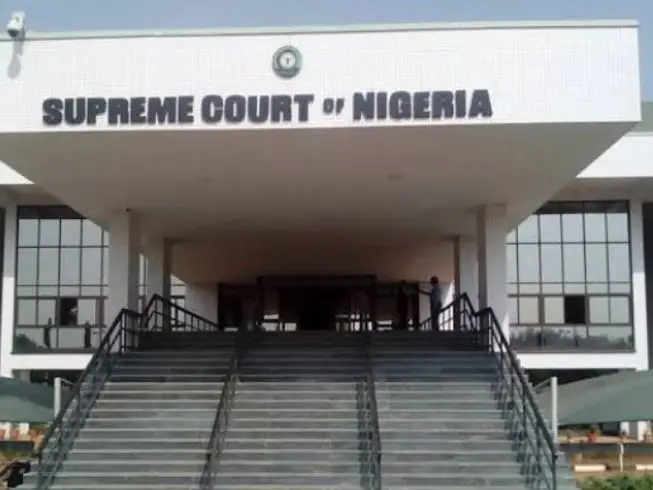
The Supreme Court has dismissed an appeal filed by Rivers State University (RSU), affirming the right of Muslim students to observe prayers and establish a place of worship on the institution’s Nkpolu Oroworukwo campus.
The unanimous decision of the apex court brings to an end a legal dispute that began in 2012, when Muslim students accused university authorities of restricting their ability to conduct prayers and set up structures for Islamic worship.
The case, instituted at the Federal High Court in Port Harcourt as Suit No. FHC/PH/CS/150/2012, was filed by Umaru Wazuru and 98 other students against the then Vice Chancellor of RSU and the Attorney General of Rivers State. Represented by Oloriegbe & Co., the students sought declaratory reliefs, arguing that the restrictions were unconstitutional and discriminatory. They asked the court to compel the university to allocate land for a mosque, similar to worship facilities available to Christian groups on campus.
In its judgment delivered on 19 February 2013, the Federal High Court ruled in favour of the students, holding that denying Muslim students a place of worship while churches operated on campus violated constitutional guarantees of freedom of thought, conscience and religion. The court also dismissed the university’s argument that a mosque was not included in the institution’s master plan, describing it as inconsistent with constitutional protections.
The university appealed the ruling to the Court of Appeal, Port Harcourt Division, in Appeal No. CA/PH/614/2015. On 31 March 2017, the appellate court unanimously dismissed the appeal and affirmed the lower court’s judgment.
RSU subsequently approached the Supreme Court in Suit No. SC/055/2018. When the matter came up on 10 February 2026, the apex court unanimously dismissed the appeal, effectively ending the litigation.
With the Supreme Court’s decision, the judgments of the lower courts—recognising the Muslim students’ right to worship and to be allocated a suitable space within the university—remain binding.
Legal experts note that, under the Constitution, Supreme Court decisions are final and binding on all authorities and persons, and failure to comply with valid court orders may attract contempt proceedings and other sanctions.