Stop Using Filling Station Queues to Justify Fuel Subsidy Rejection — Buhari’s Eight Years Showed Subsidy Could Be Sustained
MAIN POINTS:
*Buhari’s eight years provide an important lesson
*Subsidy was expensive, but was it impossible?
*Do not confuse queues with subsidy
*Tinubu’s subsidy removal in May 2023 brought back long queues almost immediately as
*What Nigerians actually want
*The real debate should be about choices
*Stop making Nigerians choose between hardship and dishonesty
*Buhari’s record should not be rewritten
By ABANIKANDA OLUMORO (UK)
For clarity of purpose, President Buhari did not remove fuel subsidy because he knew it was the only government largesse that poor masses could see coming from government to them. Buhari also refused the United States-based International Monitoring Fund (IMF) and World Bank (WB)’s pressure to devalue the Naira. The two economic suggestions by the Western rejected by Buhari that Tinubu hastily accepted, embraced and implemented are the sole reasons for the economic woes that have befallen Nigeria under him till date.
Nigeria’s fuel subsidy debate has remained one of the most emotional economic arguments in the country. Supporters of subsidy removal point to the huge amount of money the government spent on keeping petrol prices low, while critics argue that removing the subsidy has transferred the burden from government to ordinary Nigerians.
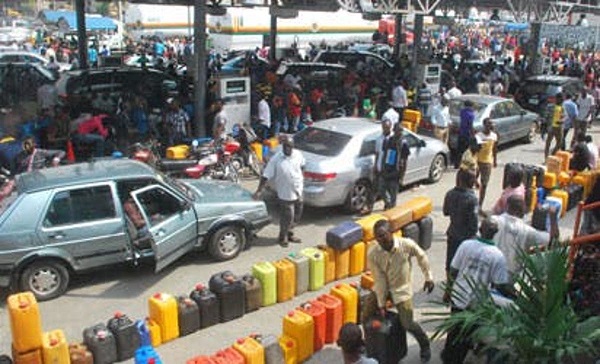
One argument that deserves closer examination is the continued use of photographs of long queues at filling stations as evidence that fuel subsidy itself was a failed policy.
Fuel queues are real. Nigerians experienced them repeatedly under different administrations, including during the Muhammadu Buhari administration. But a queue at a filling station does not, by itself, prove that fuel subsidy was responsible for the scarcity.
A more important question is: why was there a fuel shortage in the first place?
The Buhari administration remained in office for eight years, from 2015 to 2023, and maintained petrol subsidy throughout most of that period.
Available estimates put the amount spent on petrol subsidy during the administration in the trillions of naira. BusinessDay, citing NNPC and NEITI data, estimated that more than N11 trillion was spent on petrol subsidies during the Buhari years.
Despite that enormous expenditure, Nigeria did not collapse because subsidy was being paid.
Government continued to pay workers, operate ministries, fund infrastructure and service debts while subsidising petrol. President Buhari’s own 2023 budget presentation acknowledged that N1.59 trillion had been spent on fuel subsidy between January and June 2022 alone. Although he did not include fuel subsidy in the body that 2023 budget,
Buhari took a decision that improved on the supply value chain by simply stopping to pay subsidy to any independent marketers who had always been responsible for the reason Nigerians for whom the subsidy was meant never really enjoyed it.
Instead, he placed the responsibility for fuel import solely on the Nigerian National Petroleum Corporation Limited (NNPCL). By so doing, the then President simply decided that he would not pay subsidy from Federal Government’s pulse but asked the NNPCL to import, pay subsidy on the imported product and distribute to outlets of major marketers and not of independent marketers. He did not block independent marketers from importing fuel but asked them to source their own foreign exchange to import the products on their own, because they were said to be responsible for why Nigerians were not enjoying subsidy as some that imported took the products to neighbouring countries to maximize profit. Some would not even import anything but still claimed subsidy money from government in cahoots with government officials. This was how Buhari stopped queues at filling stations across Nigeria.
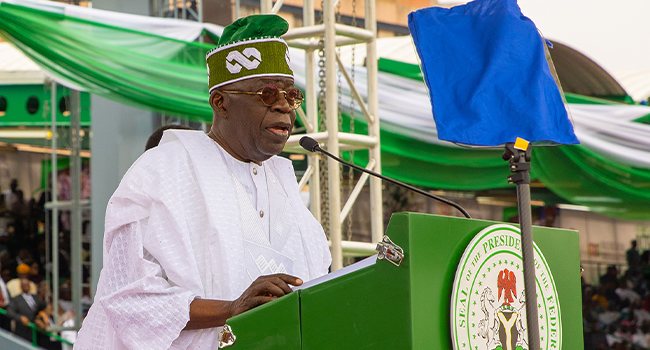
It therefore shocked many when Tinubu, who openly made electoral promise to remove fuel subsidy and made true his promise by declaring that “fuel subsidy is gone” in his May 29, 2023 inaugural speach as president, turned around to deny responsibility for fuel subsidy removal after it became clear that the policy he made with haste and confidence had backfired.
He and those that believed him were now blaming fuel subsidy removal on Buhari. It thus sounds somehow that it was possible the president was not reviewing his past statements and policies before embarking on new ones. He promised that money being used to pay subsidy would now be redirected to other areas of national infrastructural and people’s welfare development.
Almost four years down the line, some of the same people who for tribal sentiment or political party reasons fully backed him as he removed the subsidy then are now saying, rather than seeing the good of subsidy removal, all they have been served is transfer of economic burden that Nigeria was bearing paying it on them in form of the hardship they now suffer in the country.
For clarity of purpose, President Buhari did not remove fuel subsidy because he knew it was the only government largesse that poor masses could see coming from government to them. Buhari also refused the United States-based International Monitoring Fund (IMF) and World Bank (WB)’s pressure to devalue the Naira. The two economic suggestions by the Western rejected by Buhari that Tinubu hastily accepted, embraced and implemented are the sole reasons for the economic woes that have befallen Nigeria under him till date.
This does not mean the subsidy system was perfect or that the expenditure was necessarily efficient. It means something simpler: Nigeria demonstrated that it was capable of funding petrol subsidies, at least for a considerable period, even though doing so placed a substantial burden on public finances.
That distinction is important.
The argument that Nigeria could no longer afford subsidy deserves to be separated from the argument that subsidy was inherently impossible.
By the end of the Buhari administration, there was growing recognition within government that the subsidy system was becoming increasingly expensive.
Buhari’s government itself eventually announced plans to discontinue the subsidy. In his 2023 budget presentation, Buhari described the fiscal impact as unsustainable and said the government intended to provide measures to cushion vulnerable Nigerians from the consequences.
Therefore, critics are entitled to argue that subsidy was becoming too expensive.
But that is different from saying that Nigerians should simply forget what happened before 2023.
This is where the national conversation needs to become more honest.
Nigeria has experienced fuel queues under subsidy and without subsidy.
Scarcity can be caused by several factors, including insufficient domestic refining, dependence on imported petrol, foreign-exchange problems, disruptions in supply, pipeline and crude-oil production problems, logistics challenges, hoarding and panic buying.
Indeed, when subsidy was removed in May 2023, long queues appeared almost immediately as motorists rushed to buy petrol before anticipated price increases. Reports at the time documented queues across several Nigerian cities.
That experience demonstrates why photographs of queues should not become the principal evidence in an economic argument.
A queue tells us that Nigerians are struggling to obtain petrol. It does not automatically tell us why the petrol is unavailable.
The average Nigerian is less interested in ideological arguments about subsidy than in whether transportation, food, electricity and other basic necessities are affordable.
If government says subsidy removal will save trillions of naira, Nigerians have a legitimate right to ask:
Where is the money going?
That question has become even more relevant as the government itself has acknowledged that the fiscal savings from subsidy removal have been substantially offset by higher debt-servicing costs and increased government spending. Reuters reported in July 2026 that the Finance Minister said the financial gains from subsidy and foreign-exchange reforms had largely been absorbed by these higher costs.
This does not automatically mean subsidy should return.
It means the government must demonstrate that Nigerians are receiving tangible benefits from the resources previously used to support petrol prices.
There is nothing wrong with arguing that fuel subsidy should be removed.
There is also nothing wrong with arguing that some form of targeted subsidy or intervention may be necessary to protect poor Nigerians.
What is problematic is presenting the matter as though there is only one possible conclusion.
Nigeria has choices.
Government can decide to subsidise petrol.
It can decide to remove the subsidy completely.
It can introduce targeted support for public transportation and vulnerable households.
It can invest aggressively in domestic refining so that Nigerians are less exposed to international petrol prices.
Or it can combine several of these approaches.
The important thing is to be transparent about the costs and benefits.
Those defending subsidy removal should not pretend that the policy has no human cost. Petrol prices affect almost everything in Nigeria because transportation is connected to food distribution, agriculture, manufacturing and virtually every other economic activity.
At the same time, those demanding subsidy restoration should explain how the government would sustainably finance it, how corruption and leakages would be prevented, and how the benefits would reach ordinary Nigerians rather than primarily benefiting wealthy motorists and businesses.
The answer is therefore not simply to bring back subsidy because petrol was cheaper before.
Nor is the answer to celebrate high petrol prices because subsidy has been removed.
The question Nigerians should ask is: which policy gives the country affordable energy, protects the poor, encourages domestic production and remains financially sustainable?
The eight years of the Buhari administration provide an important piece of evidence in this debate.
Nigeria paid enormous sums in petrol subsidy during those years. The expenditure was financially burdensome and eventually became difficult to sustain. But the country survived and continued functioning while the subsidy was being paid.
That historical fact should neither be exaggerated nor ignored.
Therefore, stop parading photographs of fuel queues as though they alone prove that subsidy was the problem.
Show Nigerians the full accounts.
Show how much was spent.
Show what was saved after removal.
Show where the savings went.
Show what has been invested in public transport, refineries, healthcare, education and social protection.
And, most importantly, show Nigerians why the current arrangement is better for the ordinary citizen.
Because at the end of the day, **economic policy should not be judged by photographs of queues, political slogans or government explanations alone. It should be judged by whether Nigerians can afford to live, work, travel and feed their families.**