Questions as Northern Christian Chairman says this about Tinubu {READ}
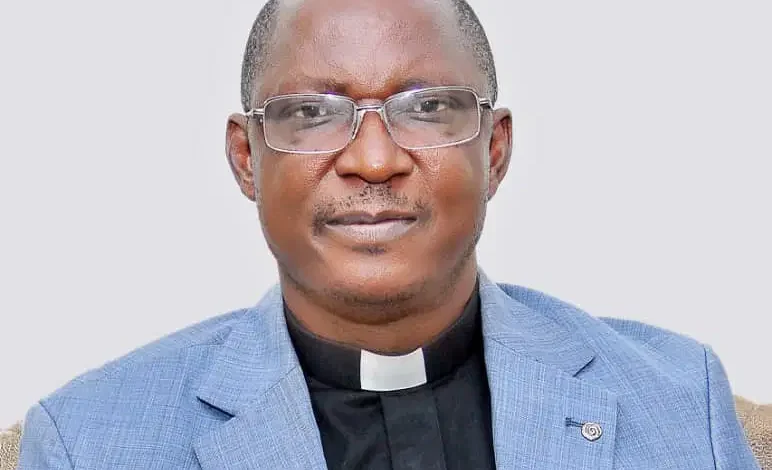
*Hayab shown realities in North, challenged to prove his claim
By OUR REPORTER

“If you look at the social media attacks targeted at Muslims, you would notice that those attacking Islam, Muslims and Northerners are Tinubu’s supporters. Tinubu, or his government, has not stopped them since 2023. The same is true of attempts to set Muslims against one another. That same man has come again with the same Muslim-Muslim ticket, which Christians hated in 2023. I can say conveniently that, for all of these to be happening and Hayab and his co-travellers in the Northern Christian community are now mobilising support for Tinubu in disguise, they are being selfish and are not fit to lead society,” he said.
Questions are beginning to arise over the sincerity of Christians’ opposition to the Muslim-Muslim ticket in 2023, particularly if they can swear by God who created them that the inroads they are now making to endorse Tinubu in 2026, ahead of the 2027 election, do not vindicate those who have argued that Christians were the real beneficiaries of the arrangement they opposed—an arrangement which, critics claim, has subjected Muslims to persecution and stigma locally and internationally since the President came into office.
This comes as the Chairman of the Northern Christian Association (NCA), Rev. John Hayab, said it would be unfair to deny that the North has benefited from projects executed by President Bola Ahmed Tinubu’s administration.
His comment has, however, raised questions about how he reached that conclusion. According to some reactions, if Northerners have benefited from the administration’s programmes, then Northern Christians should be able to identify specifically how they have benefited, particularly given claims that some of the empowerment programmes associated with the President’s wife have focused on Christian communities and beneficiaries.
The argument has also extended to infrastructure. If roads are being cited as evidence of Tinubu’s achievements, critics argue that Northern Christians now praising the President—and, by implication, appearing to support the Muslim-Muslim ticket ahead of 2027—should compare Tinubu’s record with that of former President Muhammadu Buhari, a Muslim and Northerner, particularly in the areas of roads, power and other infrastructure.
The question, therefore, is whether the same Christians who strongly opposed Buhari and condemned the Muslim-Muslim arrangement in 2023 are now prepared to praise Tinubu because they genuinely believe his administration has performed better, or whether their position reflects what critics describe as political expediency.
Critics further argue that the controversy surrounding the Muslim-Muslim ticket may have been politically motivated from the outset, with the arrangement allegedly presented as a threat to Christians while being used to secure Muslim votes. They contend that, following the victory, the administration has instead pursued policies that have allegedly deepened divisions and disproportionately benefited Christians while Muslims face persecution.
The debate raises a broader question about whether political assessments should be based on religious identity and partisan interests or on consistent standards applied to every government, regardless of who occupies the presidency.
According to him, criticising the government and recognising its achievements are not mutually exclusive.
“They want to blame the man in Abuja. When he is bad, we will tell him. But in this case, I think he is right,” Hayab said.
The cleric stressed that Christians should be guided by honesty and fairness when assessing political leaders, arguing that personal dislike should not determine whether an individual acknowledges a government’s achievements.
“If I do not praise them just because I don’t like them, then I’m not a good Christian. I don’t believe in that.
“But the North cannot pretend to say that it has not benefited from this government,” he added.
Hayab clarified that his comments should not be interpreted as an unconditional endorsement of the Tinubu administration, noting that citizens should continue to criticise policies and actions they consider unacceptable.
He urged people in the North to assess the administration objectively by acknowledging areas of progress while demanding accountability where necessary.
His comments come amid ongoing debate over the impact of the Tinubu administration across Nigeria, particularly its development projects and policies affecting the northern region.
Hayab’s position underscores the argument that recognising government achievements does not necessarily amount to political support, just as criticism of an administration should not require citizens to reject every action taken by it.
Hayab challenged to come with proof
But Hayab is being challenged to come out and identify one area, particularly now that the general elections are approaching, where Tinubu has done something specifically for the North.
One of his critics, who spoke anonymously, said: “If you are talking about the North, you are talking about its culture, religion, traditional institutions, economy, particularly the agricultural value chain, power and road infrastructure.
“When, before Tinubu, did you see a president of Nigeria struggle, allegedly, to use the court to overturn the electoral mandate of winner of a governorship election in the North? When, before Tinubu, did you see two emirs in one emirate in Northern Nigeria, or an attempt to set people against their highly respected traditional rulers just because of future elections—which is now what Hayab is trying to mobilise Northern Christian support for?
“When, before Tinubu, did you see Muslims, who have always been the largest victims of insecurity, being accused before the United States of America of being killers of Christians in Nigeria? Under Buhari, farmers, despite the issues surrounding farmer-herder clashes, still did well because Buhari was harder in insecurity to let farmers farm and they became so successful with their produce that they reportedly contributed N1.1 billion to support his second-term campaign in 2019.
“Since Tinubu came to power, what can you point to as the success of farmers and food production that has made food affordable for Nigerians? What about insecurity in Northern Nigeria? Even those constructing roads need almost a battalion of soldiers to protect themselves. Were these the prevailing conditions in Northern Nigeria before Tinubu came to power?
“Well, good, Tinubu was able to bring America’s Donald Trump and Israel’s Benjamin Netanyahu to help bomb Sokoto, the seat of Islamic leadership in Nigeria, under the guise of fighting Muslims accused of killing Christians. That was the message of Trump himself , Nigerian government did not speak straight on it. And all the empowerment programmes his wife carried out in Northern Nigeria were for Christians, while Trump made it public that hospitals for which he and Tinubu must put $5.1 billion should provide healthcare only for Christians only.
“If you look at the social media attacks targeted at Muslims, you would notice that those attacking Islam, Muslims and Northerners are Tinubu’s supporters. Tinubu, or his government, has not stopped them since 2023. The same is true of attempts to set Muslims against one another.
“That same man has come again with the same Muslim-Muslim ticket, which Christians hated in 2023. I can say conveniently that, for all of these to be happening and Hayab and his co-travellers in the Northern Christian community are now mobilising support for Tinubu in disguise, they are being selfish and are not fit to lead society,” he said.