‘Power Is What You Grab and Run Away With’: The Dangerous Creed of Nigerian Politics
By ABANIKANDA OLUMORO (UK)

The result is a political marketplace where the struggle for office frequently overshadows the struggle to improve the lives of citizens.
In Nigerian politics, a troubling philosophy appears to be gaining ground: power is what you grab and run away with. It is a cynical interpretation of politics that suggests political power is not necessarily earned through popular mandate, democratic persuasion or public trust, but seized through whatever means are available and defended at all costs.
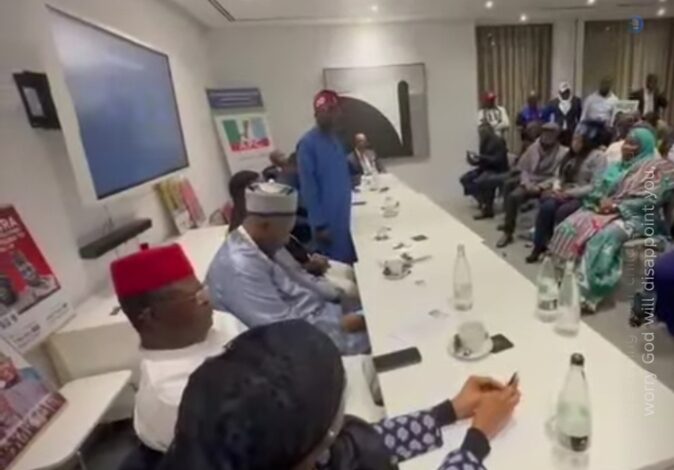
Laying the precedence was Bola Ahmed Tinubu as far back as December 8, 2022, during his presidential campaign, when he was reported to have addressed APC campaign operatives in London and made the following remark:
“Political power is not going to be served in a restaurant. They don’t serve it a la carte. At all cost, fight for it, grab it and run with it.”
The statement was reported by Peoples Gazette under the headline “Power must be grabbed, snatched at all cost: Tinubu.” So, the phrase “power is what you grab and run away with” is a paraphrase of Tinubu’s actual statement, not the exact quotation. His documented words were: “At all cost, fight for it, grab it and run with it.”
This is politically significant, particularly when examining the character of Nigeria’s electoral politics, the struggle for power, the conduct of political actors and the implications for democratic institutions.
The expression may sound like political street wisdom, but its implications for democracy, national stability and the future of Nigeria are profoundly dangerous.
Power, in a democracy, is not a private property to be grabbed, hoarded or deployed for personal survival. It is a public trust temporarily entrusted to individuals by citizens. Elections are supposed to determine who receives that mandate, while the Constitution defines the boundaries within which such authority must be exercised.
Yet, when politicians begin to see power as something to grab and run away with, the people become secondary. Political opponents are treated as enemies. Institutions are viewed as obstacles. Electoral processes become battles to be won at all costs, while accountability is sacrificed on the altar of political expediency.
This mentality explains why political alliances are often formed without ideological conviction, why politicians abandon previously held positions when convenient, and why loyalty to the people can suddenly give way to loyalty to political benefactors, party structures or personal ambition.
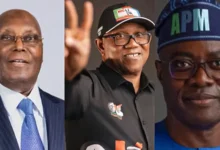
The desperation to capture power can also weaken the opposition. Instead of building a credible alternative around ideas, programmes and a clear vision for Nigeria, political actors sometimes concentrate on negotiating positions, sharing tickets, calculating who gets what and determining whose ambition should prevail.
The result is a political marketplace where the struggle for office frequently overshadows the struggle to improve the lives of citizens.
As Nigeria approaches the 2027 general election, politicians must understand that power acquired without legitimacy, exercised without accountability and maintained without regard for the people is not democratic strength. It is a recipe for instability.
The argument that power is what one grabs and runs away with may appeal to political tacticians who believe the ends justify the means. But history has repeatedly shown that power obtained through manipulation, intimidation, exclusion or the subversion of institutions carries the seeds of its own crisis.
No political victory is worth the destruction of public confidence. No ambition should be greater than the peace of the country. No office is worth undermining the democratic institutions that make political participation possible.
The ultimate test of leadership is not how a politician captures power, but what he does with it after the people have entrusted it to him. Leadership should be measured by the security it provides, the jobs it creates, the schools it strengthens, the hospitals it improves, the justice it guarantees and the hope it restores.
Nigeria does not need politicians who merely know how to grab power. It needs leaders who understand how to earn it, exercise it responsibly and relinquish it honourably when their tenure ends.
Power may be grabbed in the language of political survival, but legitimate authority must be earned through the people, exercised for the people and ultimately returned to the people.
That is the difference between political conquest and democratic leadership.