Opinion: Iran Is Not Venezuela — and Trump’s “Regime Capture” Fantasy Won’t Travel
By NASRUDEEN ABBAS
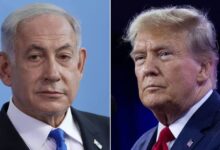
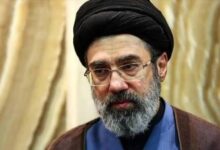
Now Trump appears eager to apply the same template to Iran following the death of Ali Khamenei during a joint U.S.–Israeli operation. He has openly suggested he should have a say in selecting the country’s next leader, comparing the situation to Venezuela and describing that intervention as a “perfect scenario.”
Inspired by a report published in The Guardian UK, one has the ground to say by any measure, the recent upheaval in Venezuela looks, to supporters of Donald Trump, like a geopolitical masterstroke. The dramatic removal of Nicolás Maduro and the swift rise of his former deputy Delcy Rodríguez have been framed in Washington as proof of a new model of American power: decisive, surgical, and effective.
According to Trump’s own telling, the formula is simple. Locate the leader of an adversarial state. Remove them with overwhelming force. Allow a more cooperative figure from within the regime to assume power. The result, in theory, is a government that is suddenly far more accommodating to U.S. interests.
Now Trump appears eager to apply the same template to Iran following the death of Ali Khamenei during a joint U.S.–Israeli operation. He has openly suggested he should have a say in selecting the country’s next leader, comparing the situation to Venezuela and describing that intervention as a “perfect scenario.”
But the comparison collapses the moment it is examined seriously.
Geography, History, and Hostility
Venezuela and Iran occupy very different geopolitical universes. Venezuela sits in the United States’ traditional sphere of influence, historically tied to Washington through oil markets, diplomacy, and regional politics. Even during the most hostile years of Maduro’s rule, the country remained economically and culturally intertwined with the United States.
Iran is the opposite.
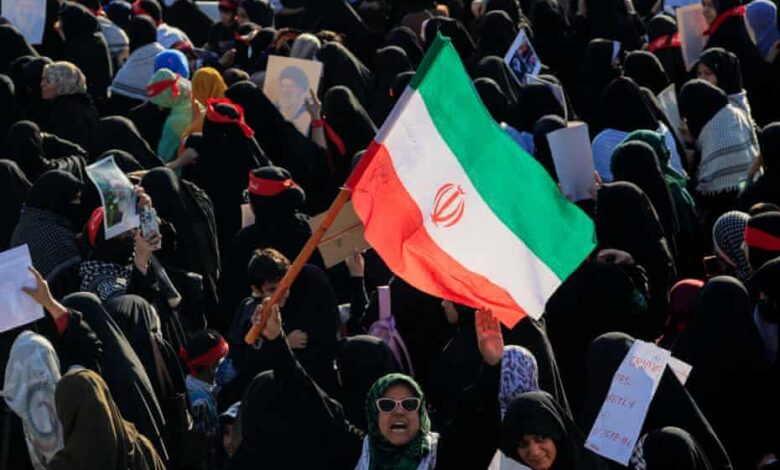
Since the Iranian Revolution, hostility toward Washington has been central to the political identity of the Islamic Republic. The revolution itself was driven in part by resentment toward foreign interference, particularly U.S. support for the pro-Western monarch Mohammad Reza Pahlavi.
The rupture deepened during the Iran hostage crisis, when Iranian revolutionaries seized the U.S. embassy in Tehran and held 52 American diplomats captive for more than a year. Diplomatic relations between the two countries have not existed since.
In that context, the idea that Iranian leaders would accept American involvement in choosing their next supreme authority borders on political fantasy.
A Different Kind of Regime
The internal structures of the two states also differ profoundly.
Maduro presided over an authoritarian government weakened by economic collapse and factional competition. Iran’s system, by contrast, is deeply institutionalized and anchored by powerful bodies such as the Islamic Revolutionary Guard Corps. The Guards command not only military forces but major sectors of Iran’s economy and political apparatus.
Any leadership transition will almost certainly be decided within that power structure, not in Washington.
Even if some insiders favored limited engagement with the United States, openly aligning with Washington during active hostilities would be politically suicidal. In a political culture where anti-Americanism has long been a rallying cry, any official perceived as cooperating with the U.S. could be eliminated before they had the chance to consolidate power.
The Illusion of Easy Success
There is also a deeper strategic risk in assuming the Venezuela operation has already succeeded.
Installing a cooperative government is one thing; ensuring long-term loyalty is another.
Venezuelan elites may currently be accommodating while U.S. military pressure remains visible in the Caribbean. But regimes born under foreign intervention rarely remain obedient indefinitely.
Over time, nationalist instincts tend to reassert themselves.
In other words, even the Venezuelan precedent may prove temporary.
The Limits of Power
Trump’s enthusiasm for what some officials call a “decapitate and delegate” strategy reflects a broader belief that modern military capabilities allow Washington to reshape governments quickly and cheaply.
But history offers many warnings against that assumption.
Iran is a large, heavily armed regional power with a deeply entrenched ideological state. It has decades of experience resisting external pressure and a political narrative built around defiance of the United States.
Trying to replicate the Venezuelan model there is not simply difficult. It misunderstands the country entirely.
The temptation to treat geopolitical success as a repeatable formula is understandable. Yet international politics rarely works like a franchise model. What happened in Caracas cannot simply be exported to Tehran.
Iran, after all, is not Venezuela. And pretending otherwise could prove a costly mistake.