{OPINION} Can America defeat Iran in one fell swoop?
*President Trump’s dilemma, the ersian oil American dollar and November mid-teem elections
By ATA IKIDDEH
Trump is, at his core, a transactional leader: every diplomatic or military engagement must yield a returns to the American purse. A scenario in which the United States expends vast resources without commensurate rewards holds little appeal for him.
President Trump faces a stark strategic dilemma. His foreign policy has been markedly unipolar, highly directional, and fundamentally defensive in orientation. Unlike many of his predecessors, who prioritised mission, ideology, and legacy, Trump’s primary focus has been the American treasury and its economy. Where others have spoken of America’s international purpose, Trump has spoken explicitly and implicitly about the cost of being the worlds’ guardian.
He has adopted a pragmatic approach to foreign policy, one designed to avoid draining the United States’ financial reserves. He understands that any major military engagement, particularly one involving the deployment of ground forces, would not just cost billions, but trillions of dollars. His campaign manifesto made a promise to the American people, an end to US troop deployment anywhere in the world. Trump is, at his core, a transactional leader: every diplomatic or military engagement must yield a returns to the American purse. A scenario in which the United States expends vast resources without commensurate rewards holds little appeal for him.
This pattern is evident in recent precedents. In Venezuela, the United States extracted significant leverage tied to oil interests. In Ukraine, Trump secured a substantial agreement concerning rare earth minerals. In the case of Iran, his attention may turn to the oil rich Persian Gulf a move that would also constrict a critical component of China’s energy supply. It is therefore unsurprising that China has, in recent weeks, reportedly increased its transfer of weapons to Iran.
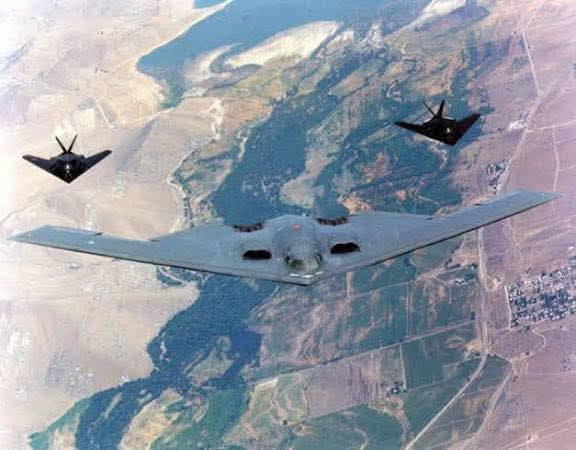
Trump favours a swift, decisive conflict. One that would cost America a few billions. During the so called twelve day war, he withheld intervention until the final hours, authorising strikes only after Israel had carried out the bulk of the military effort, then ordering a halt. He allowed others to do the heavy lifting before stepping in at minimal cost.
Bill Clinton famously remarked, “It’s the economy, stupid.” Trump’s version is blunt: “It’s the money, silly.” He calculates the cost of every American expenditure, right down to $1.5m per missile. War is expensive. A conflict with Iran would fundamentally alter America’s balance sheet. The economic gains achieved through aggressive tariff policies could rapidly evaporate. Inflation could resurge as borrowing increases and interest rates rise. With midterm elections looming in November of 2026, a weakened economy would almost certainly precipitate Republican losses. This, above all else, is Trump’s concern.
At a recent high level military meeting between senior American commanders and Israeli leadership, Trump reportedly pressed for a war with Iran that would be both swift and minimally costly for the United States. Yet such an outcome is deeply uncertain. Ironically the twelve day conflict arguably left Iran stronger, not weaker. Another inconclusive war, one that fails to achieve decisive results would only further consolidate Iranian resilience. Trump is unlikely to endorse a military enterprise that produces little more than craters and symbolism.
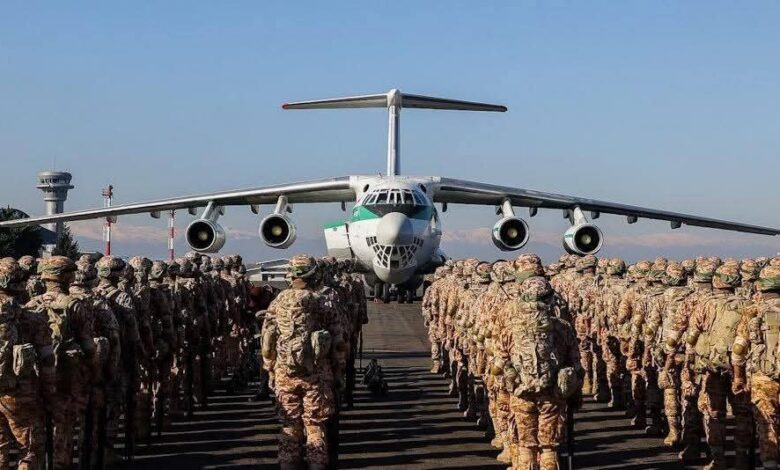
The reality, however, is unavoidable: any meaningful effort to dislodge the Iranian government would require ground forces, whether limited or extensive. This could not be avoided in Venezuela, and it would be impossible in Iran. Air power alone may damage infrastructure, but regime change cannot be achieved from the skies. To remove the Iranian leadership, the United States would ultimately need boots on the ground.
At present, only three strategic options appear available to Washington. And these are my thoughts.
RISKY – First, arming civilian populations. This approach carries extreme risk. Iran could devolve into a fragmented, lawless landscape reminiscent of Somalia a patchwork of militias and rival factions. Such an outcome would likely surpass even Libya in instability and long-term damage.
UNCERTAIN – Second, an all-out, unpredictable blitzkrieg. Given Iran’s vast geography and population, the prospect of a quick, decisive war is doubtful. The conflict could instead resemble Stalingrad a campaign expected to be swift, only to mire Germany’s invading forces in attrition, exhaustion, and eventual strategic failure.
PRAGMATIC – Third, and most pragmatically, a limited but decisive strike: do not attempt to occupy the entire country. Take Tehran. As the nerve centre of political authority and the headquarters of the Islamic Revolutionary Guard Corps, the capital represents Iran’s symbolic and operational heart. Seize it. Capture the Supreme Leader and the regime’s symbolic authority. Fracture loyalties within the armed forces. Avoid humiliation. Compel surrender. Install a temporary government. The remnants of the old regime would either capitulate or relocate to secondary cities, where a newly aligned national army could dismantle them incrementally.
In this scenario, Iran would be defeated not in one fell swoop but piece by piece. The country may simply be too large to subdue in one stroke. This is not to suggest such an outcome is impossible but Iran is not Venezuela.
There remains the possibility of wider regional conflagrations. However, Israel has already significantly weakened Iranian proxy forces across the Middle East, making it difficult to envisage these actors inflicting serious damage on core American interests.
In summary. An all out war with Iran may not align with Trump’s instincts, incentives, or political calculus. For a President who measures strategy in dollars as much as dominance, restraint paired with calculated, surgical action may prove the more compelling path.
A decisive victory over Iran would secure President Trump’s legacy. It would constitute a triple strategic trophy: the neutralisation of Iran, the strategic constriction of China, and effective leverage over Persian Gulf oil denominated in dollars. Such an outcome would almost certainly guarantee a resounding Republican victory in the November 2026 midterm elections.
Conversely, failure to achieve this objective or an electoral defeat would carry profound political consequences. As Trump himself has intimated, a loss in the midterms could embolden an incensed Democratic opposition, potentially culminating in renewed impeachment proceedings against the President.
This calculus underscores why Iran occupies a singular place in Trump’s strategic thinking: not merely as a foreign policy challenge, but as a decisive inflection point for his political survival and historical standing.