Nigeria’s local air ticket may hit N1m as Tinubu’s tax laws take effect Jan 1st, 2026
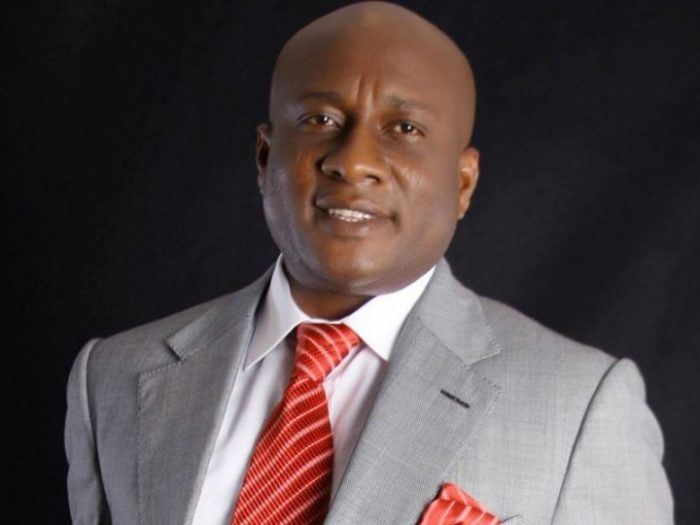
*How 2020 tax laws or provided relief to aviation business – Onyema
By KEMI KASUMU

“Now, the tax law of 2020 removed customs duties, removed on imported aircraft and imported aircraft spares and engines, removed VAT on imported aircraft and other spare parts, removed VAT on ticket fares. That is the 2020 Act,” he said.
The minimum cost of traveling by air from Lagos to Abuja or Port Harcourt locally in Nigeria may rise to unprecedented height when the tax laws of Bola Tinubu Administration take effect on Thursday January 1, 2025.
This is coming as the Air Peace Chairman and Chief Executive Officer, Mr. Allen Onyema, has expressed deep worries over the country’s domestic aviation sector, cautioning that the recently introduced tax laws could drive ticket prices to unprecedented levels and threaten the viability of local airlines.
Speaking on ARISE NEWS on Sunday December 28, 2025, Onyema described the situation as a “looming crisis,” warning that fares could exceed N1 million unless swift corrective measures are taken.
“The Nigerian airlines are heavily overburdened by taxes, levies, and all manner of charges. Just take a ticket of about N350,000. What comes to the airlines is about N81,000. And people, everybody’s talking about the airlines as if they’re making a kill. It’s not true,” Onyema said.
He stressed that the sector is being weighed down by multiple, overlapping charges, including a mandatory 5 percent deduction on every ticket sold to the Nigerian Civil Aviation Authority (NCAA). “We are suffering multiple taxation, multiple charges. For example, the NCA, 5% for every ticket, mandatorily. That is to NCA alone. There are so many other charges,” he added.
Onyema argued that these levies reduce passenger demand and run counter to international aviation standards. “ICAO, the International Civil Aviation Organisation, says that you are not supposed to go into revenue generating for government. What you do is cost recovery. That is, you charge according to the cost of the services you render to the airlines. Who are the ones suffering? The airlines. And that’s why the airlines are not growing.”
He recalled that the 2020 tax law had provided critical relief by removing customs duties and VAT on imported aircraft, spare parts, engines, and ticket fares. “Now, the tax law of 2020 removed customs duties, removed on imported aircraft and imported aircraft spares and engines, removed VAT on imported aircraft and other spare parts, removed VAT on ticket fares. That is the 2020 Act,” he said.
Even with those concessions, Onyema explained, airlines were still burdened by multiple charges nationwide. “Even then, airlines are still suffering so many other multiple charges all over the country. Now, the new tax law has brought those things back. All of them.”
Under the new regulations, importing an $80 million aircraft would attract 7.5 percent VAT, while spare parts are similarly taxed. “There’s VAT now on importation of aircraft. So if you buy an aircraft of $80 million, you are supposed to pay 7.5% of $80 million,” he said. Combined with high borrowing costs, the renewed taxation threatens to make airline operations unsustainable.
“Funds borrowed from the bank are 30–35%. So you bring in spare parts, you pay 7.5% on your spare parts. Ticket fares will hit $1.7 million soon. At 35% we are choking. You don’t do that,” Onyema warned.
The chairman predicted that the burden would ultimately fall on passengers. “Because when you take 5% from what we charge, it reduces the demand.
“With this new tax regime? Yes. From January. With 7.5% on ticket fares, ticket fares will hit $1.7 million soon. If we implement that tax reform, Nigerian airlines will go down in three months. At the end of the day, economic class tickets will go to about ₦1.7 million if it happens.”
Onyema said airline operators under the Airline Operators of Nigeria (AON) have repeatedly submitted their concerns to government authorities, including the National Assembly and the tax reform committee. “We submitted. Nobody listened to us. In fact, to be honest with you, the AON, the operators, airline operators, I let them, we went to the National Assembly. We addressed them on this issue and they saw reasons with us. They were surprised at the kind of facts we’re bringing out.”
He added that lawmakers and consultants expressed shock at the scale of the burden on airlines and recognized the broader economic risk. “We went to a tax consultant the government hired, the chairman of the taskforce, fantastic gentleman. He gave us audience. He’s going to look at it. He agreed with us. He was even worried.”
Onyema emphasized that aviation is a critical driver of economic growth and national integration, not a sector to be exploited for short-term government revenue. “One thing I credit this regime for is our president is a businessman and from the most I know, he doesn’t want indigenous businesses to crumble. And when it comes to the airline business, it’s a peculiar one. Airlines all over the world are supported by governments, even private airlines. We’re not asking them to give us money, even though in other climes they are giving money.”
He called for a return to the 2020 Act, which had respected the aviation sector. “AON is asking let us go back to 2020 Act. That Act respected aviation. That is how it is done. Remove VAT on ticket fares to help the common man. Remove VAT from imported aircraft. Remove those things. And of course, if possible, create a different window for airlines to buy their equipment. At 35% we are choking. You don’t do that.”
Failure to amend the law, he warned, could trigger a domino effect of airline collapses and financial losses for banks that have financed aircraft acquisitions. “If we implement that tax reform, Nigerian airlines will go down in three months. Within one month, some will go down. Some big ones might go down in three months because if you’re bringing, you won’t be able to, and the banks in Nigeria will take a hit. Because of what they had invested.”
Onyema also praised the federal government for past responsiveness to industry concerns. “One thing I like about the government is that they’re listening. I’m not being patronising. They’re listening because I know so many things we’ve asked them to do and they did it for us.”
The Air Peace chairman concluded by stressing the need for supportive policies that ensure sustainability and growth of the domestic aviation sector. “The government should clearly favour locally supported aviation practices through targeted fiscal, regulatory, and infrastructural support, while actively encouraging new investments in airline capacity. That is the way forward for the Nigerian aviation industry.”