Nigeria Belongs to All of Us: A Warning Against Those Who Seek to Divide the North
By SHERIFDEEN ABBAS
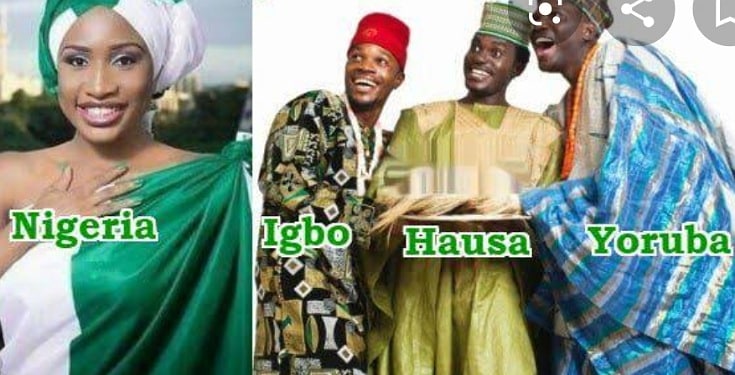
To those deliberately attempting to create hatred between Hausa and Fulani, between Muslims and Christians, between North and South, or between one Nigerian community and another, the message should be unmistakable: Nigeria will not be strengthened by your division. You may gain temporary political advantage. You may attract followers on social media. You may generate sensational headlines. You may even convince some people that your enemy is their enemy. But eventually, the consequences of hatred will reach everyone.
There is a dangerous tendency developing in our national discourse that deserves the attention of every patriotic Nigerian: the deliberate attempt by certain individuals and interest groups to sow distrust, suspicion and division among the Hausa-Fulani communities of Northern Nigeria.
This tendency must be confronted—not because those behind it belong to any particular ethnic or religious group, but because no Nigerian, regardless of ethnicity, religion or political affiliation, should be permitted to weaponise identity for the purpose of weakening another community.
It is therefore necessary to ask: Who benefits when Northerners are encouraged to turn against one another? Who benefits when Hausa, Fulani and other Northern communities are persuaded to see themselves primarily as enemies rather than neighbours, citizens and fellow Nigerians?
These are questions that deserve sober answers.
For decades, Northern Nigeria has been home to communities with different ethnic backgrounds, languages, traditions and interpretations of Islam and Christianity. Despite disagreements and historical tensions, ordinary people have continued to trade together, intermarry, attend one another’s ceremonies and build communities side by side.
The greatest danger is not diversity itself. The danger is the deliberate manipulation of that diversity.
Some politicians, activists, commentators and social-media influencers—irrespective of whether they are Yoruba, Hausa, Fulani, Igbo, Christian or Muslim—have increasingly discovered that division generates attention, political loyalty and emotional reactions.
They should be resisted.
Do Not Turn Yoruba Against Hausa-Fulani, or Christian Against Muslim
It is particularly important that Nigerians reject the temptation to label an entire ethnic or religious community because of the conduct of a few individuals.
If a Yoruba individual promotes division in the North, condemn that individual.
If a Christian individual deliberately attacks Muslims or Northern communities, condemn that individual.
If a Muslim or Hausa-Fulani individual promotes hatred against Yoruba people or Christians, condemn that individual as well.
That is the patriotic standard.
The Yoruba people are not the enemy of the Hausa-Fulani. Christians are not the enemy of Muslims. Northerners are not the enemies of Southerners.
Our common enemy is the politics of hatred, manipulation, injustice, poverty, insecurity and deliberate misinformation.
Nigeria has suffered enough from the consequences of identity politics. We should have learned by now that once hatred is deliberately planted among ordinary citizens, those who planted it are rarely the ones who suffer its consequences.
It is the market woman who loses her livelihood.
It is the farmer who loses his farm.
It is the young man who loses his future.
It is the family that loses a loved one.
And it is the country that becomes weaker.
The North Must Not Be Divided From Within
Hausa-Fulani communities, like every other Nigerian community, have legitimate grievances and internal disagreements. These should be discussed openly and constructively.
Leadership questions must be debated.
Traditional institutions must be respected while remaining open to legitimate scrutiny.
Political differences should be tolerated.
Religious disagreements should be handled with wisdom.
But disagreement must never become hatred.
The North must not allow external voices—or opportunistic internal voices—to convince its people that their neighbours are their enemies simply because of ethnicity, political allegiance, language or sect.
At the same time, Northern leaders must also accept responsibility. A community that wants to remain united must confront its own weaknesses.
Unity cannot be sustained by silence, intimidation or blind loyalty. It must be built upon justice, mutual respect, accountability and fairness.
Those who occupy positions of traditional, political, religious and intellectual authority must therefore speak with greater responsibility. Every careless statement from a respected leader can inflame thousands of people.
Patriotism Must Rise Above Identity
Nigeria is bigger than every political party.
Nigeria is bigger than every ethnic group.
Nigeria is bigger than every religious organisation.
And Nigeria is certainly bigger than the ambitions of individual politicians.
The Hausa-Fulani have contributed immensely to the development of Nigeria. So have the Yoruba, Igbo, Kanuri, Tiv, Nupe, Ijaw, Ibibio, Edo, Gbagyi and hundreds of other communities that make up this country.
No community needs to destroy another to establish its own relevance.
Instead of asking who should dominate Nigeria, we should ask how Nigeria can become a country where every Nigerian can live securely, worship freely, educate his children, conduct business and pursue prosperity without fear.
That is the Nigeria worth fighting for.
A Message to Those Playing With Fire
To those deliberately attempting to create hatred between Hausa and Fulani, between Muslims and Christians, between North and South, or between one Nigerian community and another, the message should be unmistakable:
Nigeria will not be strengthened by your division.
You may gain temporary political advantage. You may attract followers on social media. You may generate sensational headlines. You may even convince some people that your enemy is their enemy.
But eventually, the consequences of hatred will reach everyone.
And when the flames of division become uncontrollable, there will be no ethnic or religious boundary strong enough to contain them.
This is why responsible Nigerians must reject every attempt to turn ethnicity and religion into weapons.
The Future Belongs to a United Nigeria
The younger generation deserves better than inherited suspicion.
A Hausa child should be able to grow up knowing that a Yoruba Nigerian is a fellow citizen—not an enemy.
A Christian child should be able to understand that a Muslim Nigerian is a fellow citizen—not a threat.
A Northerner should be able to travel to the South without fear.
A Southerner should be able to live and do business in the North and vice versa without intimidation.
That is what patriotism means.
We must therefore be careful about the narratives we consume and the voices we amplify. Before forwarding a provocative message, ask who benefits from it. Before believing an inflammatory claim, verify it. Before condemning an entire ethnic or religious community, identify the actual person responsible.
Do not allow anyone to use your identity to manipulate you.
Nigeria’s strength has always been in its diversity. Our task is not to eliminate our differences but to transform them into sources of strength.
The Hausa-Fulani must remain united, but their unity should never be defined by hatred of Yoruba people, Christians or any other Nigerian community.
Likewise, Yoruba unity must never be built upon hostility towards Northerners, and Christian identity must never become an excuse for hostility towards Muslims.
We can defend our communities without demonising others.
We can disagree without becoming enemies.
We can protect our identities without destroying our nation.
At this critical moment in Nigeria’s history, every patriotic citizen must choose reconciliation over provocation, truth over propaganda and national unity over political manipulation.
Because when Nigeria wins, all of us win.
And when Nigeria burns, no tribe and no religion will stand safely outside the fire.
*Abbas, a public affairs analyst, writes from Port Harcourt, Rivers State Nigeria.