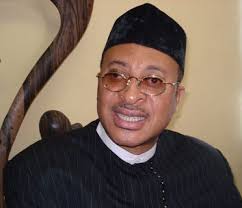
MURIC urges EFCC to rethink reopening of Atiku’s case file
By KEMI KASUMU
“Where was EFCC since all these years? Alhaji Atiku Abubakar’s case file has always been in EFCC’s cabinet since 2006, and this presidential candidate has never hidden his intention to contest over and over again,” he said.
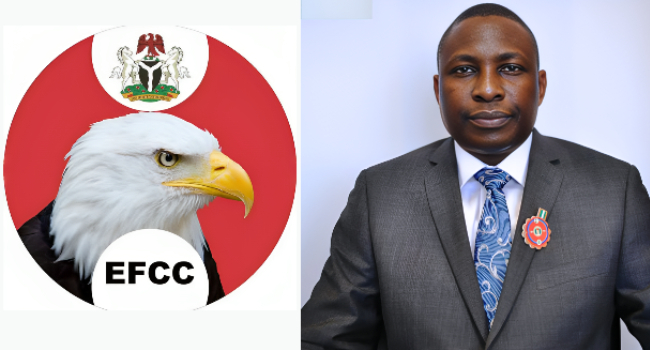
The Muslim Rights Concern (MURIC) has urged the Economic and Financial Crimes Commission (EFCC) to reconsider its reported decision to reopen the investigation into alleged financial crimes involving former Vice President Atiku Abubakar.
The Islamic human rights organisation warned that reopening the case file of a presidential candidate during a sensitive political period could heighten political tensions and create perceptions of selective justice.
MURIC’s Founder and Executive Director, Professor Ishaq Akintola, made the appeal in a press release issued on Friday, October 16, 2026.
The organisation was reacting to reports that the EFCC had reopened its investigation into allegations against Atiku following a petition by a former member of the House of Representatives, Hon. Ehiozuwa Johnson Agbonayinma, seeking his prosecution over alleged financial crimes.
Akintola cautioned the anti-graft agency against actions that could heat up the political atmosphere, insisting that all individuals facing corruption allegations should be treated equally under the law.
“MURIC is not encouraging corrupt practices. Neither are we saying the law must not take its due course. What we are saying is that there should be a level playing field. All alleged fraud offenders should be given equal treatment. There should be no selective apprehension of perceived offenders,” he said.
He argued that the timing of the reported reopening raised questions, considering that the allegations had reportedly been on the EFCC’s radar since 2006.
The MURIC director questioned why the agency was revisiting the matter at a time when Atiku had indicated his intention to contest the presidency again.
“Where was EFCC since all these years? Alhaji Atiku Abubakar’s case file has always been in EFCC’s cabinet since 2006, and this presidential candidate has never hidden his intention to contest over and over again,” he said.
Akintola warned that arresting or prosecuting opposition presidential candidates close to a general election could be interpreted as political persecution, potentially generating public sympathy and protest votes for those affected.
He cited historical examples of political figures who rose to prominent leadership positions after imprisonment, including Malaysia’s Anwar Ibrahim, South Africa’s Nelson Mandela and Myanmar’s Aung San Suu Kyi.
According to him, the EFCC should avoid actions capable of aggravating political tensions in a country already grappling with security challenges, including insurgency.
“Arresting any presidential candidate at this time will be a wrong strategy. It will look as if we are preparing for war. But that is not what our dear country needs at this time because we are fighting one already,” he said.
He added that Nigeria could not afford another source of instability, urging the commission to exercise caution in handling politically sensitive cases.
Akintola also defended MURIC’s intervention as part of its responsibility to promote fairness and protect the fundamental human rights of all citizens, irrespective of religious or political affiliations.
He stressed that the organisation’s position was not an attempt to shield Atiku from accountability but a call for equal treatment under the law.
The MURIC director said the organisation would similarly oppose any unfair treatment of non-Muslim political candidates, citing Islamic teachings on justice and impartiality.
“Justice in Islam has no boundaries, no colour, no ethnicity, no nationality and no race,” he said.
Akintola urged the EFCC to ensure that its actions did not create the impression that opposition figures were being selectively targeted, insisting that the fight against corruption must remain impartial.
“The best advice we can give EFCC is to rethink the reopening of Atiku’s file. Nigerians are not fools. Nobody will believe that opening Atiku’s file at this time is procedural,” he said.
He concluded by urging the commission to avoid politically sensitive investigations for the time being, declaring: “EFCC should close politicians’ files for now. Let Nigeria breathe, please.”
MURIC’s position, however, does not establish whether the allegations against Atiku are substantiated or whether the EFCC’s reported action is politically motivated. Any determination of the allegations would depend on the available evidence and due legal process.