Ladipo Johnson rejects Tinubu’s ‘Age of Prosperity’ claim, says Nigerians still drowning in hardship
By KEMI KASUMU


Johnson asked, “Prosperity for whom?”, arguing that the wellbeing of citizens should be measured by their ability to afford basic necessities rather than by macroeconomic indicators alone.
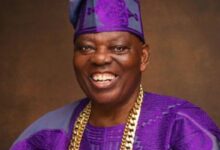
The Lagos Central Senatorial candidate of the National Democratic Congress (NDC), Bamofin Ladipo Johnson, has rejected President Bola Ahmed Tinubu’s description of Nigeria as having entered an “Age of Prosperity,” saying the claim does not reflect the economic realities confronting millions of Nigerians.
Johnson stated this in a response to the President’s Independence Day address to Nigerians on Thursday, October 1, 2026, in which Tinubu highlighted the progress of his administration’s economic reforms.
According to Johnson, while the Presidency celebrates indicators such as GDP growth and foreign reserves, ordinary Nigerians continue to grapple with food inflation, rising transportation costs, high energy prices and declining purchasing power.
He asked, “Prosperity for whom?”, arguing that the wellbeing of citizens should be measured by their ability to afford basic necessities rather than by macroeconomic indicators alone.
Johnson described the President’s address as “detached, self-congratulatory, and profoundly insensitive to the daily struggles of ordinary citizens.”
He also faulted Tinubu’s dismissal of critics of his economic policies as “regressive voices,” saying such criticism undermined democratic dialogue and legitimate debate over alternative approaches to addressing the economic crisis.
The NDC candidate particularly criticised the removal of petroleum subsidy, arguing that it was implemented without adequate local refining capacity and effective social safety nets to cushion its impact on Nigerians.
“Stifling policy debate will not fix the economy,” Johnson said, adding that alternative policy proposals should be subjected to democratic scrutiny rather than dismissed.
He further rejected the administration’s claim that the country had successfully passed through the difficult phase of its economic reforms.
According to him, Nigerians are still confronted by insecurity, electricity grid challenges, rising energy costs and difficult operating conditions for businesses.
He argued that farmers unable to access their farmlands because of insecurity and manufacturers struggling with high operational costs were evidence that the country had yet to reach the prosperity being proclaimed by the government.
Johnson subsequently outlined what he described as an alternative path towards economic recovery, including greater emphasis on domestic production, incentives for manufacturers and small businesses, improved energy infrastructure and stronger social safety programmes.
He called for a shift from what he described as “aggressive revenue extraction and high taxes” towards policies that encourage local manufacturing and entrepreneurship.
He also advocated improved domestic refining and distribution infrastructure as part of efforts to reduce fuel costs, while urging greater investment in public healthcare, education and agricultural support.
Johnson, however, urged Nigerians not to lose hope, saying the current hardship was not permanent and that better governance could create an economy based on opportunity, dignity and shared prosperity.
He said, “Positive change is entirely possible, and a nation that guarantees true opportunity, dignity, and shared prosperity is within our reach.”