Is China sending Washington a message? satellite imagery, signaling, and the new intelligence chessboard
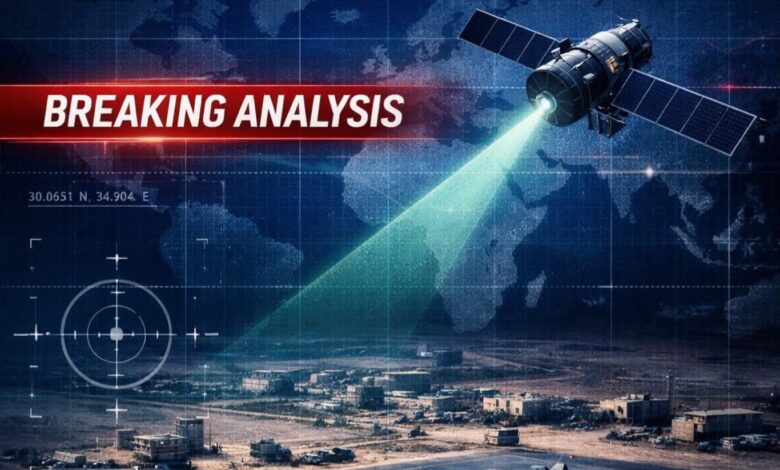
The deeper question is unavoidable: Is China sending an indirect message to the United States — “We are watching your movements”?
When a Chinese commercial satellite firm releases detailed imagery of advanced U.S. military assets overseas, it is difficult to see it as a coincidence.
Recently, “MizarVision,” a Chinese satellite company, published images showing F-22 fighter jets and Patriot missile defense systems at Israel’s Ovda Airbase. On the surface, this appears to be routine commercial imagery — the kind of material that private satellite firms around the world now sell openly. But in today’s geopolitical climate, nothing involving stealth fighters and Middle Eastern airbases is ever just routine.
The deeper question is unavoidable: Is China sending an indirect message to the United States — “We are watching your movements”?
Commercial Image — Strategic Signal
China’s space ecosystem blurs the line between commercial and state capability. Even if MizarVision operates as a civilian enterprise, Beijing possesses far more advanced military reconnaissance satellites capable of persistent, high-frequency surveillance. Monitoring a strategic airbase like Ovda would not be technically difficult.
By publicly releasing such imagery, China may not be trying to expose secrets. Instead, it may be signaling capability. Publishing the photos says, without saying it outright: we can see this.
That is classic strategic communication.
The F-22 Factor
The presence of F-22 fighters is particularly noteworthy. The is widely regarded as the spearhead of U.S. air campaigns. In any potential strike scenario against Iran, stealth aircraft would likely be deployed first to neutralize air defenses and open corridors for follow-on forces.
If an attack were to occur, the initial movements of these aircraft could effectively mark “Zero Hour” — the moment operations begin.
If China can monitor those movements in near real time, the strategic implications grow far beyond photography.
Would This Give Iran an Advantage?
The critical issue is not whether the images exist — but what can be done with them.
If Beijing can detect the precise moment U.S. aircraft reposition or prepare for launch, and if that information is shared, the element of surprise — historically central to American air doctrine — could be diminished.
Knowing the exact timing of a strike could allow Iran to:
- Temporarily shut down radar systems to reduce vulnerability to anti-radiation missiles.
- Reposition mobile air defenses.
- Harden critical infrastructure at the final moment.
- Consider preemptive or retaliatory measures.
Surprise has long been one of Washington’s strongest operational tools. Precise timing intelligence could erode that edge.
Is This Really About Israel — or Washington?
The imagery focused on Ovda Airbase in Israel. But strategically, the message is directed elsewhere. The United States is Israel’s principal security partner, and any large-scale strike scenario against Iran would almost certainly involve U.S. assets or coordination.
By releasing images of American stealth aircraft abroad, China may be demonstrating that geographic distance no longer guarantees operational opacity.
This is less about Israel and more about U.S. global force projection.
The Broader Power Contest
The world has entered an era where commercial satellites, artificial intelligence, and military reconnaissance converge. The old monopoly on space-based intelligence once held by superpowers is eroding. Yet major powers like China still retain far more sophisticated capabilities than what they publicly reveal.
Whether or not Beijing is actively feeding information to Tehran, the mere perception that it could do so reshapes strategic calculations.
Deterrence is no longer just about missiles and aircraft. It is about who sees first — and who knows when.
If China can detect the moment American jets prepare to move, and if that knowledge can be transmitted instantly, then the battlefield timeline compresses. Decision cycles shorten. Risks increase.
And perhaps that is the real message: not a threat, but a reminder.
We are watching.