Iranian cleric says Tehran preparing missiles with 15,000km range capable of reaching US
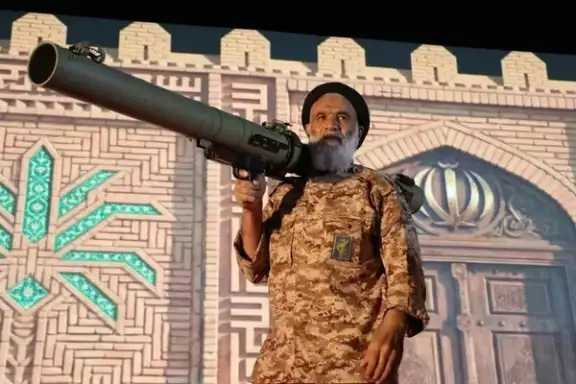
“We are preparing ourselves so that the American people, too, will see what it is like to be hit by missiles and understand what it means to be left in blood and destruction,” Mousavifard was quoted as saying.
An Iranian senior cleric has said the Islamic Republic is preparing to develop missiles with a range of up to 15,000 kilometres (about 9,300 miles), a capability that would potentially put targets deep inside the United States within reach.


Abdolnabi Mousavifard, the Friday prayer leader in the southwestern Iranian city of Ahvaz, made the claim during a sermon on Friday, amid heightened tensions between Iran, Israel and the United States.
According to reports, Mousavifard said Iran was working to extend the range of its missiles to 15,000 kilometres, a distance sufficient to cover the geographical distance between Iran and the continental United States.
The cleric reportedly framed the proposed long-range capability as a means of making Americans understand the consequences of war and missile attacks.
“We are preparing ourselves so that the American people, too, will see what it is like to be hit by missiles and understand what it means to be left in blood and destruction,” Mousavifard was quoted as saying.
He also claimed that Iran’s existing missile capabilities could already reach deep into Israeli territory, citing a range of approximately 2,000 kilometres to Jerusalem.
The remarks come against the backdrop of an increasingly dangerous confrontation between Tehran and Washington, following the latest escalation in the US-Israeli conflict with Iran.
Threat to reach American territory
A missile with a range of 15,000 kilometres would fall into the broad category of an intercontinental-range missile capability, potentially allowing Iran to reach virtually any location in the continental United States from Iranian territory, depending on the missile’s trajectory and payload.
Washington and Tehran have previously been engaged in a long-running dispute over Iran’s ballistic-missile programme. Iran has developed a substantial arsenal of short- and medium-range ballistic missiles, but publicly available evidence has not established that it currently possesses an operational missile capable of reaching the continental United States.
The latest statement therefore represents a reported Iranian intention or aspiration, rather than confirmation that such a weapon has been successfully developed, tested or deployed.
Iran’s development of an intercontinental-range missile would represent a major strategic shift. Such a capability would fundamentally alter the country’s deterrence posture by potentially allowing it to threaten the US mainland directly rather than relying primarily on regional missiles, drones and attacks against US military facilities and allies in the Middle East.
‘Americans must experience the consequences of war’
Mousavifard’s comments appeared intended not only as a military warning but also as a political message to the American public.
His argument was that some Americans who support US military action against Iran do so without having experienced the destruction caused by missiles and warfare in their own communities.
The cleric suggested that exposing the American population to the consequences of missile warfare would change public attitudes towards the conflict.
The remarks are likely to generate concern in Washington because an Iranian capability to strike the US homeland would represent a qualitatively different threat from attacks on American military bases and personnel stationed abroad.
Despite the seriousness of the statement, there is currently an important distinction between Iran saying it intends to develop such a capability and Iran actually possessing it.
The available report does not provide evidence that Iran has flight-tested a 15,000-kilometre missile. Nor does it establish that Tehran currently possesses an operational intercontinental ballistic missile capable of striking Washington or other US cities.
Iran has, however, invested heavily in ballistic missiles and has repeatedly sought to improve their range, accuracy, mobility and survivability.
The country unveiled its Fattah hypersonic missile in 2023, although the missile’s publicly stated range was approximately 1,400 kilometres — nowhere near the 15,000-kilometre figure cited by Mousavifard.
What would a 15,000km capability mean?
The development of a missile capable of travelling 15,000 kilometres would have consequences far beyond the current Middle East conflict.
It would potentially place the United States, Canada and much of Europe within Iran’s strategic missile envelope, depending on the missile’s trajectory and payload.
Historically, US intelligence assessments have examined the possibility of Iran eventually developing an intercontinental ballistic missile capable of reaching North America. Arms-control experts have also noted that Tehran’s development of such a system would require major advances in propulsion, staging, guidance, re-entry technology and other areas associated with long-range ballistic missiles.
For Washington, therefore, the significance of Mousavifard’s statement lies less in the immediate existence of such a weapon and more in the possibility that Iran could be signalling a determination to pursue a capability that would directly threaten the US homeland.
For Tehran, such a weapon could serve as the ultimate deterrent: a way of telling Washington that any future war against Iran could eventually carry consequences not only for American forces overseas but potentially for the American mainland itself.
For now, however, the 15,000-kilometre missile remains a reported Iranian objective rather than a confirmed operational capability.