If you need replies to your allegations against me, take them before a court, I will respond, El-Rufai tells ICPC in custody
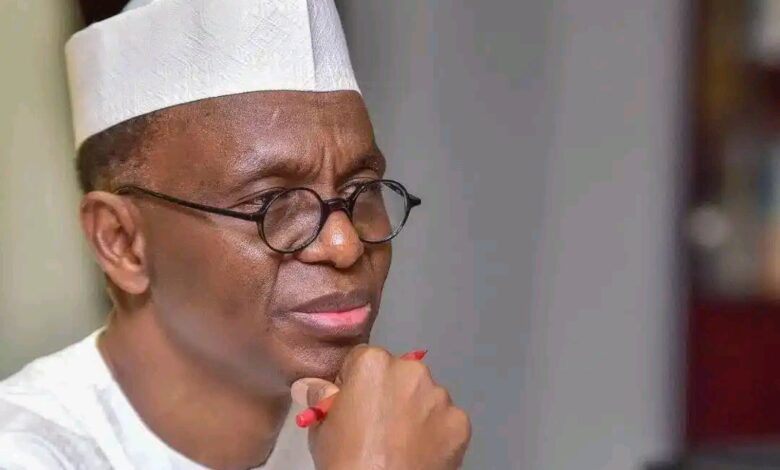
In statements he wrote on 19 and 20 February in ICPC’s custody, Mr El-Rufai declined to respond to allegations laid before him by the prosecutors, instead asking them to present them before a court where he would respond.
The former Governor of Kaduna State, Nasir El-Rufai, has maintained that his investigation and detention by the Independent Corrupt Practices and Other Related Offences Commission (ICPC) is linked to his activity as a leading member of the African Democratic Congress (ADC), which he described as the “only surviving opposition political party” in the country, Premium Times reported.
El-Rufai has been in ICPC custody since 19 February, after his release from days of detention by the Economic and Financial Crimes Commission (EFCC), which had detained him after he honoured an invitation on Monday, 16 February.
In statements he wrote on 19 and 20 February in ICPC’s custody, Mr El-Rufai declined to respond to allegations laid before him by the prosecutors, instead asking them to present them before a court where he would respond.
According to a media report, which said it obtained the statements, it said they were filed as part of the exhibits ICPC filed along with a counter-affidavit opposing Mr El-Rufai’s N1 billion fundamental rights enforcement suit.
El-Rufai had instituted the suit to seek redress over what he described as his illegal arrest, detention and search of his residence in Abuja.
ICPC urged the court in its counter-affidavit to dismiss the suit, citing the discoveries of its agents during the search of the property at 12 Mambilla Street, Asokoro, Abuja, on 19 February.
However, the former governor insisted the investigations, detention and raid on his home were political persecution, not law enforcement.
“I believe that after nearly two years of intensive investigation, the ICPC should present its findings to a judicial tribunal and not to me. I will respond to any allegations in a court of law only,” he wrote in a 19 February statement at the ICPC obtained by PREMIUM TIMES.
“This is because I do not believe these investigations amount to law enforcement. This is political persecution, which only a judge can decide upon.”
An ICPC prosecutor, David Efuk, said in its counter-affidavit seen by this newspaper that the commission had with the support of the State Security Service (SSS) attempted to arrest Mr El-Rufai on 5 February at the Nnamdi Azikiwe airport in Abuja upon his arrival from Egypt. The arrest was unsuccessful as the former governor declined to follow the security agents without a formal invitation, causing a ruckus and attracting attention at the airport.
Mr Efuk said the airport arrest attempt followed the commission’s futile attempts to serve the former governor with a letter of invitation.
He explained that the commission later found Mr El-Rufai’s residential address in Abuja and served him a letter to appear before the commission on 13 February.
Through his legal representative, he requested to honour the invitation on 18 February instead. However, he had been detained by the EFCC before the date. The EFCC would later release him to the SSS around 7 p.m. on 18 February and transferred him to the ICPC on 19 February, the ICPC prosecutor narrated.
On the same day, the ICPC said it searched Mr El-Rufai’s home with a search warrant granted
During the search, witnessed by his wife, Hadiza El-Rufai and son Mohammed El-Rufai, the ICPC said it retrieved “sensitive security documents capable of compromising national security”, including equipment it claimed is capable of tapping conversations.
“The commission retrieved electronic magnetic equipment capable of tapping conversations, and he was asked to give consent to enable the commission access to the equipment, but he refused,” the prosecutor added.
However, El-Rufai’s son, Mohammed El-Rufai, said on Monday that all that the ICPC recovered from the house were old mobile phones, laptops and flash drives.
In a statement shared on his social media page, the junior El-Rufai, who is a member of the House of Representatives, described the ICPC’s claims of finding phone-taping equipment at the former governor’s home as ‘fiction’.
Why ICPC is investigating El-Rufai
The ICPC said it is investigating Elrufai over a petition submitted against him in 2024, and for which it has obtained several relevant documents from banks and other agencies of government.
The petition, filed by Nus’ab Chambers in June 2024, alleged diversion of state funds, mismanagement of loans obtained, and violations of procurement laws in the awards of projects.
But El-Rufai refused to answer the questions asked by the ICPC prosecutors in custody, according to his statements and affidavits by the ICPC prosecutor.
Up until 26 February, El-Rufai had not answered any questions relating to the petitions when confronted, the ICPC prosecutor said.
“In response to your question (and indeed all your questions), I have, on the advice of counsel, decided to exercise my right to silence,” Mr El-Rufai wrote. “I will make no further statement or respond to any question.”
Elrufai used more than half of the statements to tell the ICPC about his life and background –where he was born, the schools he attended and the jobs he has taken up in the last 26 years.
He also told the ICPC he is retired and currently resides mostly in Egypt alongside his aged mother.
However, he refused to respond to the allegations laid out to him by the interrogators, asking them to present their findings before a court and not to him.
“I will respond to these documents and questions only when presented in a court of law,” he said in another statement written at the ICPC custody on 20 February.
El-Rufai challenges detention
The former Kaduna state governor had filed a suit against the EFCC, ICPC, SSS and the Attorney General of the Federation (AGF) at a Federal High Court in Abuja.
In the suit, El-Rufai wants the court to declare that his arrest and detention violated his fundamental rights.
He asked the court to declare the actions of the anti-graft agencies unlawful and to award him N1 billion in damages.
He also sought that the court bar respondents from taking steps to freeze his bank accounts or seize his property.
El-Rufai, a critic of President Bola Tinubu, also urged the court to issue an order of interim injunction directing the respondents to maintain “the status quo ante” pending the hearing and determination of the application and his main suit.
El-Rufai defected from the ruling All Progressives Congress (APC) and joined the African Democtratic Congress (ADC) last year.