How Muslim clerics’ warning to Tinubu over hardship, insecurity prompted petrol price discount — Tribune Columnist
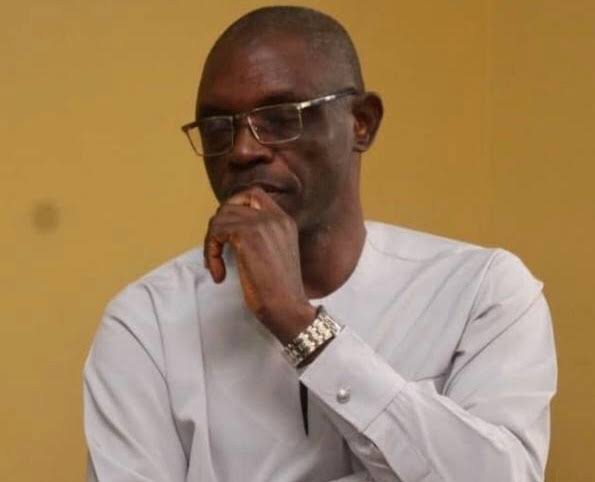
By KEMI KASUMU
Preachers should not remain silent when their congregations face hunger, kidnapping and violence, stressing that religious responsibility extends beyond delivering sermons.
More than 1,000 Islamic clerics reportedly gathered in Kano last week to warn Nigerian Muslims against re-electing President Bola Tinubu in 2027 unless his administration changes its economic policies, citing hardship, unemployment, killings and kidnappings across the country.
The development, reported by Daily Trust on Wednesday, followed a national conference held in Kano on the theme, “An Assessment of the State of the Nation under President Tinubu and the 2027 General Elections.”
In his Monday Lines column published in the Nigerian Tribune on October 12, 2026, columnist Lasisi Olagunju examined the political implications of the clerics’ intervention, the worsening economic situation and the Federal Government’s subsequent announcement of a temporary petrol price discount.
Olagunju said the names of several prominent Islamic scholars and clerics reportedly associated with the conference lent weight to the gathering’s position, even as he questioned how the participants were assembled and counted.
Among those identified in the report were Dr Abdulmuddalib Ahmad Gidado, Prof. Muhd Muslim Ibrahim, Sheikh Kabir Bashir Abdulhamid, Dr Aminu Isma’il Sagagi, Dr Najibullah Abdallah Nuhu, Sheikh Abdurrazaq Uba Musa, Sheikh Musa Muhd Ɗan Kwano, Dr Yahuza Getso, Prof. Ibrahim Siraj Adhama, Dr Umar Dokaji and Sheikh Muhd Sani Khamis, also known as Abu Haisam.
The columnist argued that the clerics’ intervention presented a significant challenge to the administration, particularly given the influence religious leaders wield in northern Nigeria.
He contrasted the reported position of the Islamic clerics with the Federal Government’s earlier criticism of Catholic bishops who had expressed concerns about the country’s economic hardship and insecurity.
According to Olagunju, religious leaders should be able to speak openly about suffering, insecurity and governance failures without being accused of exceeding their boundaries.
He maintained that preachers should not remain silent when their congregations face hunger, kidnapping and violence, stressing that religious responsibility extends beyond delivering sermons.
Olagunju questions Tinubu campaign claims
The columnist also questioned claims by Senator Abdulaziz Yari, one of Tinubu’s leading campaign figures for the 2027 presidential election, that the President had performed well and enjoyed strong support across more than 10 northern states.
Yari reportedly made the remarks while speaking to State House correspondents on Friday, arguing that the President’s policies were improving the lives of Nigerians.
Olagunju challenged the claims against the backdrop of the clerics’ reported opposition to Tinubu’s re-election unless his administration changed course.
He questioned whether the campaigner’s assessment accurately reflected public sentiment in the North, where many communities continue to grapple with poverty, insecurity and economic hardship.
The columnist also observed that the region’s experience under former President Muhammadu Buhari had not delivered the relief many residents might have expected from a northern leader.
He argued that economic hardship could translate into political rejection when people believe their livelihoods are under threat.
Historical lessons for the presidency
Olagunju drew comparisons with British colonial administration in northern Nigeria, citing the assurances given by Frederick Lugard following the British conquest of the Sokoto Caliphate in 1903.
He referenced historical accounts in which Lugard pledged respect for religious worship and promised not to interfere unnecessarily with the religious practices of the Muslim population.
The columnist also cited the qualification contained in the oath of allegiance taken by northern emirs under British colonial rule, which required obedience to colonial laws and commands provided they did not contradict their religion.
Using these historical examples, Olagunju argued that political authority must recognise its limits and exercise restraint, particularly in societies where religious institutions command substantial influence.
He urged Tinubu and those around him to recognise that electoral victories do not eliminate the need to respond to public grievances.
Petrol price discount follows clerics’ warning
The columnist noted that the Federal Government announced a temporary petrol price discount less than 24 hours after the clerics’ reported resolution became public.
He questioned whether the timing suggested that the administration was responding to mounting public anger, although the government did not say the announcement was prompted by the clerics.
Minister of Finance and Coordinating Minister of the Economy Taiwo Oyedele announced the measure at a briefing in Abuja, saying the discount would initially last for 30 days and prioritise public transport operators nationwide.
“We are offering a discount on petrol dispensed by NNPC Limited for the next 30 days in the first instance with priority for public transporters nationwide,” Oyedele said.
He added that the measure was not a return to fuel subsidy, describing it instead as a decision by the government to sell petrol at cost.
Olagunju questioned whether the temporary concession would adequately address the underlying causes of public discontent, including hunger, unemployment and insecurity.
He asked what would happen after the 30-day period expired, arguing that a short-term reduction in fuel costs could not, by itself, resolve the wider economic and security challenges facing Nigerians.
‘Price modulation’ sparks criticism
The columnist also criticised the government’s description of its petrol pricing arrangement as “price modulation”, arguing that changing terminology did not necessarily translate into meaningful relief for consumers.
He recalled that former President Buhari’s administration had used similar language in 2015 when discussing changes to petrol pricing.
Olagunju cited a statement by former Minister of State for Petroleum Resources Ibe Kachikwu, who had referred to price modulation as a more technical alternative to the language of subsidy.
The columnist argued that the recurrence of such terminology under successive administrations raised questions about whether the policy changes had produced a meaningful difference for ordinary Nigerians.
He also challenged Oyedele’s argument that keeping petrol prices stable could be preferable to allowing them to fluctuate, even where the eventual price might fall.
According to Olagunju, a comparison between buying petrol at ₦1,400 per litre on two consecutive days and paying ₦1,500 on one day followed by ₦1,300 the next produces the same combined price of ₦2,800 for two litres.
He argued that while price stability might help households plan their spending, it did not necessarily make petrol more affordable.
The columnist maintained that the fundamental issue was the burden of fuel costs on household incomes, rather than the terminology used to describe the government’s pricing policy.
Economic hardship and insecurity fuel public discontent
Olagunju further linked the reported clerics’ intervention to broader dissatisfaction with Tinubu’s economic reforms and the continuing security crisis.
He cited a report published by British magazine The Economist on October 1, 2026, titled “Nigerians dislike their president, but may re-elect him anyway,” which examined public discontent over economic hardship and insecurity.
He also recalled Tinubu’s Independence Day address, in which the President defended his reforms, arguing that they confronted rather than created the weaknesses in the Nigerian economy.
The columnist questioned whether the administration’s defence adequately addressed the suffering experienced by ordinary Nigerians.
He argued that the government needed to acknowledge the consequences of its policies and pursue more effective measures to improve living conditions.
According to him, the reported protests by Islamic clerics and other expressions of public dissatisfaction should not be dismissed simply because the administration retains the machinery of state power.
He urged members of the President’s family, associates and political circle to give him honest advice about the effects of government policies on the population.
Olagunju concluded that temporary petrol discounts and other reactive measures would not be sufficient to ease public anger without broader improvements in economic conditions and security.
He warned that political victories could ultimately prove costly to those who fail to understand the limits of their power and respond to the grievances of the people.