{OPINION} EL-RUFAI WAS RIGHT: Nuhu Ribadu’s secret ransom deals with Boko Haram demand answers
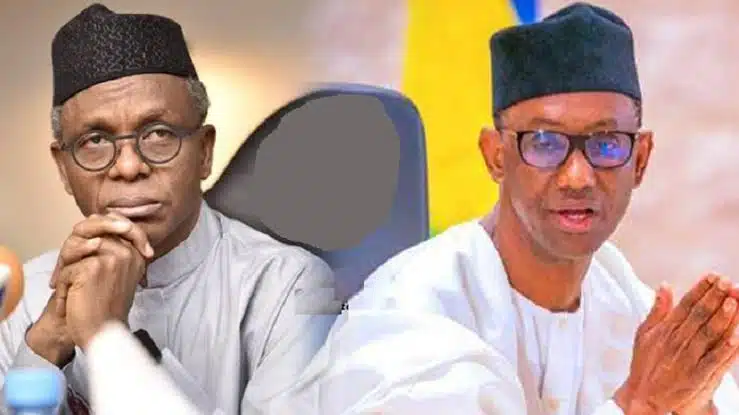
By MOHAMMED BELLO DOKA
Yet, a National Bureau of Statistics report paints a grim picture: From July 2024 to June 2025, nearly 5,000 abductions, 614,937 killed, and N2.2 trillion in ransoms paid nationwide.
In a bombshell revelation that exposes the rotten underbelly of Nigeria’s security strategy, an Agence France-Presse (AFP) investigation has laid bare how President Bola Tinubu’s administration funneled millions of dollars in “blood money” to Boko Haram terrorists to buy the freedom of innocent schoolchildren. This isn’t just a policy failure—it’s a brazen betrayal of the Nigerian people, a direct violation of the law, and a vindication of former Kaduna Governor Nasir El-Rufai’s explosive accusations against National Security Adviser Nuhu Ribadu. As critical ministries gasp for air amid a crippling cash crunch, with a staggering N10 trillion shortfall stalling capital projects and leaving infrastructure in ruins, the government is allegedly squandering billions on ransoms to bandits and payoffs to media influencers to whitewash their atrocities and silence dissent. Who will hold them accountable before Nigeria spirals into utter chaos?
Let’s rewind to September 2025, when El-Rufai, no stranger to controversy, went on national television to torch the Tinubu administration’s “non-kinetic” approach to insecurity. He accused Ribadu’s Office of the National Security Adviser (ONSA) of sponsoring bandits with billions in naira, doling out food, incentives, and ransoms while parading paid-for releases as heroic rescues. El-Rufai didn’t mince words: This was enabling terrorism, not fighting it. Ribadu fired back, calling the claims “baseless, unfair, and deeply insulting,” insisting no federal arm paid ransoms and doubling down on the government’s zero-tolerance policy. Fast-forward to February 23, 2026, and AFP’s damning report shatters those denials like fragile glass. Four intelligence sources confirm that for the November 21, 2025, abduction of nearly 315 pupils and staff from St. Mary’s Secondary and Primary School in Papiri, Niger State—where at least 50 escaped early—the government paid a “huge” multimillion-dollar ransom, estimated at 40 million naira per person or up to N2 billion overall (roughly $1.2–7 million USD). The cash was helicoptered to Gwoza, a Boko Haram stronghold in Borno State, handed to commander Ali Ngulde—who even crossed into Cameroon to confirm receipt due to spotty networks—and sweetened with the release of two jailed Boko Haram commanders. The abductors? A faction led by the notorious Sadiku, infamous for the 2022 Abuja-Kaduna train attack.
This flouts the 2022 amendment to the Terrorism (Prevention) Act, which slaps a minimum 15-year prison term on anyone—officials included—who pays or facilitates ransoms to terrorists. Yet, the Department of State Services (DSS) clings to its mantra: “Government agents don’t pay ransoms.” The public isn’t buying it. Social media erupts with outrage, with users decrying the hypocrisy and demanding probes, while analysts warn this fuels the kidnapping economy. Even U.S. President Donald Trump, framing Nigeria’s crises as “persecution” of Christians, must be fuming—his administration’s Christmas Day strikes on Islamic State militants in northwest Nigeria underscore the international stakes.
But St. Mary’s is no isolated scandal. Under Tinubu since May 2023, mass abductions have exploded, with over 4,777 people kidnapped in his first year alone, per SBM Intelligence. Take the March 7, 2024, Kuriga school raid in Kaduna: 287 students snatched, a N1 billion ransom demanded, released after 17 days amid official denials but whispers of covert payments. Or the November 18, 2025, Federal Government College Birnin Yauri attack in Kebbi: 25 female students abducted, 24 freed quickly, with suspicions of backroom deals despite presidential assurances of “zero-tolerance.” Then there’s the March 9, 2024, Gidan Bakuso Tsangaya School in Sokoto: 15 children taken, released amid claims of military pressure but patterns suggesting otherwise.
The horror escalated in late 2025: A November 21 church abduction in Kwara saw 38 worshippers seized, ransoms demanded at $68,000 each, and releases attributed to “rescues” but riddled with doubt. Days later, 13 women and an infant kidnapped in Borno, with families forced to pay up again. By November’s end, over 500 abductions in a week prompted Tinubu to declare a national security emergency, ordering 20,000 new police recruits and military boosts. Yet, a National Bureau of Statistics report paints a grim picture: From July 2024 to June 2025, nearly 5,000 abductions, 614,937 killed, and N2.2 trillion in ransoms paid nationwide. Recent horrors include a bride and her bridesmaids snatched in Edo State, and over 160 worshippers from Kaduna churches in early 2026.
This surge coincides with economic Armageddon: Ministers lament stalled N10tn capital budgets, revenue crises threatening the N58trn 2026 fiscal plan, and 70% of 2025 funds rolled over amid borrowing spirals. Health, education, and infrastructure ministries beg for scraps, while billions vanish into terrorist coffers and, allegedly, to a network of media influencers paid handsomely to spin narratives defending the regime or attacking critics. Insiders has exposed how influencers rake in thousands of dollars—up to $7,000 each—to push agendas, often cloaked as pro-government propaganda to bury scandals like these ransoms. Is this the “renewed hope” Tinubu promised? Or a renewed nightmare where taxpayer money funds terror and cover-ups?
El-Rufai’s warnings weren’t vindictive—they were prophetic. The AFP exposé proves him right, igniting public fury and calls for Ribadu’s head. Nigerians demand answers: How many more secret deals? Who authorized the helicopter drops? Will the EFCC probe, as it did with suspended Minister Betta Edu’s N585m fraud? Tinubu must sack Ribadu, launch an independent inquiry, and enforce the anti-ransom law—no more excuses. Anything less is complicity in terror. The clock is ticking; Nigeria’s future hangs in the balance.
Mohammed Bello Doka can be reached via bellodoka82@gmail.com
Abuja Network News
24 February, 2026
Note that all opinions expressed in this article are entirely those of the author and not of The DEFENDER.