{EDITORIAL} Nigeria 2027: Reset Rhetoric or Real Reform?

Elections should not be transactions; they should be accountability mechanisms. No matter how hungry they are by the currently experienced weaponisation of poverty in the country, to relieve themselves of this hunger, voters must interrogate candidates, not just on promises, but on capacity, track record, and clarity of vision.
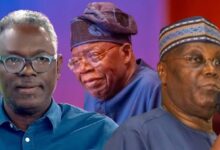

As Nigeria approaches the 2027 general elections, the conversation should move beyond slogans and sentiment. The central question is not just who leads next, but what kind of leadership Nigerians are prepared to demand—and enforce.

There is a growing chorus insisting that any candidate seeking public office must commit to a bold “reset” of the nation—one that restores Nigeria’s economic strength and social cohesion to something resembling its pre-1980 standing. It’s an appealing idea. But nostalgia, on its own, is not a policy. The real task is more difficult: building a competitive, productive economy that can stand on its own terms in a global system still dominated by the dollar.

Today’s economic reality is stark. The naira’s weakness against major currencies reflects deeper structural failures, not just malfunctioning refineries or fluctuating oil prices. Nigeria’s core productive sectors—agriculture, manufacturing, and industry—have been hollowed out over decades. The result is an import-dependent economy that exports little beyond crude oil and imports nearly everything else.

This decline did not happen in isolation. It has been accompanied—and in some cases accelerated—by political choices that have deepened division and undermined productivity. One example is the long-running conflict between herders and farmers. What began as a resource-use challenge has metastasized into a national security crisis, fueled by ethnic profiling, political manipulation, and state inaction.

Reducing this conflict to simplistic narratives does more harm than good. Both livestock production and crop farming are essential components of Nigeria’s agricultural economy. Framing one group as enemy to the other ignores the economic interdependence that once sustained rural livelihoods. Effective governance would recognize this and invest in systems—grazing frameworks, land-use policies, security enforcement—that enable coexistence rather than conflict.

Leadership failure is at the heart of the issue. Political power in a democracy is not merely about winning elections; it is about deploying that mandate to ensure security, fairness, and opportunity. When leaders hesitate to act decisively—whether out of political caution or lack of capacity—the consequences are felt across every sector.

Nigeria is not without assets. Religious and traditional leaders, for instance, remain deeply embedded in communities and often play stabilizing roles. Their efforts at promoting unity and dialogue can be powerful—but only when matched by political will. Without that alignment, even the most committed peacebuilding initiatives struggle to achieve lasting impact.

Much is often made of Nigeria’s economic strength in 1980, when the naira was stronger and industries were more vibrant. The country had a diversified industrial base: vehicle assembly plants in Kaduna and Lagos, textile mills in the North, tyre production in Port Harcourt, and manufacturing clusters spread across regions. Agricultural raw materials fed local industries, and many goods consumed domestically were produced at home.

That era offers lessons—but it should not be romanticized. The global economy has changed, and Nigeria cannot simply rewind to 1980. What it can do is recover the underlying principles that drove productivity then: investment in infrastructure, support for local industry, coherent industrial policy, and a commitment to value addition rather than raw export.

If there is a “reset” to be pursued, it must be grounded in these realities. It requires credible, transparent leadership that prioritizes long-term economic competitiveness over short-term political gain. It demands policies that encourage production—whether in agriculture, manufacturing, or technology—and reduce dependence on imports.

Most importantly, it requires citizens to raise their expectations. Elections should not be transactions; they should be accountability mechanisms. No matter how hungry they are by the currently experienced weaponisation of poverty in the country, to relieve themselves of this hunger, voters must interrogate candidates, not just on promises, but on capacity, track record, and clarity of vision.
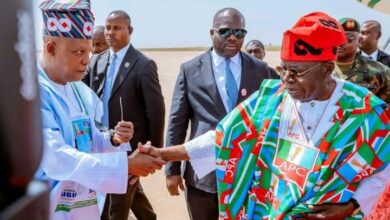
The temptation to blame external forces for Nigeria’s challenges is understandable, but ultimately unproductive. The country’s future will be determined less by global conspiracies and more by domestic choices—by what Nigeria produces, how it governs itself, and whether its sincere and generally accepted leaders are willing to make difficult decisions.

So as 2027 approaches, the message to aspiring leaders should be clear: rhetoric is no longer enough. Nigerians are not just looking for promises of change—they are looking for proof that change is possible, and a plan to deliver it.

Related Articles

Back to top button

Adblock Detected

We noticed you're using an ad blocker. To continue providing you with quality journalism and up-to-date news, we rely on advertising revenue. Please consider disabling your ad blocker while visiting our site. Your support helps us keep the news accessible to everyone.

Thank you for your understanding and support.

Sincerely, Defender Media Limited