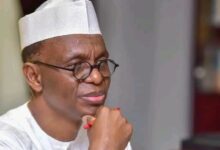
Arrests before investigation, detention of people without evidence must now end in Nigeria, declares El-Rufai
By KEMI KASUMU
“Arrests without evidence must end. Detention before investigation must end. Governing by intimidation rather than institutions must end,” he said, insisting that law enforcement agencies are increasingly being deployed for regime protection rather than democratic preservation.
For Governor of Kaduna, Mallam Nasir Ahmad El-Rufai, has spoken up to what he describes as the growing use of arrests, prolonged detention, and selective prosecution in Nigeria, warning that the trend is quietly eroding the country’s democracy and deepening public distrust in governance.
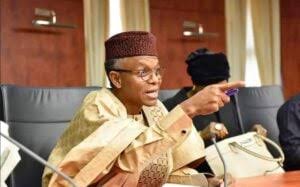
El-Rufai, who made the remarks on Thursday January 22, 2026 while speaking virtually from Brussels at the 23rd Daily Trust Dialogue where he addressed the theme “Nigeria’s Fourth Republic: What Is Working and What Is Not”, said detention of people without trial must now end in the country.
He said the increasing detention of individuals without due process reflects a dangerous drift away from the rule of law.
“Arrests without evidence must end. Detention before investigation must end. Governing by intimidation rather than institutions must end,” he said, insisting that law enforcement agencies are increasingly being deployed for regime protection rather than democratic preservation.
The former governor argued that the justice system, which should serve as a shield for citizens, has instead become a source of fear for many Nigerians.
“The law should protect citizens, not terrify them,” El-Rufai said, adding that prolonged detention, selective prosecution, and what he described as “investigative fishing expeditions” had weakened confidence in the courts.
He warned that when arrests and detentions are perceived as politically motivated, democracy suffers lasting damage.
He noted that although the courts remain the last refuge for many Nigerians, doubts about judicial independence threaten the stability of the nation.
“We have seen in Nigeria prolonged detention, selective prosecution, and investigative fishing expeditions that have weakened confidence in the justice system. When law enforcement is weaponised against political competitors, democracy erodes quietly but steadily, and this is what we’ve seen happening in our country today.
“The courts remain the last refuge of anyone that feels persecuted, but when justice is doubted, when judges are compromised, the republic itself is weakened.”
Read Also:
Daily Trust Dialogue: Insecurity, poor governance denying Nigerians democracy dividends – Olubadan
We can’t have a nation of jobless youths and want peace — Fayemi, others, speak on democracy, leadership in Nigeria
El-Rufai linked the pattern of detentions to broader governance failures, arguing that selective enforcement of laws has created a climate of impunity for those aligned with power while exposing others to persecution.
He said this uneven application of justice has contributed to widespread cynicism and declining trust in public institutions.
Situating his comments within Nigeria’s ongoing insecurity and governance crisis, El-Rufai said the erosion of civil liberties compounded public anger already fueled by economic hardship and social exclusion.
According to him, a democracy cannot endure where fear replaces accountability and institutions are subordinated to political interests.
He cautioned that unless the trend is reversed, public faith especially among young Nigerians will continue to erode, with serious consequences for the survival of the Fourth Republic.
The former governor called for an end to selective law enforcement and urged political leaders to embrace reform rather than repression.
“The choice before us as politicians is not stability, but reform. It is reform now or instability sooner or later,” he said.
El-Rufai’s comments came amid long-running corruption investigations by the Economic and Financial Crimes Commission (EFCC) involving several former governors and ministers who served during President Muhammadu Buhari’s administration.
We gathered that several former ministers and top officials from the Buhari era remain entangled in legal battles.
Former Attorney-General of the Federation Abubakar Malami (SAN) has faced repeated arrests since December 2025 over alleged money laundering and asset recovery controversies, including a re-arrest by the State Security Service (SSS) shortly after his release from custody in January 2026.
Also, former Labour Minister Chris Ngige is standing trial over alleged N2.2 billion contract fraud linked to his oversight of the Nigeria Social Insurance Trust Fund (NSITF), while ex-Central Bank governor Godwin Emefiele continues to face multiple cases involving procurement fraud and money laundering, with courts ordering forfeiture of high-value properties and assets linked to him.