Why Are You Begging Tinubu to Continue Making You Suffer Beyond 2027?
By ABANIKANDA OLUMORO (UK)

There is also the disturbing political posture of Nyesom Wike, Tinubu’s Minister of the Federal Capital Territory, who has reportedly boasted that the FCT and Rivers State elections are already secured for Tinubu. Such statements raise serious questions about respect for voters and the credibility of the electoral process. Abuja must not be treated as a personal political territory or as an imaginary 37th state under the control of one minister.
How difficult is it for Nigerians to make politicians in government work for them? Why would citizens who possess the constitutional power to hire and fire political leaders through the ballot box prefer to celebrate their suffering and beg those responsible for their hardship to remain in power?
Sadly, some Nigerians seem to have lost the ability to recognise when it is time to tell non-performing political leaders to quit. Rather than demand accountability, they resort to drumming, dancing and singing in praise of those whose policies have made life increasingly difficult for millions. Is political loyalty now more important than the welfare and survival of the people?
Every four-year tenure of an administration has far-reaching implications for the lives, businesses and future of citizens. Government policies determine whether people enjoy prosperity or endure hardship. Therefore, responsible citizenship requires Nigerians to hold their leaders accountable, regardless of ethnic, religious or political affiliations.
Since President Bola Ahmed Tinubu assumed office in 2023, Nigerians have experienced what many consider a dramatic departure from the improving governance and development direction pursued under President Muhammadu Buhari’s administration (2015–2023). Buhari had his shortcomings, but with ministers such as Rotimi Amaechi, Babatunde Raji Fashola, Rauf Aregbesola, Chris Ngige and Abubakar Malami, his administration implemented projects and policies that left significant marks on the country.
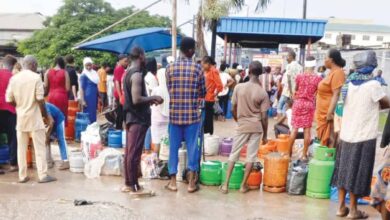
Tinubu’s announcement of fuel subsidy removal, accompanied by the depreciation of the naira, however, triggered an economic crisis that has pushed millions of Nigerians into deeper hardship. Businesses have closed or relocated, household purchasing power has collapsed, and families are struggling to survive. The economic pressure has also strained marriages and family relationships, leaving parents and children frustrated by circumstances beyond their control.
What has happened to the railways and road infrastructure development for which Buhari was particularly known? Several major roads have deteriorated, while some reconstruction projects involving the transition from asphalt to concrete remain unfinished with dust and many intolerable diversions all over the nation’s roads. Nigerians deserve completed projects, not endless announcements and construction sites.
Education has not been spared. Although Tinubu introduced the student loan scheme, parents have had to contend with sharply increased university charges, with fees in some institutions rising from the N20,000–N25,000 range maintained in some universities during Buhari’s administration to between N168,000 and N500,000, depending on the institution and course. Nigerians were told that education could not be cheap if the sector must improve. But where is the corresponding improvement that justifies this financial burden?
The health sector is another concern. The continuing migration of Nigerian doctors and other professionals in search of better working conditions abroad has raised serious questions about the future of healthcare delivery. Ordinary citizens deserve hospitals they can afford and trust.
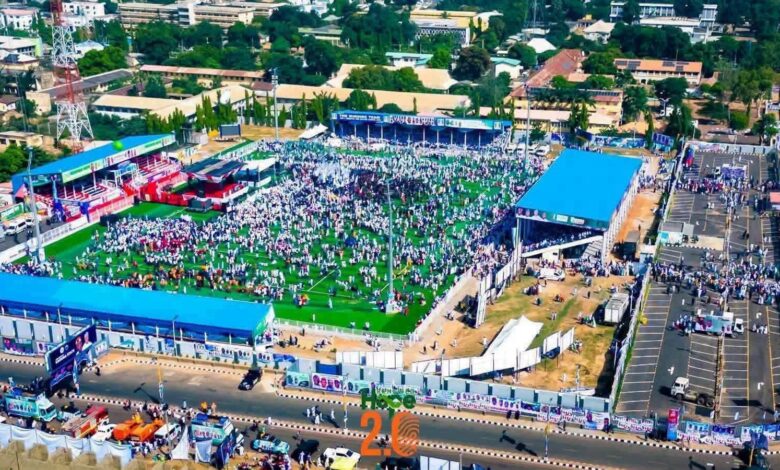
Yet, against this background, some traditional rulers, apparently influenced by ethnic considerations, and citizens seeking financial benefits are dancing and declaring Tinubu the only Nigerian capable of governing the country. Is this the reward for hardship?
There is also the disturbing political posture of Nyesom Wike, Tinubu’s Minister of the Federal Capital Territory, who has reportedly boasted that the FCT and Rivers State elections are already secured for Tinubu. Such statements raise serious questions about respect for voters and the credibility of the electoral process. Abuja must not be treated as a personal political territory or as an imaginary 37th state under the control of one minister.
Nigerians must reject political intimidation, electoral manipulation and violence. They must also remind politicians that elections are decided by voters, not by declarations of victory made before the ballots are cast.
As the January 16, 2027 presidential and National Assembly elections approach, followed by governorship and State Houses of Assembly elections, citizens must use their votes wisely and defend their democratic rights.
Why beg a government to continue when you should be demanding that it works for you?
Nigeria belongs to its people. No president, minister, traditional ruler or political party owns the country. The ballot must remain the people’s instrument for accountability and change.
*Abanikanda Olumoro is a Nigerian in the Diaspora, United Kingdom.
Disclaimer: Opinions expressed in this article are entirely those of the author and not of The DEFENDER Newspaper.