Israel President Taps Opposition Candidate Eisenkot To Form Government in Major Setback for Netanyahu
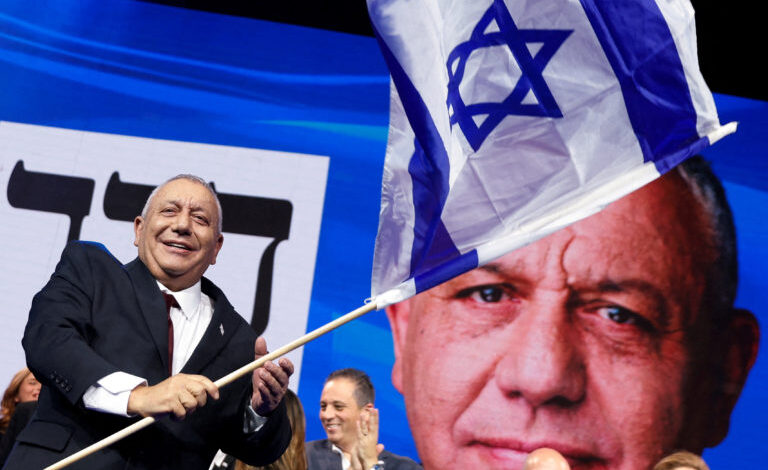
Reacting to the announcement, Eisenkot wrote on his X account: “This is the time to establish a national emergency government. I will do anything possible to prove us worthy.”
Israeli President Isaac Herzog has given opposition candidate Gadi Eisenkot the first opportunity to form a new government following the country’s October 27 elections, in a major setback for Prime Minister Benjamin Netanyahu.
Herzog announced the decision on Saturday, bringing Eisenkot, a former military chief who emerged as Netanyahu’s main challenger, a step closer to ending the tenure of Israel’s longest-serving prime minister.
Reacting to the announcement, Eisenkot wrote on his X account: “This is the time to establish a national emergency government. I will do anything possible to prove us worthy.”
He has up to six weeks to assemble a governing coalition, although the task is expected to be difficult in a deeply divided country still grappling with the October 7, 2023, Hamas-led attacks and the three years of ensuing conflicts in Gaza and other parts of the region.
During consultations with Herzog earlier this week, representatives of most of Israel’s major political parties recommended that Eisenkot be given the mandate to form the next government.
However, neither Netanyahu’s political bloc nor the opposition alliance led by Eisenkot secured an outright parliamentary majority in the elections, leaving the formation of a stable government dependent on difficult political negotiations.
The Arab-led parties, which recorded historic gains in the elections, have emerged as potential kingmakers, although any alliance with them could prove politically controversial.
An Arab party has participated in an Israeli governing coalition only once in the country’s history. Such an arrangement could be particularly contentious for Eisenkot following more than three years of war in Gaza.
Netanyahu has repeatedly opposed any potential alliance between Eisenkot and the Arab-led parties, including making unsubstantiated claims that the parties “stole” the elections.
Shortly before Herzog’s announcement, Netanyahu called for a “national unity government” in a video statement, warning against what he described as “hastily swearing in a government with terrorist supporters” — a reference to the Arab-led parties.
While Netanyahu and his allies have consistently portrayed the Arab-led parties as a national security threat, Eisenkot has indicated some willingness to work with them under certain conditions, including their acceptance of his position that Hamas is a terrorist organisation that must be destroyed.
One possible option for Eisenkot is to negotiate a broad national unity government involving major Jewish political parties, potentially including Netanyahu’s Likud, which remains the single largest party in parliament.
However, significant differences between the two politicians could complicate such an arrangement.
Their disagreements include Netanyahu’s dependence on religious parties demanding exemptions from compulsory military service for ultra-Orthodox men and his opposition to a formal investigation into the security failures surrounding the October 7 attacks.
Another possibility is for Eisenkot to establish a minority government supported externally by Arab-led parties that would not formally join his coalition.
However, some members of his opposition bloc have already indicated that they would reject such an arrangement.
Eisenkot’s party, Yashar, also criticised Netanyahu’s video statement in a post on X, urging members of Likud to distance themselves from what it described as “radical parties”, in an apparent reference to the far-right groups within Netanyahu’s religious-nationalist political alliance.
The party maintained that any government formed by Eisenkot would comprise only political parties and lawmakers committed to its governing principles.
The coming six weeks are therefore expected to determine whether Eisenkot can secure the parliamentary support needed to form a new government and bring Netanyahu’s long-standing leadership to an end.